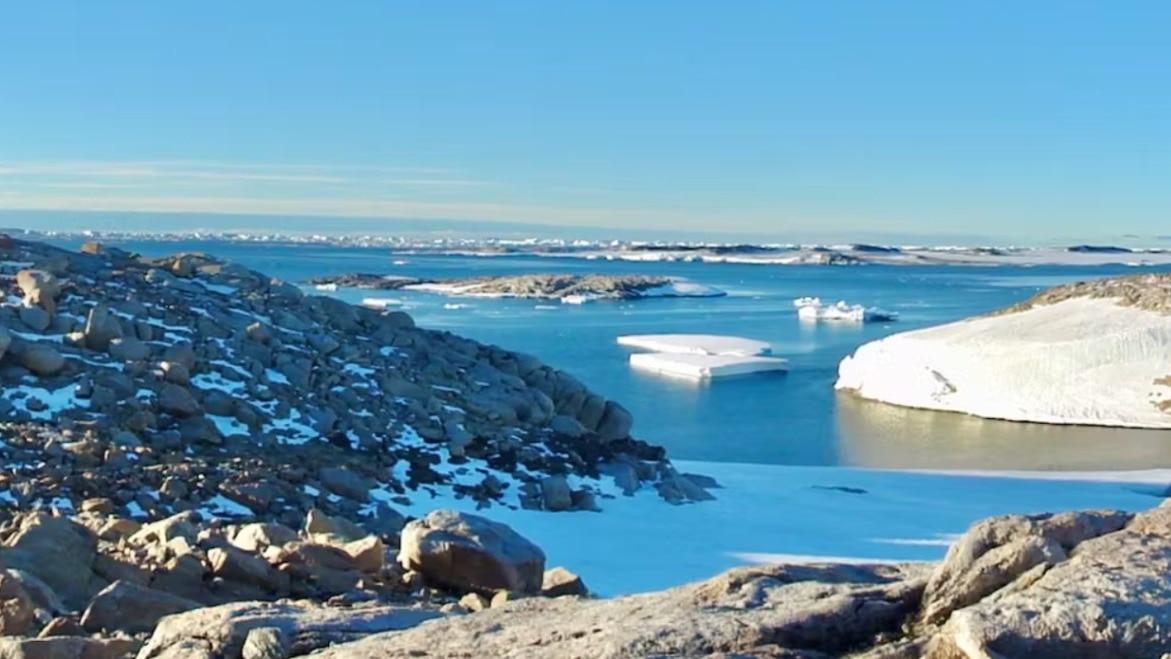
In a startling reminder of how rapidly the planet’s climate is changing, parts of Antarctica — Earth’s coldest and most isolated continent — have experienced winter temperatures that were as much as 20 degrees Celsius above the seasonal average.
The unprecedented warmth has shattered long-standing records, melted snow and ice during what should be the harshest part of the Antarctic winter, and raised fresh concerns about the pace of global climate change.
Record-breaking winter
The most dramatic reading came from Argentina’s Esperanza research station on the Antarctic Peninsula, where temperatures climbed to 15.4°C on June 6, breaking the previous winter record for the site by around 2°C. Scientists say the temperature was roughly 20°C warmer than what is normally expected at this time of year.
What has particularly alarmed researchers is that this was not an isolated spike. The Antarctic Peninsula has been gripped by a prolonged heatwave, with daily maximum temperatures remaining above the freezing point for nearly three weeks — an extraordinary event during the southern hemisphere’s winter.
Climate scientist Raúl Cordero of the University of Groningen described the event as “absolutely crazy,” calling the 20°C departure from normal “a huge anomaly.”
Snow melting when it should be falling
The effects of the unusual warmth have already been witnessed on the ground. On King George Island, researchers reported that landscapes usually covered by snow and ice had turned patches of brown, grey and green as the thaw exposed bare earth. Temperatures there reached 4.6°C, causing widespread melting.
Chilean glaciologists working in the region said they even encountered rain falling on glaciers, a highly unusual phenomenon for this time of year. According to researchers, glaciers that should be accumulating snow during winter instead experienced surface melting, a process known as ablation.
What caused the heatwave?
Scientists attribute the event primarily to strong northerly winds, which transported unusually warm air masses deep into the Antarctic Peninsula. While weather patterns can naturally produce short-lived warm spells, experts say the intensity and persistence of these events are becoming more common in a warming world.
Researchers note that similar extreme Antarctic heatwaves have occurred more frequently since the 1980s, a trend that aligns with broader evidence of human-driven climate change. The Antarctic Peninsula is already among the fastest-warming regions on the planet, having warmed significantly over the past several decades.
Sea ice connection
The heatwave comes amid another troubling development: an exceptionally low level of winter sea ice around parts of Antarctica. Scientists estimate that the Bellingshausen Sea, on the west side of the Antarctic Peninsula, is missing an area of sea ice roughly equivalent to the size of France.
Sea ice acts like a natural cooling shield, reflecting sunlight and helping maintain low regional temperatures. When it disappears, darker ocean waters absorb more heat, amplifying warming and potentially creating a feedback loop that accelerates further ice loss. Experts believe the lack of sea ice may have intensified the recent heatwave by reducing this cooling effect.
Why it matters beyond Antarctica
A single heatwave is unlikely to cause a dramatic jump in global sea levels, but scientists warn that recurring events of this nature signal a larger and more worrying trend. Antarctica holds enough ice to significantly alter global coastlines if major glaciers become unstable.
The continent’s massive Thwaites and Pine Island glaciers, often described as vulnerable climate tipping points, are already under close observation. Continued warming and reduced sea ice could weaken the floating ice shelves that help hold these glaciers back, potentially accelerating ice loss into the ocean.
The consequences are not limited to rising seas. Shrinking sea ice also threatens Antarctic ecosystems by disrupting habitats for krill, a cornerstone of the Southern Ocean food chain, with knock-on effects for penguins, seals and whales. Scientists have already linked recent sea-ice declines to breeding failures among emperor penguin colonies.
For decades, Antarctica was viewed as one of the last great untouched wildernesses, buffered from many of the rapid changes occurring elsewhere on Earth. But the latest record-breaking winter temperatures suggest even this remote region is not immune to the impacts of a warming climate.
Antarctica, Climate Change, Global Warming, Antarctic Heatwave, Extreme Weather, Polar Ice, Sea Ice Loss, Climate Crisis, Environmental News, Scientific Research#Heatwave #Antarctica #Temperatures #soar #20C #normal #alarming #scientists1781454040

20C
alarming
Antarctic Heatwave
Antarctica
Climate Change
Climate Crisis
Environmental News
Extreme Weather
global warming
Heatwave
Normal
Polar Ice
Scientific Research
scientists
Sea Ice Loss
Soar
temperatures