
Google’s May Core Update ended on June 2nd. It was followed by the June Spam Update. Although these are two different types of updates, there are suggestions that they are both targeting the same thing – AI manipulation – and may be impacting the same sites. Updates impact search results and can cause sites to gain or lose positions in search results. A site ranking first one day may rank on page 2 the next. Losing ranking in Google will cause a site to lose precious traffic and can also negatively impact visibility in AI tools like ChatGPT and Gemini. SEO expert Glenn Gabe says the Core Update was big and warns, “Stay tuned, the summer is just heating up”.
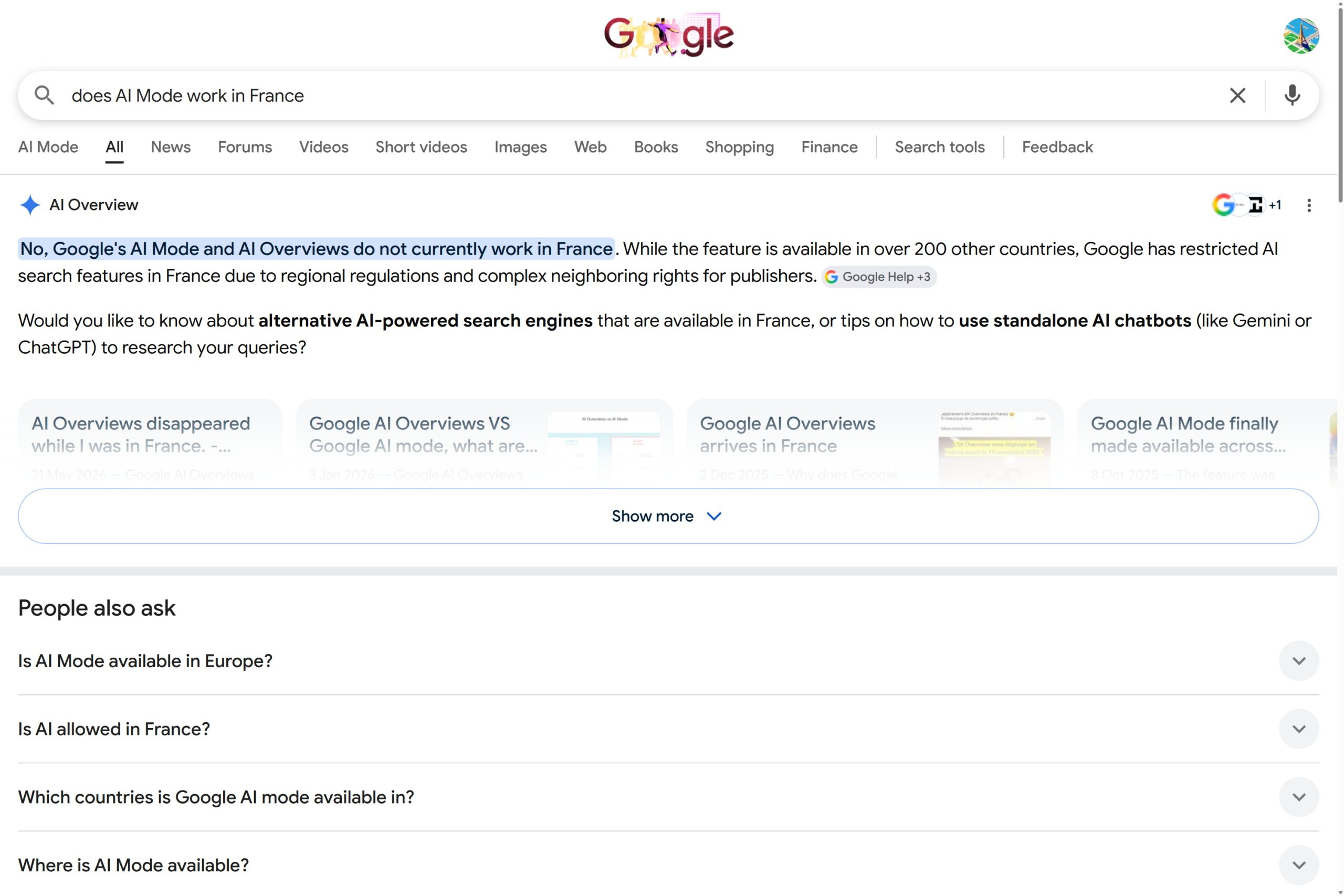
France also has AI Overviews and AI Mode to look forward to this summer. Until now it was the only country in the World not to have AI-generated results in Google. Media in France (article in French) are reporting that Google informed them on June 29th that these features would be arriving and that sites could opt-out, track impressions from AI generated results and be remunerated (we assume that this includes only media sites).
Google May 2026 Core Update ended June 2nd
The May 2026 Google Core Update launched on May 21st and was completed on June 2nd. There was no specific information from Google on this update, but in his article, The Core Roars Back, Glenn Gabe concludes that it was much more powerful than the March Core Update and impacted sites in the health, finance and gambling industries. As mentioned above he also expects more updates from Google this summer to deal with content generated by AI on a large scale.
Aleyda Solis has analyzed data from Sistrix to give her an analysis of what changed in search results in the US and the UK during this update. She concludes that this update changed the type of content Google was likely to rank for certain search topics. For example, a search for “best running shoes” may now not show so many blog articles but instead category pages from e-commerce sites or marketplaces.
Aleyda says we should manually check the SERP (Search Engine Result Page) in Google with our keywords to see what type of content is featured. Are results mostly blog articles, forum posts or product pages? You may need to adopt the format of your content to feature in the top results.
You can follow Aleyda’s advice and search in Google for your most important keywords. Analyze the SERPs to see what type of content is more visible. See our advice on recovering from a Google Update if you think your site was hit by the May 2026 Core Update.
Google June 2026 Spam Update
Google launched a new Spam Update on June 24th, and it was deployed very quickly, finishing on June 26th. The official announcement on LinkedIn said simply :
“Today we released the June 2026 spam update to Google Search. This is a normal spam update, and it will roll out for all languages and locations. The rollout may take a few days to complete. More information about spam updates can be found at
The document referred to in the post is general introduction to Spam Updates and it has not been updated since December 2025. The related Spam Policies document, however, was updated on May 15th to make it clear that spam policies apply to all types of search results including generative AI responses. This coincided with the launch of Google’s guide to generative IA optimization also published on May 15th. It is fair to conclude that the Spam Update targeted examples of AI manipulation given in this document. Glenn Gabe speculated on X that Google is taking action against what it calls “Commmodity Content”. His analysis of the Spam Update also mentions that drops in ranking started before the update was announced.
It is possible that the Spam Update also included automatic demotions for sites using “back button highjacking”. Back in April, Google said that enforcement of this new policy would start on June 15th.
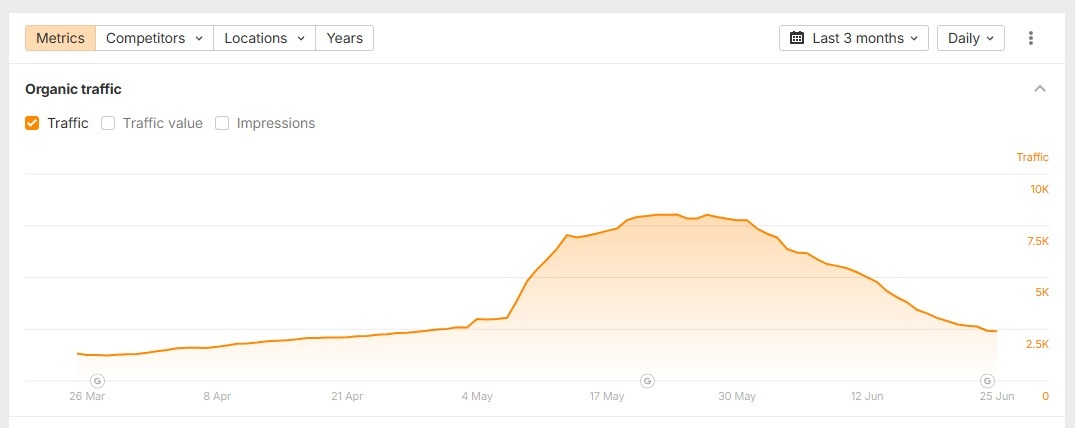
Ranking in Google can change during a Spam Update. WordPress site owners can use SEOPress Insights to track keywords directly from the site’s dashboard.
John Morabito of Stella Rising published an interesting article on Search Engine Land, How real people actually prompt AI – and what it means for GEO. He analyzes data from research carried out by his own company and compares it with other research and data such as the SEMRush Clickstream data.
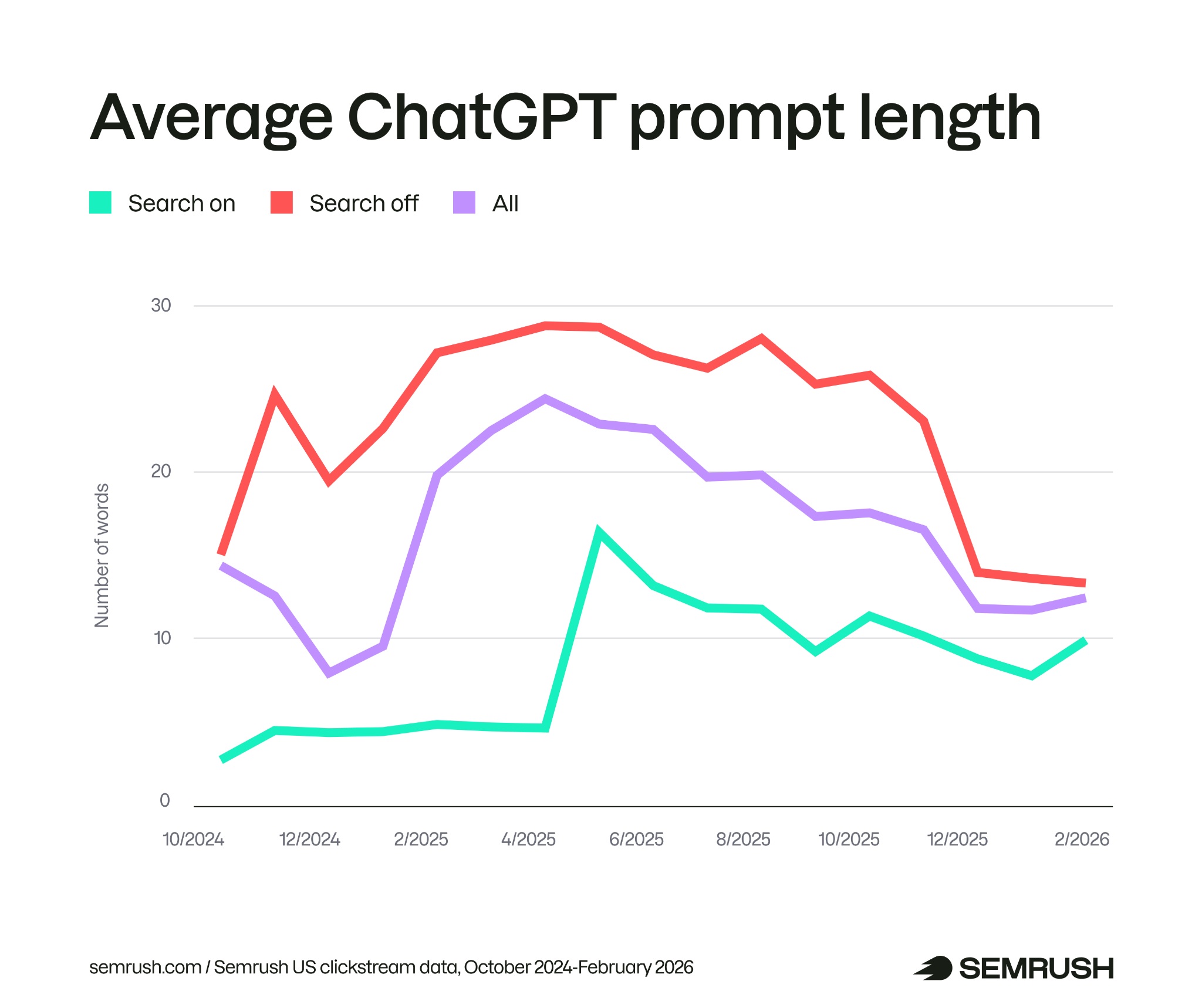
John concludes that a lot of people are still searching like they did in 2008. According to SEMRush clickstream data, the average length of a prompt on ChatGPT is 8.7 words in 2026 (up from just 4.7 words last year). In a survey, Stella Rising asked users to write a prompt to ask ChatGPT for help buying a new pair of shoes, the median answer was eight words long. In a 2026 survey, 30 % of prompts were very similar to Google search queries with examples such as:
- “Shoes nearby”
- “Tennis shoes”
- “Nike”
- “Ladies tennis shoes size 7 near me”
- “Best price for hiking shoes”
Other interesting conclusions from his research were:
- 5% of prompts contained the word “best”
- 28 % of prompts mention price or budget
- 16 % of prompts include geographical location, including the “near me” term
- 32% included personal information in their search (shoe size, profession, health conditions)
This last point is interesting. John feels that users didn’t include these sorts of details on Google searches and the way that ChatGPT works means that this personal information is remembered and carried over into future prompts. This means that tracking mentions on AI tools like ChatGPT will be difficult, because real answers consider personal data of each individual user.
You can apply this information to your SEO keyword strategy. Keywords are longer than one word and may often contain the word “best”, “price” or your local area.
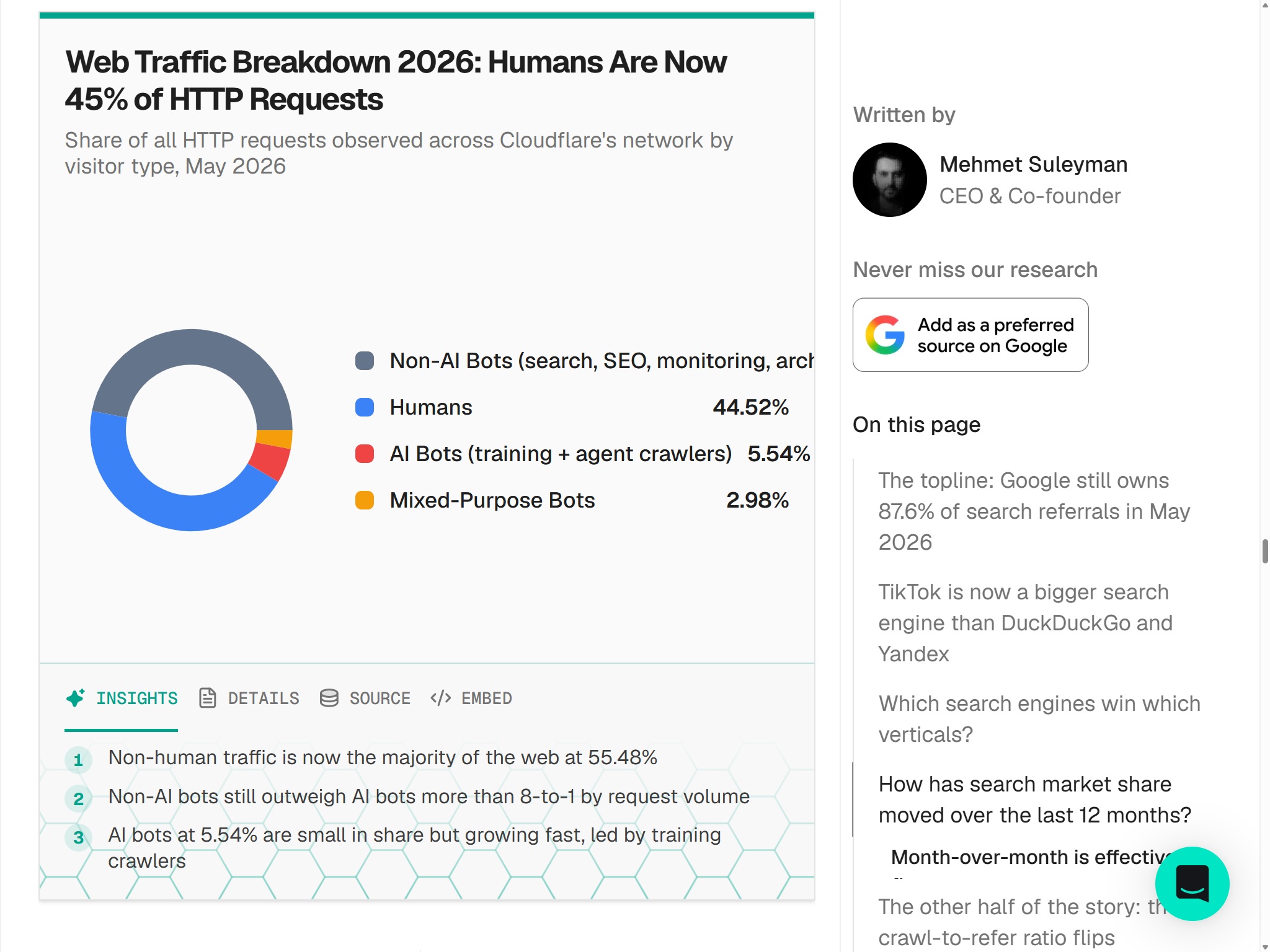
Although ChatGPT officially reached 1 billion users mid-June, data from the June update of the Search Engine Market Share Report by TechnologyChecker.io, shows that AI search tools (ChatGPT, Gemini and Claude combined) generate much less traffic than Google (which also proposes AI-generated responses). Measuring traffic to websites using Cloudflare Radar data, Mehmet Sulyman says 87.63% of search traffic comes from Google, 3.45% from Bing, 0.23% from ChatGPT, 0.028% from Gemini, 0.016% from Claude and 0.013% from Perplexity. This means that Google sends over 300 times more traffic to websites than all AI tools combined.
Another interesting take away from the article by Mehmet is that humans are now less than 50% of visits to websites. Search engines and SEO tools are the biggest source of HTTP requests, not AI-bots.
If your ambition is to generate more traffic to your website, bear in mind that Google is still by far the best source of visitors.
Other Google News
John Mueller was once again anchor man for the Google Search News on YouTube. In the latest edition, released on June 18th, John goes through a lot of news from Google from May and June as well as featuring work by SEO experts that he has appreciated recently.
The Google news stories covered were:
On this last point, did you see that SEOPress now features a Preferred Sources block you can use in WordPress? This is just a small part of the massive version 10 of SEOPress released on June 18th. Other great new features include SEOPress AI Credits, AI Agents, AI-driven SEO Assistant, AI and a Sitemap health check.

SEO News#Hot #Summer #Google #Updates #Begins #SEO #News #June1782908970