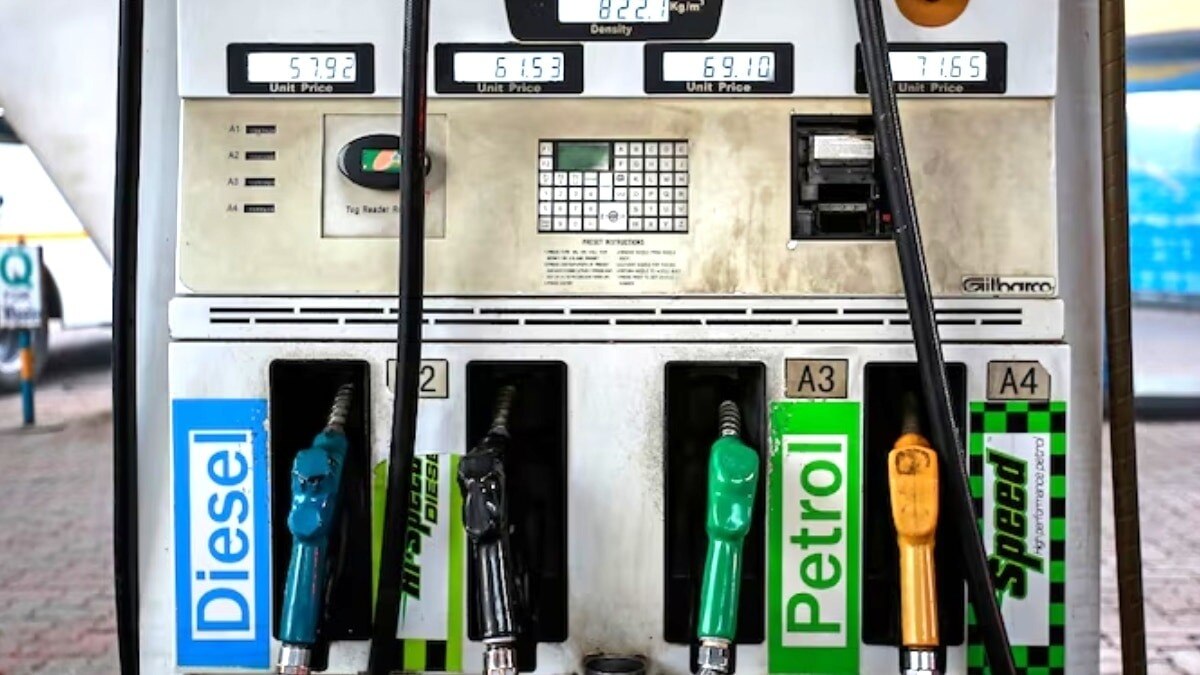
The government on July 3 issued a detailed rebuttal to what it described as misinformation circulating on social media about India’s E20 ethanol blending programme, rejecting claims on excessive water use, engine damage, environmental risks and fuel safety. In a 10-point clarification, the petroleum and natural gas ministry said the programme, under which petrol contains up to 20 per cent ethanol, is backed by scientific evidence, extensive testing and global practices.
The ministry said India achieved its target of 20 per cent ethanol blending in petrol in December 2025, ahead of schedule, up from around 1.5 per cent in 2013-14. It added that the country’s installed ethanol production capacity has reached about 2,000 crore litres, while procurement is projected to exceed 1,200 crore litres during the 2025-26 ethanol supply year.
Addressing concerns over vehicle performance, the ministry said trials by the Automotive Research Association of India covering around 40,000 km in passenger vehicles and 20,000 km in two-wheelers found no significant adverse impact on drivability or fuel efficiency, with only marginal changes in mileage. It added that vehicles calibrated for E20 could also benefit from ethanol’s higher octane rating.
On claims that E20 damages engines or corrodes vehicle components, the ministry cited studies by ARAI carried out with Indian Oil Corporation, the Indian Institute of Petroleum and the Society of Indian Automobile Manufacturers. It said the studies found no issues related to drivability or compatibility of metal and plastic components, though certain rubber parts in older vehicles may need earlier replacement.
The ministry also rejected claims that using E20 could invalidate warranties or insurance, saying automobile manufacturers and insurers have clarified that vehicles designed or approved for E20 remain covered under applicable terms.
Rejecting claims that producing one litre of ethanol requires 10,000 litres of water, the ministry said only surplus rice cleared after meeting national food security requirements is diverted for ethanol production. It said distilleries use around 3-5 litres of processed water per litre of ethanol and are increasingly operating under Zero Liquid Discharge systems that recycle water. The ministry added that maize now contributes more than 40 per cent of ethanol supplied under the programme, requires much less irrigation than paddy and is being promoted through higher minimum support prices.
Dismissing assertions that E20 is an untested fuel, the government said ethanol-blended fuels have been used globally for decades, citing the United States, Brazil, Canada, Thailand, Japan and several European countries. Responding to viral posts claiming ants and bees are attracted to E20 because it contains sugar, the ministry said fuel-grade ethanol is distilled to remove residual sugars and contains denaturants that repel insects, while the hydrocarbon odour of petrol remains dominant in the blend.
The government also denied claims that it had described the E20 programme as an experiment before the Supreme Court, saying the proceedings were related to contractual provisions governing ethanol procurement and not to the scientific validity of ethanol blending. It cited a clarification by the Office of the Attorney General, which said media reports suggesting otherwise were inaccurate.
The ministry further dismissed claims that E20 increases the risk of water entering fuel tanks, saying modern vehicles and fuel retail infrastructure have safeguards against water ingress. It also described viral videos allegedly showing sugarcane juice being mixed with petrol as fabricated, saying fuel ethanol is produced through industrial processes and blended according to prescribed quality standards.
On environmental concerns, the ministry said ethanol plants require statutory environmental clearances, are subject to groundwater regulations and must comply with Zero Liquid Discharge norms. According to the ministry, the ethanol blending programme has saved more than Rs 1.9 lakh crore in foreign exchange, enabled payments of over Rs 1.6 lakh crore to farmers, reduced carbon dioxide emissions by around 930 lakh metric tonnes and displaced more than 310 lakh metric tonnes of crude oil imports since 2014-15.
In its clarification, the government said the E20 programme is supported by testing, regulation and international experience, and rejected social media claims on engine safety, water use, insects, environmental damage and fuel handling. It said the programme has expanded steadily over the past decade alongside a rise in blending levels, production capacity and procurement.
E20 ethanol blending, ethanol blending programme India, petrol ethanol mix, Ministry of Petroleum and Natural Gas, ARAI vehicle trials, ethanol water use claim, engine safety E20, maize ethanol supply, India fuel policy#Centre #debunks #E20 #myths #amp #concerns #cites #tests #engine #safety #water1783114769

amp
ARAI vehicle trials
centre
cites
concerns
debunks
E20
E20 ethanol blending
engine
engine safety E20
ethanol blending programme India
ethanol water use claim
India fuel policy
maize ethanol supply
Ministry of Petroleum and Natural Gas
myths
petrol ethanol mix
safety
Tests
Water