As the Q1FY27 earnings season gathers pace, investors are assessing whether improving domestic fundamentals can offset persistent global uncertainties. Corporate earnings, foreign institutional investor (FII) flows, geopolitical developments, interest rate expectations and a busy IPO pipeline are expected to shape market sentiment in the coming months.
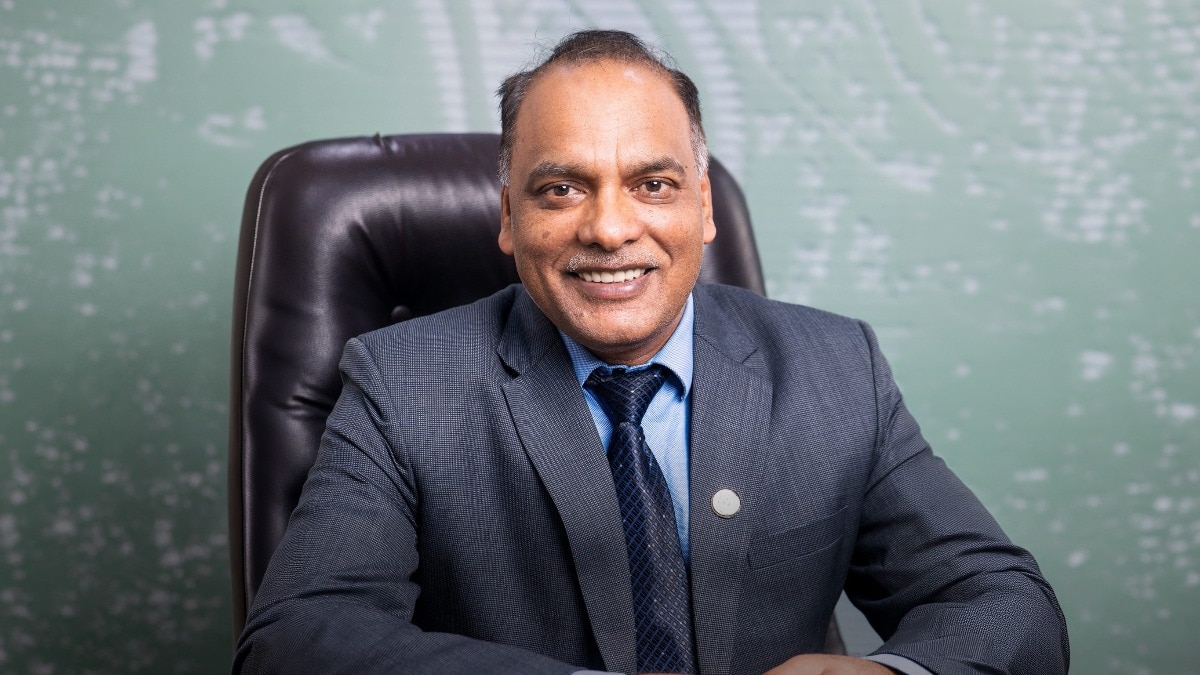
Against this backdrop, Business Today spoke with Baldev Prakash, the newly appointed MD & CEO of SBICAP Securities, on the outlook for key sectors, the sustainability of the recent market recovery, valuation trends across large and mid-caps, the impact of global macro factors, and the key catalysts and risks that investors should monitor over the next three to six months. Read the edited excerpts:
BT: Earnings season is set to being. Which sectors are expected to surprise positively, and where do you see the biggest risk of earnings disappointment? Which sectors look best placed to outperform after the Q1 earnings season?
Prakash: In 1QFY27, we expect banks, NBFC, auto and auto ancillaries (2W, PV, Power train agnostic focussed companies), metals and metal products, value retailers, consumer discretionary (hotels, jewellery, liquor), telecom, healthcare (hospitals and diagnostics), EMS, defence, capital goods, power and wower Ancillary (Cables, T&D, Solar panel manufacturers, etc) to report healthy earnings growth.
In contrast, OMCs, agro-chemicals and cement companies may witness margin pressure in the backdrop of elevated crude oil and crude oil derivatives prices coupled with supply chain disruption for chemicals. Consumer staples universe should report incrementally better results led by the strategy of price hikes and premiumisation adopted by companies to tackle higher packaging cost. IT companies may report relatively muted earnings growth performance.
Post truce between US-Iran, crude oil prices have corrected sharply by 38% from its recent peak of $120/bbl. and hence macro economy concerns have ebbed significantly. Moreover, various measures taken by RBI to attract forex have arrested depreciation in USDINR, thereby easing selling pressure from FIIs. Street will keenly watch progress on monsoon for the key months of July and August.
Although monsoon this year is expected to be below LPA, in case, it is well spread then impact on rural economy should be negligible. Post consolidation of 20 months, valuations have turned comfortable. Moreover, with likely double digit earnings growth during next 2 years.
BT: The Indian market has staged a strong recovery from recent lows. Is this the beginning of a sustained bull run, or are valuations running ahead of fundamentals?
Prakash: The recovery has largely been led by broader markets, with over 90% of stocks above Rs 1,000 cr market cap delivering positive returns from their March lows. The rebound was overdue and supported by relatively stronger 4QFY26 earnings from broader markets compared with large-cap companies.
Going forward, if the earnings recovery sustains, the current uptrend can continue. From a valuation perspective, the Nifty 50 is trading at around 18x one-year forward earnings, compared to its 10-year average of about 20x, indicating that benchmark valuations remain reasonable. Due to persistent selling by FIIs, index heavy weights sectors like Banks, IT etc have underperformed during the last 3 months. In the medium term, we expect large caps are likely to outperform with stock specific activities across mid and small cap.
BT: How are investors factoring in geopolitical risks, including tensions in the Middle East, US-China trade developments and global tariff uncertainties? Which sectors remain most vulnerable or resilient?
Prakash: The market appears to have moved past the most challenging phase of the Middle East conflict and is currently treating it as a manageable disruption rather than a structural threat. We do not expect a sharp spike in crude oil prices as continued Iranian supply, exit of UAE from OPEC and the possibility of increased global supply could help keep prices in check.
On tariff front, the key monitorable will be finalisation of India-US trade deal ahead of July 24 deadline. Any renegotiation before the deadline could remove a significant overhang for India. While tariff-related uncertainty is unlikely to materially affect domestic-facing businesses, businesses like textile & apparels, marine products, auto components etc with significant US exposure could face headwinds.
On the positive side, India has already signed FTA with multiple countries like UK, EU, Oman, New Zealand etc and this should help domestic manufacturers to de-risk exposure to one country and encash on opportunities available across the globe. Despite of tariffs, we have witnessed that sectors like power/electrical equipment, engineering, auto components, pharma, defence etc continue to witness robust demand traction and likely to be immune to any tariff shocks.
BT: With a packed IPO calendar in the coming weeks, do you expect strong investor appetite to continue, or could the surge in primary issuances divert liquidity from the secondary market?
Prakash: Over the last 18 months, around 42 per cent of mainboard IPOs and nearly 55 per cent of SME IPOs continue to trade below their issue prices. Investor appetite is likely to remain strong for fundamentally sound businesses which are mobilising growth capital at reasonable valuations. Having said that, besides IPO issuance, promoter stake sales, exits by strategic investors and QIP/Preferential issue will weigh on secondary market liquidity and is key risk for better returns in short to medium term.
BT: Foreign investors have turned net buyers recently. Do you expect FII inflows to sustain in the second half of 2026, and what could reverse this trend? Are mid-cap and small-cap valuations justified, or is it time to shift towards large-cap stocks?
Prakash: FII outflows in recent years have been driven by the lack of a large AI-related investment theme in India, currency weakness and taxation concerns. Future flows will depend on tax certainty, stability in the currency market, earnings growth coupled with relative valuations and the relative attractiveness of investment opportunities within Emerging Markets.
While it is difficult to conclude whether the recent buying trend will sustain, money has already started to rotate out of global AI plays and is moving towards old economy sectors. Despite of FII outflow at an aggregate level, we have seen that FIIs have been increasing stake selectively in Indian companies where earnings growth continues to remain robust.
As far as mid- and small-caps are concerned, growth prospects remain a key consideration. Companies with strong earnings visibility and robust growth outlooks are likely to continue to attract investor interest despite premium valuations. There are many sectors which are not part of benchmark indices and are likely to be future wealth creators and hence we may continue to witness outperformance by select mid and small cap companies in the long run.
BT: What are the three biggest catalysts that could drive Indian equities over the next three to six months—Q1 earnings, RBI policy, global interest rates, or something else? Which macro indicators should investors monitor most closely over the next quarter?
Prakash: Q1 earnings will be particularly important as investors look for management commentary on demand trends, margin outlook and earnings visibility for the second half of FY27 and FY28, especially amid increasing adoption of AI and automation. Globally, the recent moderation in US inflation and softer labour market data have reduced the probability of further rate hikes, easing pressure on US bond yields. If geopolitical tensions continue to subside and inflation remains under control, the possibility of rate cuts in both the US and India could improve market sentiment.
With the recent jobs data and ease in inflationary pressure in US, probability of rate hike have reduced in US economy thereby easing in pressure on US bond yields. If geopolitical tensions ease further and the inflation outlook improves, the possibility of rate cuts could emerge across US and India. Investors should closely monitor earnings trends in the backdrop of likely gains due to adoption of AI/robotics, crude oil prices, distribution of monsoon, water reservoirs levels and disruption in trade due to geo-political tension.
Disclaimer: Business Today provides stock market news for informational purposes only and should not be construed as investment advice. Readers are encouraged to consult with a qualified financial advisor before making any investment decisions.
Indian stock market, Q1 earnings season, Indian equities, Stock market outlook, Market outlook, Nifty, Sensex, Banking sector outlook, IT sector outlook, Defence stocks, Auto stocks, IPO market, FII inflows, RBI policy, Indian stock market outlook FY27,Q1FY27 earnings outlook, Best sectors after Q1 earnings, Large cap vs mid cap stocks Will FII buying continue, IPO market outlook India, Which sectors will outperform in FY27, Indian equities next six months#Banks #defence #auto #shine #lag #SBICAP #Securities #CEO #markets #amp #FII #flow1783493364

amp
auto
auto stocks
Banking sector outlook
banks
Best sectors after Q1 earnings
CEO
Defence
defence stocks
fii
FII inflows
Flow
Indian equities
Indian equities next six months
Indian Stock Market
Indian stock market outlook FY27
IPO market
IPO market outlook India
IT sector outlook
lag
Large cap vs mid cap stocks Will FII buying continue
market outlook
markets
Nifty
Q1 earnings season
Q1FY27 earnings outlook
RBI Policy
SBICAP
Securities
Sensex
Shine
stock market outlook
Which sectors will outperform in FY27