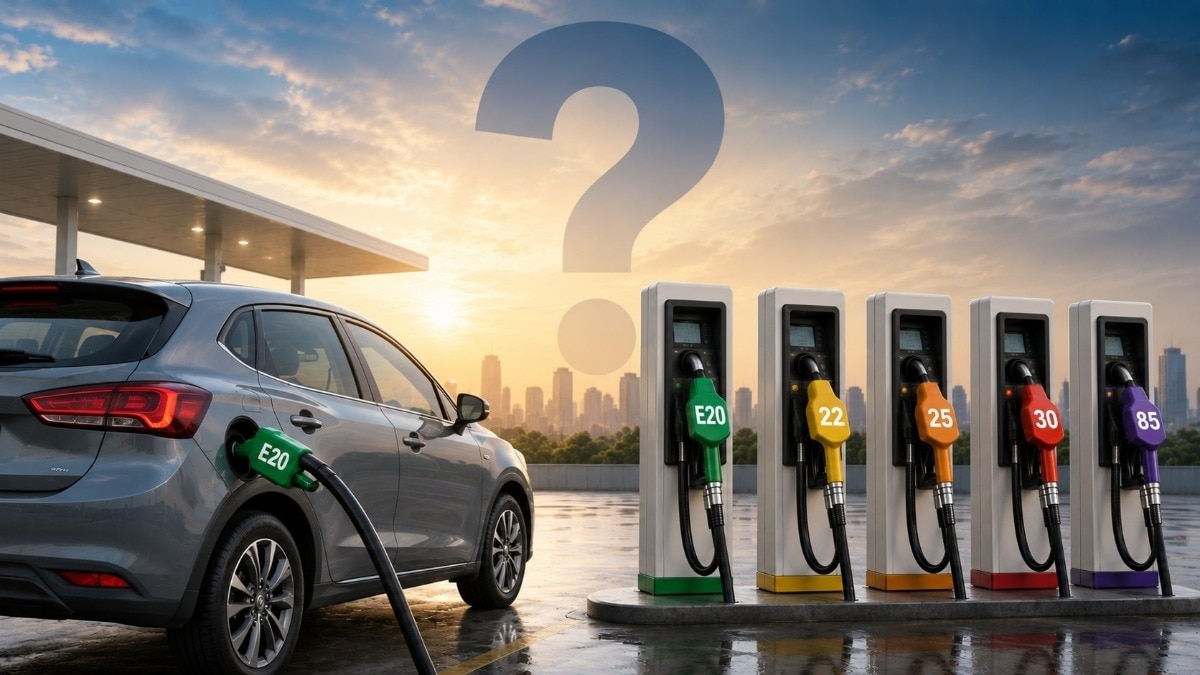
India has achieved nationwide rollout of 20% ethanol-blended petrol (E20), but one question continues to puzzle consumers: if one-fifth of every litre of petrol is ethanol, why hasn’t the fuel become cheaper? The Ministry of Petroleum and Natural Gas (MoPNG) has now sought to answer that question, saying E20 is designed to improve India’s energy security and reduce dependence on imported crude oil—not necessarily to lower pump prices when crude oil prices are relatively low.
In a detailed Frequently Asked Questions (FAQs) document, the ministry said the economics of ethanol procurement currently make E20 more expensive to produce than pure petrol, even though it contains less fossil fuel.
Why is E20 petrol not cheaper than pure petrol?
According to the ministry, the government procures ethanol from domestic producers at fixed prices to ensure farmers receive remunerative returns. Maize-based ethanol is currently purchased at around Rs 71.86 per litre, excluding GST, transportation, storage and depot handling charges.
MUST READ: Why can’t you choose between pure petrol, E10, E20? Here’s what every vehicle owner should know
At the same time, international crude oil prices are hovering around $70 per barrel. At these levels, the ministry said producing E20 petrol costs more than producing conventional petrol without ethanol.
Unlike crude oil, whose prices fluctuate daily based on global demand, geopolitical tensions and supply disruptions, ethanol procurement prices remain largely fixed. As a result, blending ethanol into petrol does not automatically reduce production costs.
MUST READ: Will using E20 petrol affect your motor insurance claim? Here’s what policyholders should know
What makes E20 fuel more expensive to produce?
The ministry explained that ethanol prices reflect the cost of feedstock procurement, processing, logistics and storage, and are linked to the government’s objective of ensuring stable income for farmers.
It said the purpose of ethanol blending is not to create a cheaper fuel in the short term but to diversify India’s fuel basket and reduce dependence on imported crude oil.
However, the ministry noted that the economics could change if global crude prices rise sharply. If crude oil climbs to around $120-$130 per barrel, ethanol would become comparatively cheaper, making E20 more economical to produce than conventional petrol.
MUST READ: Govt says no to E10, cites ₹1 lakh crore per year investments in ethanol production financed by PSBs
Does ethanol blending reduce petrol prices?
The government said consumers should view the programme as a mechanism for price stability rather than lower prices.
With nearly 20% of every litre of petrol sold in India now consisting of domestically produced ethanol, the country is less exposed to fluctuations in international crude oil markets. This helps cushion consumers from sharp fuel price increases during geopolitical crises or supply disruptions.
According to data cited by the ministry, petrol prices in Delhi increased 5.58% between June 2022 and June 2026, significantly lower than the increases recorded in Pakistan, Sri Lanka, Nepal and Bangladesh during the same period. The government attributes part of this resilience to higher ethanol blending, which reduces crude oil imports.
The ministry also said the Ethanol Blended Petrol Programme has saved over Rs 1.97 lakh crore in foreign exchange, replaced 316 lakh metric tonnes of crude oil, reduced around 952 lakh metric tonnes of carbon dioxide emissions, and transferred more than Rs 1.66 lakh crore to farmers.
MUST READ: Consumers shift to premium petrol amid E20 concerns; demand doubles at Delhi fuel stations: Sources
E20 petrol price, E20 fuel, Ethanol blended petrol, Why E20 is not cheaper, Ethanol blending India, E20 vs petrol, Petrol price India, Ethanol blending programme, E20 fuel price, Ministry of Petroleum and Natural Gas#E20 #fuel #price #E20 #petrol #cheaper #pure #petrol #ethanol #blending1783735548

blending
cheaper
E20
E20 fuel
E20 fuel price
E20 petrol price
E20 vs petrol
ethanol
ethanol blended petrol
ethanol blending India
ethanol blending programme
fuel
Ministry of Petroleum and Natural Gas
petrol
petrol price India
price
pure
Why E20 is not cheaper