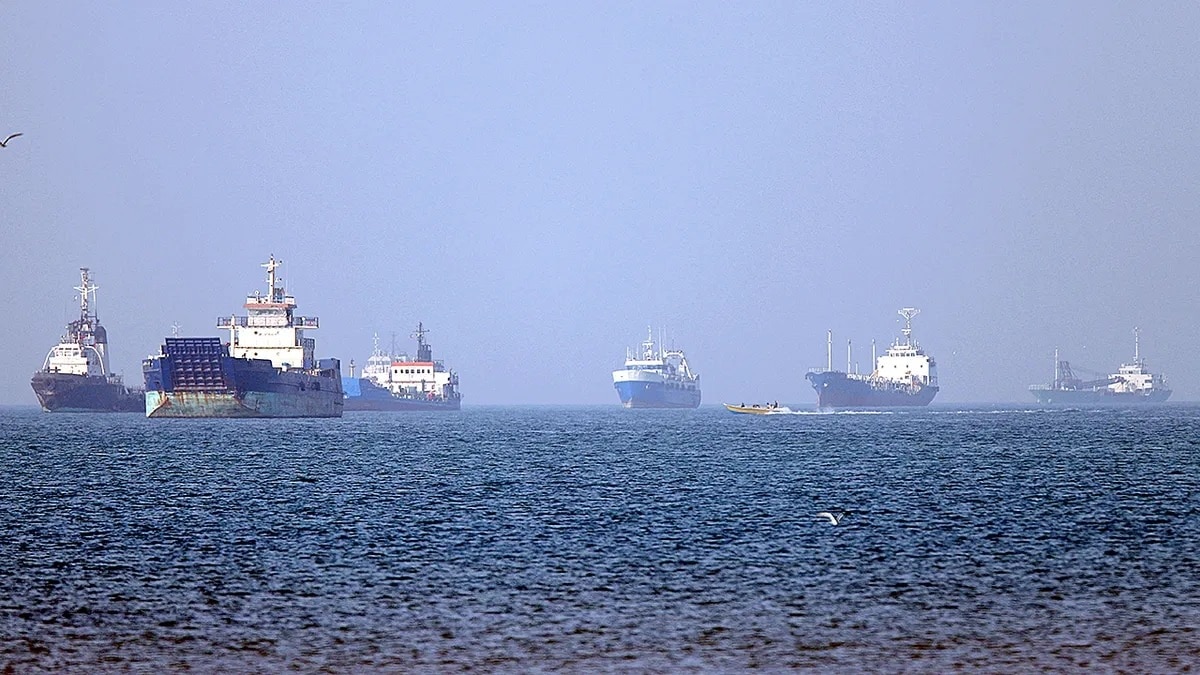
An Indian crew member has been killed, and eight others injured, after Iranian cruise missiles struck two UAE oil tankers in the Strait of Hormuz, the United Arab Emirates Ministry of Defence confirmed. The vessels, Mombasa and Al Bahiyah, were sailing through the southern lane of the strait in Omani territorial waters when they were hit. The Indian national who died was serving aboard the Mombasa.
Among the eight injured, four sustained serious wounds. Six of those wounded were Indian nationals; the remaining two were Ukrainian crew members.
The missile strikes set both tankers ablaze and caused significant structural damage. Crew members managed to contain the fires on both vessels, preventing the situation from escalating into a larger catastrophe in one of the world’s most critical shipping lanes.
The UAE condemned the attack in unequivocal terms, describing it as a grave violation of international law and warning that it reserved the right to respond. “The UAE remains fully prepared to confront any threat and respond decisively to actions that undermine regional stability,” the Ministry of Defence said in a statement. The country added it would take all necessary steps to protect its sovereignty, security, and maritime interests.
A separate incident also reported
Separately, the United Kingdom Maritime Trade Operations agency reported that a tanker travelling approximately 40 nautical miles northeast of Oman’s Qalhat was struck by an unidentified projectile. The agency said the impact damaged the vessel’s starboard-side engine room, though all crew members were reported safe. It was not immediately clear whether this referred to one of the UAE tankers or a distinct incident.
The wider context
The attacks come as the US-Iran confrontation continues to intensify. On Monday, President Donald Trump announced the reinstatement of a blockade on Iranian shipping and warned of further military action. Hours later, American forces launched a third consecutive night of strikes targeting Iran’s coastal surveillance systems, drone infrastructure, and missile capabilities.
Tehran has rejected any US role in determining who may use the strait, with senior Iranian military officials stating that the future of the waterway will not be dictated by outside powers.
Before hostilities erupted earlier this year, roughly one-fifth of the world’s daily seaborne oil and gas trade passed through the Strait of Hormuz, making the continued attacks on commercial vessels there a source of deepening anxiety for global energy markets and shipping companies worldwide.
#Indian #killed #Hormuz #tanker #attack #Iran #missiles #hit #UAE #tankers #Mombasa #Bahiyah1783995887