Former Wipro and Cognizant HR executive Amit Chilka went viral on the internet earlier this year for a decision that seemed to defy conventional wisdom. At 45, he stepped away from the corporate treadmill and relocated from Pune to Dehradun with a corpus of roughly Rs 1 crore.
For many observers, this was not enough. But Chilka’s version of financial independence was built on a different philosophy—he reduced his monthly expenses from Rs 1.5 lakh to Rs 50,000, left his investment corpus untouched, reinvested rental income, and continued earning through consulting, coaching, and leadership retreats.
The internet reacted with part admiration and part skepticism. Could someone retire in their 40s with what many considered a modest corpus? Was this financial independence or recklessness? More importantly, was the real story about money at all?
Across urban India, a growing number of professionals are planning exits from high-pressure corporate careers years before conventional retirement age. Some are moving to smaller cities. Others are shifting to consulting, freelancing or portfolio careers—a modern style of working multiple part-time, freelance jobs. Many are not trying to stop working altogether. They are trying to reclaim ownership over their personal time.
The shift sits at the intersection of burnout, financial independence, changing definitions of success, and growing discomfort with careers that consume more than they give back.
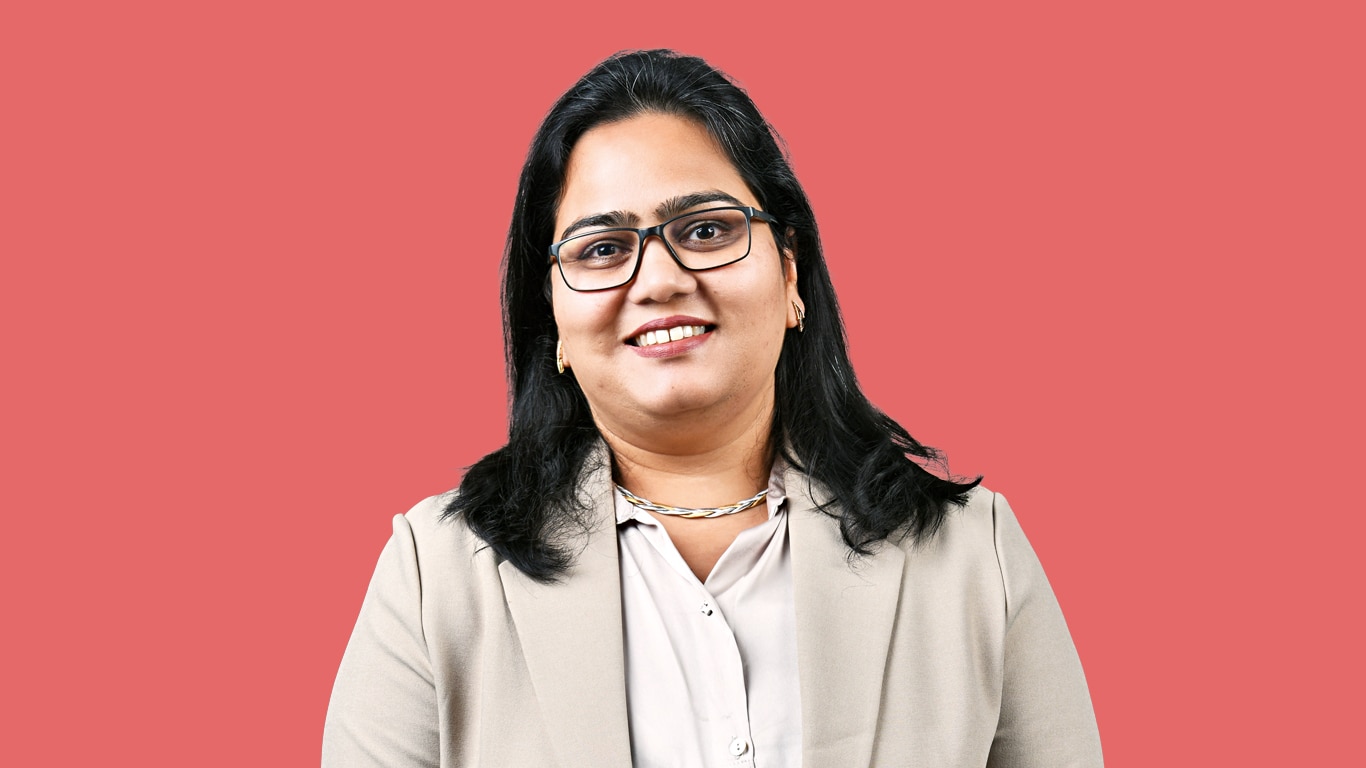
The journey from the Great Resignation, through mass lay-offs, to quiet quitting reflects a workforce that has been operating under sustained pressure for years.
-MANSEE SINGHAL,Careers Leader India, Mercer
The question is no longer whether people can retire early. The bigger question is why so many suddenly want to.
Recalibration of Ambition
For decades, retirement in India was tied to age. People worked until their late 50s or early 60s, accumulated savings, collected a pension if fortunate, and then withdrew from active professional life.
Today, a different conversation is taking shape.
The pandemic fundamentally altered how people think about work.
According to Mansee Singhal, Careers Leader India at professional services firm Mercer, the post-pandemic workforce is not abandoning ambition; it is recalibrating what it means.
“The journey from the Great Resignation, through mass lay-offs, to quiet quitting reflects a workforce that has been operating under sustained pressure for years. Quiet quitting was not a reflection of laziness; it was an act of self-preservation,” says Singhal.
Mercer’s Global Talent Trends 2026 report captures the depth of this shift. Only 44% of employees globally report that they are thriving at work today, down from 66% in 2024, the least since this measure was introduced in 2018. In India, 74% of employees value working for a purpose-driven organisation, yet 54% are planning to leave for better pay.
“This is not a workforce that has disengaged. It expects both purpose and fair reward, and will not compromise one for the other,” says Singhal.
She says ambition is being redefined around greater alignment between personal values and organisational purpose, along with fair recognition. Improved financial literacy has also expanded the possibility of achieving financial freedom much earlier than previous generations.
That shift is changing the meaning of retirement. “The aspiration around early retirement warrants a closer examination,” says Singhal. “In most cases, professionals are not seeking an exit from work; they are seeking an exit from compulsion.”
Mercer’s data supports that argument. While 40% of employees globally plan to leave their organisation in the next 12 months, their motivations suggest they are not looking to abandon work altogether. In India, 45% cite greater control over where and when they work as a key retention factor, while 46% prioritise a positive workplace culture.
The trend is visible in the rise of freelancers, fractional CXOs, independent consultants and professionals building multiple careers simultaneously.
At the same time, burnout has emerged as a significant challenge. Mercer’s Global Talent Trends 2026 report says the loss of talent due to burnout or long-term sick leave is now cited as a top workforce concern by 44% of HR leaders, up from 16% in 2024. Singhal believes organisations must also recognise the difference between a job and a career.
Professionals who take time to reassess priorities, rebuild skills and realign careers are more likely to create sustainable and fulfilling professional lives than those who default to resignation as the solution, Singhal says.
The Retirement Math Problem
While the emotional appeal of early retirement is easy to understand, the financial realities are far less forgiving.
Financial educator and author Monika Halan believes many Indians underestimate the sheer magnitude of the planning required. To make that possible, an individual would need to aggressively save and invest during the relatively short career window.
“In my view, unless you get lucky, it will not be possible in view of the funds required for independent living. Even five years of super-high inflation in retired years can leave you underfunded for years when you might see higher costs due to medical reasons.”
Rather than targeting a full retirement, Halan believes people should target financial independence. She also cautions against romanticising retirement. “People look at retirement as an unending party on the beach. What they forget is that a holiday has meaning only when there is work,” she says.
How Much Is Enough?
If retirement at 40 is financially possible, what corpus does it actually require?
Mihir Vora, Chief Investment Officer at Trust Mutual Fund, argues that asking for a fixed number is misleading in a country as diverse as India.
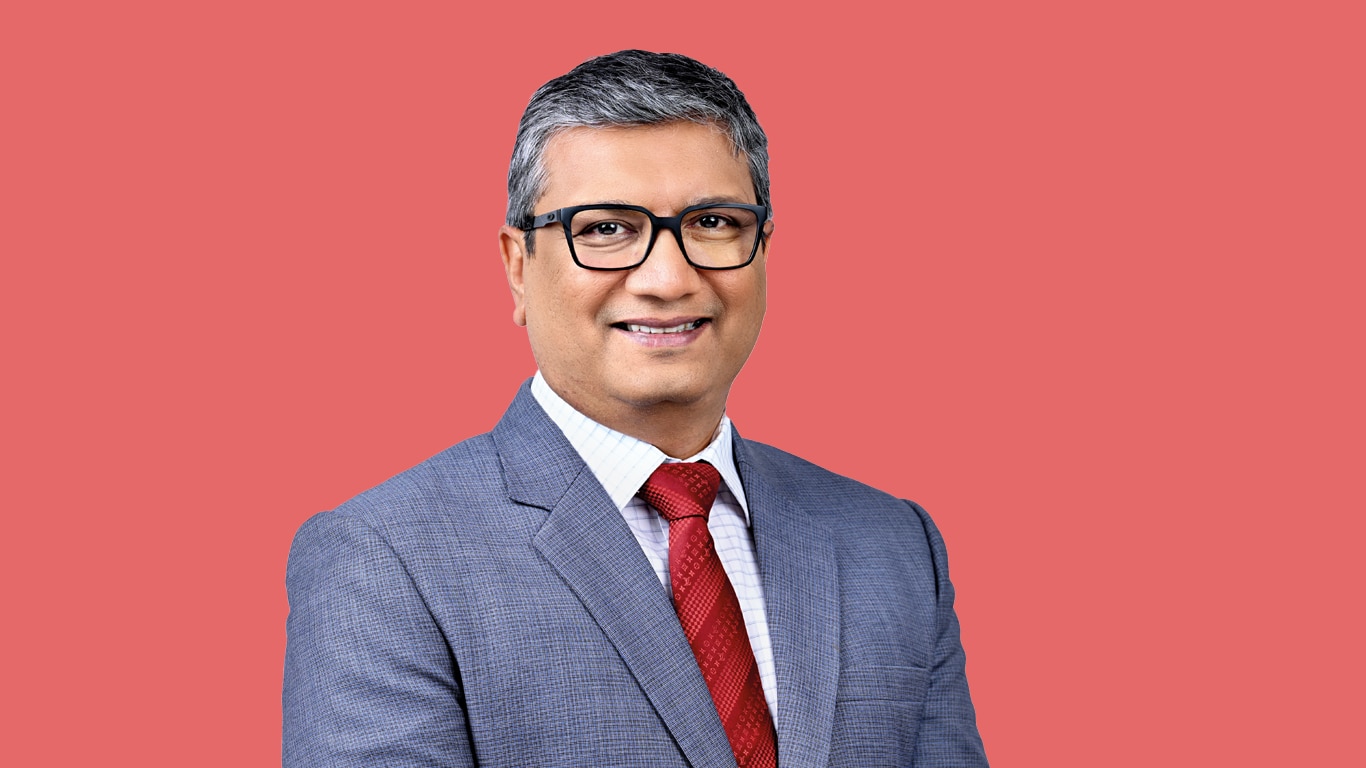
Personal inflation can be higher because inflation in services, travel, healthcare, domestic help, education, lifestyle upgrades and discretionary spending has historically been higher.
-MIHIR VORA,Chief Investment Officer, Trust Mutual Fund
“One number may not be applicable or comprehensible to all individuals in a diversified population of a large country like India,” he says. “A better way would be to look at a multiple of monthly recurring expenses.”
The same lifestyle, he points out, carries very different costs depending on where someone lives. “If we assume a portfolio return of around 8% pre-tax and long-term recurring expense inflation of 6%–7, the corpus required is about 400 times the monthly recurring expenses.” So, someone spending Rs 1 lakh per month would require approximately Rs 4 crore to retire.
However, Vora cautions that retirement planning over a 40-50-year horizon is filled with uncertainty. “Personal inflation can be higher because inflation in services, travel, healthcare, domestic help, education, lifestyle upgrades and discretionary spending has historically been higher.”
He also warns against assuming equity markets will always deliver strong returns. If inflation averages closer to 10%, the numbers change dramatically, he says. “400X monthly expenses may not be enough. The required corpus can move closer to 600X monthly expenses or more.”
Vora stresses that even these calculations only cover recurring expenses. “Large capital expenditures and family commitments need separate buffers. These include periodic car replacement, home repairs, replacement of computers & phones, children’s college education, weddings, major medical expenses, parental healthcare, and large family obligations. Predictable monthly support to parents can be included in monthly expenses, but unpredictable large costs should be separately planned.”
“The biggest mistake,” he says, “is planning early retirement as if life will remain a neat spreadsheet.”
Beyond The Spreadsheet
For Ankit Vengurlekar, a media executive, communication coach, and the Founder of Antar Wellness, stepping away from a conventional career was not a sudden decision but the culmination of years of reflection about what success meant to him. After years in the corporate and start-up ecosystem, aided by practices such as yoga and Vipassana meditation, he began questioning the assumption that professional growth had to come at the cost of time, wellbeing, and personal fulfilment.
“Freedom is difficult to experience when you’re worried about next month’s bills,” he says. “Before I stepped away from full-time work, I built a financial runway that could sustain my lifestyle for at least a year. That cushion didn’t just provide money; it removed fear.”
For Vengurlekar, career transitions are often framed incorrectly. “People often think career transitions are about courage. In reality, they’re about preparation. If you’re considering leaving a stable job, you need a corpus that can cover at least 12 to 24 months of expenses, including health emergencies and unexpected costs.”
Yet the decision was never about withdrawing from work. But the hardest part of leaving corporate life, he argues, is rarely financial. “It’s an emotional challenge. Earlier in life, I tried similar experiments and failed because I wasn’t emotionally ready.” He also believes early-retirement conversations often ignore the importance of community.
“If you’re planning a major life transition, don’t do it alone… You need a tribe, people who understand your choices, challenge you when needed and support you when things get difficult.”
Vengurlekar believes the debate around early retirement is asking the wrong question. “The goal isn’t to stop working at 40. The goal is to stop doing work that disconnects you from yourself.”
Retiring From Stress
If Vengrulkar represents professionals redesigning life after corporate careers, global wellness leader Saurabh Bothra questions whether retirement is even the right goal.
An IIT-BHU graduate who stepped away from a conventional engineering path to build Habuild—one of India’s largest wellness communities—Bothra believes the fascination with early retirement often misses the real issue.
For Bothra, the problem is not work itself, but the relationship people have with it.
“If your mind is peaceful, you can continue working, contributing and creating for a very long time. Mental peace doesn’t come from changing your job title. It comes from learning how to manage your mind.”
Yet, contentment should not be mistaken for complacency, he says.
“Being content doesn’t mean becoming lazy. It means being disciplined enough to know what truly matters and not constantly chasing more. Contentment is not the absence of ambition. It is freedom from unnecessary craving.”
Even as he advocates a simpler life, Bothra stresses that any decision to slow down must be supported by financial preparedness. “Freedom without financial stability can quickly become stress.”
For him, the future lies somewhere between burnout and complete retirement.
And that may be the real story behind India’s growing early-retirement movement. For many professionals, the aspiration is not to stop working altogether, but to build a life where work no longer comes at the cost of health, freedom and peace of mind.
#Retiring #Freedom #Fantasy #Financial #Strategy1784154836

Recent Post



Gallery






Featured Videos