To see why MCP matters to marketers, start with what’s happened to the buyer journey. Over the past couple of years, I’ve watched it fold in on itself: a category decision that used to take someone 10 steps – Google the category, click a result, compare providers, check reviews, search again, then finally narrow down – now takes two. They ask an AI assistant, “What’s the best option for me?” and click whatever it recommends.
If your brand isn’t in the three- or four-name shortlist the model returns, you haven’t just lost the deal. To be honest, you were never in the running.
That shift puts a new question in front of every marketing team I talk to: How do you make sure AI describes your brand accurately, and get it doing real work for you instead of handing back generic advice? Increasingly, the answer runs through the Model Context Protocol, or MCP. So, the question becomes what to connect and how to make it work and how MCP for marketers benefits multiple teams – from SEO to the CMO.
What Is MCP & Why Should Marketers Care?
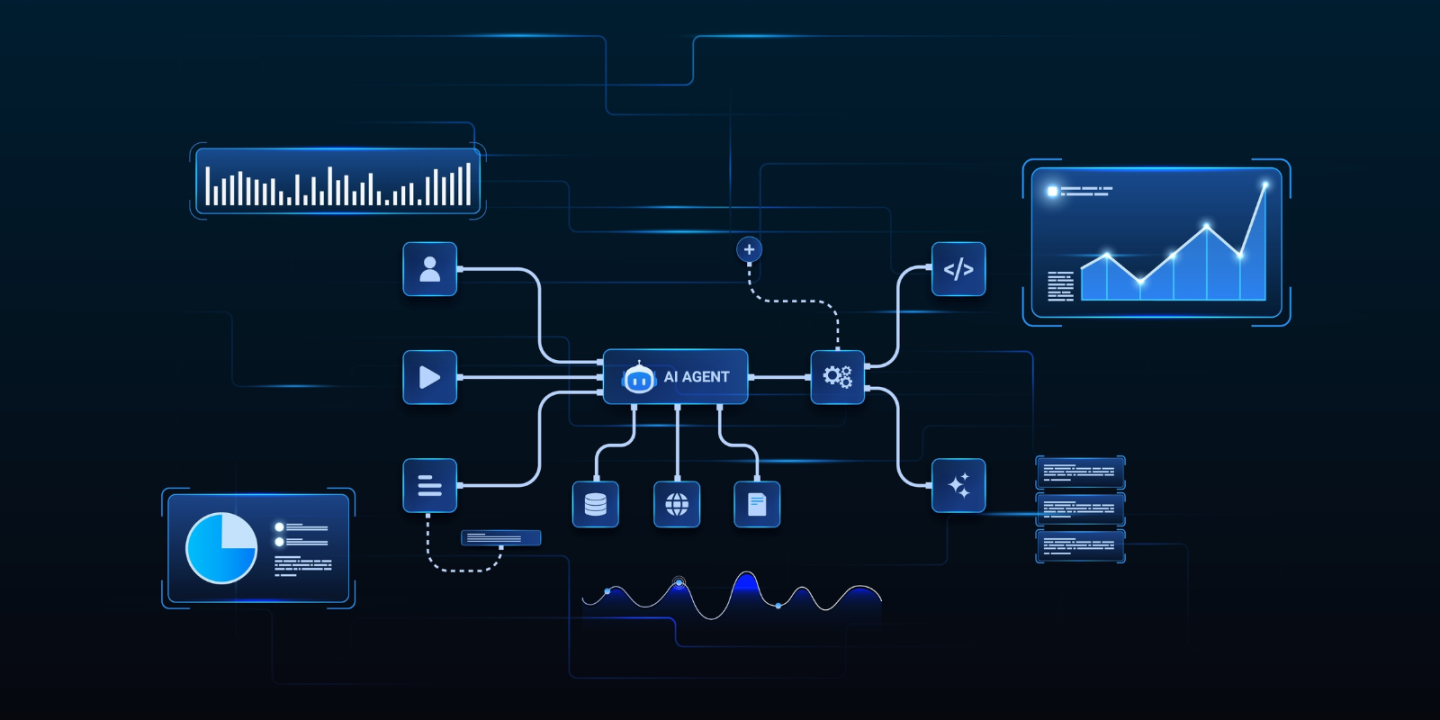
The Model Context Protocol is an open, standardized way to connect AI assistants (ChatGPT, Claude, Gemini, Copilot, and others) directly to your files, tools, databases, and platforms. The analogy people reach for, and I think it’s a fair one, is a USB-C port: one universal connector that lets any compatible AI agent plug into the systems you use, read their data, and act inside them.
How Does MCP Work?
It’s also important to be clear about what MCP is not, because the hype tends to blur it: It doesn’t make a model smarter, and it doesn’t conjure knowledge from thin air. It’s a bridge. On its own, a model reasons from its training data plus whatever you paste into the chat. With MCP, it can pull live information from your analytics platform, CMS, search data, or internal documents and act on it. Under the hood, it’s a simple, code-free handshake:
- The assistant connects to an MCP server.
- It calls that server to fetch data or run a task.
- It folds the result back into its answer.
How MCP For Marketers Works In Practice
In practice, it’s pretty simple:
- Connect once. Link the search and analytics platform your team relies on to your AI assistant through a single MCP connection: a one-time setup, no code.
- Prompt in plain language. Ask “Which categories are we losing AI visibility in?” and the assistant queries your live account in real time.
- Act on the answer. It returns a response built on your actual numbers, then takes the next step: drafting the brief, flagging blocked pages, ordering opportunities by demand and competitive gap.

You approve it once, then prompt as normal.
And that one connection works across ChatGPT, Claude, Copilot, and the rest. What comes back reflects where you actually stand, and it lands in the tools your team already uses. You can act on it the same day.
Connected AI Changes And MCP For Marketers
Why does this matter to marketers specifically? In my experience, it’s the difference between an answer that sounds good and one you can take to your boss. Ask an unconnected AI where to focus, and you’ll get plausible, generic suggestions. Connect it to your live AI-visibility and search-demand data, and it can tell you where you’re already showing up in AI answers, where a rival is being recommended instead of you, and which gaps I’d close first. The same data also shapes whether you appear when buyers ask AI directly.
What To Connect To MCP
The connections I’d reach for first are the systems where your proprietary data already lives:
- Search and AI-visibility platforms: organic position, share of voice, where AI is recommending you, and what AI is saying about your brand.
- Web analytics: traffic, conversions, and on-site behavior.
- Your CMS: to draft, audit, or update content in place.
- CRM and customer data: to ground messaging in real audience insight.

You don’t need to connect everything. I’d start with the handful of sources that turn a generic assistant into one that really understands your business.
How To Make MCP Work Across Your Marketing Team
If there’s one line I want you to take from this piece, it’s this: AI is only as good as the data that feeds it. A model with no access to your numbers gives you market-level platitudes that fit any company in your category. One connected to trusted, current data gives you brand-level priorities, a prioritized list of what to do and the why behind each. And the same connection serves every function on the team. One MCP setup, many jobs:
1 Connection, MCP For Marketers And Every Team’s Questions
- SEO managers can ask: “Which of our pages slipped in organic position last week, and what’s driving it?” or “Where are we losing AI citations to competitors right now?”
- Content teams can ask: “Draft a brief for the highest-priority topic where our citation share is under 15%,” or “Which five low-effort content moves would close our biggest visibility gaps this quarter?”
- PR and comms can ask: “Which channels and threads are shaping AI answers about our brand this month?” or “Are there branded prompts where we aren’t cited as a source?”
- Product and strategy can ask: “Which competitor pages are capturing citations on prompts where we already perform well in organic search?”

The picture changes higher up the org chart, too. In my experience, a CMO or VP rarely wants to run a query themselves; they want the headline. Given the right type and quality of data, a connected assistant rolls those live signals up into the kind of summary leadership will read, with no dashboard-digging or hand-built decks. Ask it for the state of play and it can:
- Surface market-level movement across competitors and categories.
- Separate a durable trend from a week of short-term noise.
- Flag where competitive ground is slipping before it reaches the revenue numbers.
Example: AI Recommendations With And Without MCP For Marketers
Here is an example I see people run into a lot. Say a content manager asks which three pages to prioritize for a service in their city. Without data, the assistant suggests a service page, an explainer, and a pricing comparison. Sensible enough, but generic, and blind to whether you already show up in AI or whether a rival owns those answers. Point it at your live search data, and it instead names the three highest-demand, highest-intent pages, attaches each one’s search volume, and shows which rival is winning the AI answer. That’s the moment “sounds plausible” turns into a real move.

MCP For Marketers: Why Your Data Is The Real Differentiator
For a lot of people, I think, it’s tempting to assume the magic lives in the model. I’d push back on that. Every major AI assistant can already draft a brief or suggest content ideas. What none of them can do out of the box is tell you anything true about your business: your brand, your competitors, or your content gaps. Ask one a strategy question, and it gives you the same answer it would give your rivals. The differentiator was never just the model. It’s the data feeding it.
Here are a few things I’d look for if you’ve got the right data feeding into the model:
- A page nobody can see. An assistant might tell a retailer to “improve product descriptions” while your live data shows several high-value category pages are blocked from AI crawlers entirely. No optimization rescues a page AI can’t read, and only your crawl data surfaces the problem.
- A share-of-voice gap. “We’re losing visibility” is a feeling. “Our AI share of voice for this category is 12% while a rival sits at 43%, and we have a 30-day gap on a key prompt” is a brief. The number turns a vague worry into a clear priority.
- A win hiding in plain sight. Trusted data can reveal pages earning AI citations even where you have no organic visibility at all: content-led wins you’d never spot in a traditional organic report, and a repeatable play once you do.
When I say, “good data,” I don’t mean it as a throwaway line. The quality of what you connect is the whole advantage. When looking at MCP for marketers, the sources I’d trust to ground an AI tend to share four traits:
- High-fidelity and trustworthy: Quality data you’d stake a decision on, not a rough estimate or a thin sample.
- Drawn from how AI actually answers: AI Overview and answer-engine citations, share of voice, and sentiment, sitting alongside traditional organic search, not instead of it.
- Real-time and historical: Where you stand right now, plus the history to see the trend and where it’s heading.
- Granular: Page- and query-level visibility and content data, plus the search-volume figures that show which opportunities are worth chasing.
Feed an AI stale, partial, or low-fidelity data, and it doesn’t get smarter; it gets confidently wrong. The platforms that earn a lasting seat are the ones whose data marketers trust enough to act on.
Getting Started With MCP For Marketers: Takeaways And Cautions
Of all the AI developments to land in marketing lately, MCP is one of the few I’d call genuinely practical, precisely because it’s unglamorous. It doesn’t promise a smarter model, just a better-informed one. A few suggestions if you’re getting started:
- Audit your data first. MCP amplifies whatever you connect it to. If your analytics are messy or your reports are stale, a connected AI will confidently surface bad conclusions. Clean inputs come first.
- Start with one high-value connection. Pick the source your team trusts and uses daily, usually search or analytics, before expanding.
- Write prompts like briefs. Output quality depends on the question. Specify the brand, the market, the metric, and the decision you’re trying to make.
- Build a shared prompt library. Once a prompt works, save it so the whole team benefits, which is where the “one connection, many functions” promise pays off.
Where I’d Be Careful With MCP
- Live data drifts. A source that’s right today can quietly fall out of date, so make sure whatever feeds the AI refreshes on a schedule you trust.
- Permissions and security. An MCP connection gives an AI assistant real access to real systems. Scope permissions tightly, prefer read-only access, and keep sensitive sources behind proper controls.
- Over-trust. A data-backed answer is more trustworthy, not infallible. Treat outputs as a sharp first draft to confirm, not a verdict to ship unread.
- Decide who can connect what, and document it; loose governance becomes a real operating-model risk as usage spreads.
How To Move Forward With MCP For Marketers
The buyer journey won’t wait for any of us. Buyers are already asking AI to shortlist their options, with or without your input. The marketers I see pulling ahead aren’t the ones with the cleverest prompts; they’re the ones who connected their AI to data worth trusting and moved on it fastest.
MCP is just the bridge that makes that possible. The model brings the reasoning, but the payoff only shows up if you bring the right data: the kind that’s accurate, precise, current, and trusted enough to make a decision on. Get that part right and a generic assistant turns into the sharpest analyst on your team.
More Resources:
Featured Image: Fardived/Shutterstock
Digital Strategy,Generative AI#MCP #Marketers #Connect #amp #Data #Wins1784549339