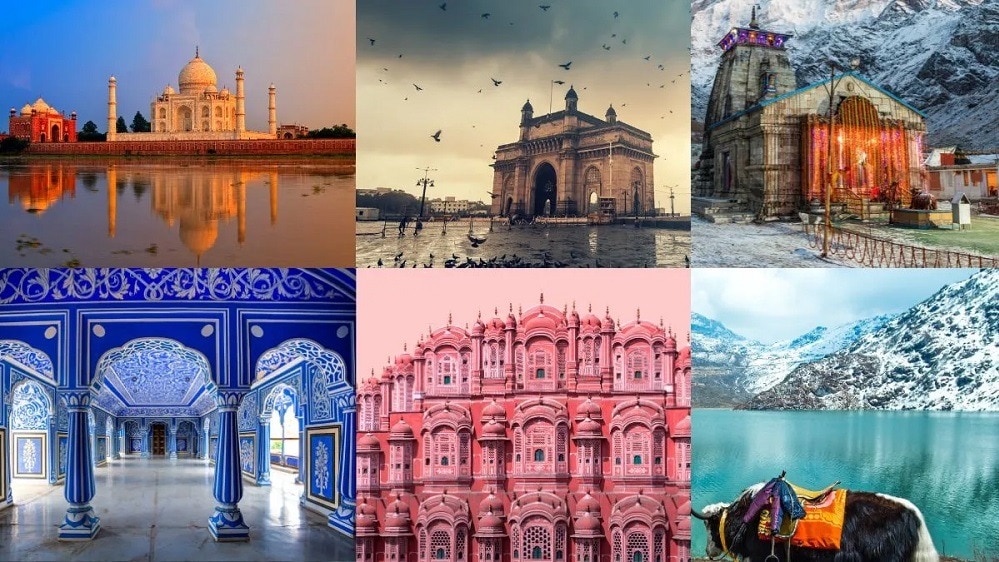
India’s tourism and hospitality sector is emerging as a powerful driver of economic growth, generating employment, fostering entrepreneurship and enhancing India’s global standing. While the sector’s achievements at 7% contribution to GDP and 9% share of employment are significant, its true potential lies in what is built over the next decade.
As India aspires to become one of the world’s leading tourism economies, the focus must shift from attracting visitors alone to transforming into a structural contributor of broad-based growth.
The Tourism Growth Charter of this year’s FAITH Conclave, outlines a time-bound action agenda built around six strategic priorities, each designed to address key constraints and unlock the sector’s full economic potential.
Sector Attractiveness
As per EY’s tourism research report, the borrowing rate for the sector is in the range of 12-15% compared to 8-10% for other sectors. This leads to limited access to credit for small operators and rural tourism entrepreneurs. Granting tourism infrastructure status at the centre and industry status across all states would fundamentally change how capital views the sector. Financing costs would fall, access to institutional capital would widen and hospitality and travel businesses would be able to raise funds on terms comparable to other capital-intensive sectors.
Destination Development
Hospitality development should be integrated into broader economic planning, ensuring that investments in airports, highways and urban infrastructure are complemented by destination readiness, accommodation capacity and visitor experiences. With this intent, in her Budget speech last year, Finance Minister Nirmala Sitharaman had announced that top 50 tourist sites in the country will be developed in partnership with states through a Mission Mode. The Charter calls for fast-tracking this destination development with defined implementation timelines.
Brand Bharat
Despite 3 million places of worship, 43 UNESCO sites and over 7,500 kilometers of coastline, India gets less than 10 million foreign tourist arrivals while a city like Paris alone gets 25 million. Considering the size and the opportunity and excluding the Indian diaspora arrivals, India must ramp up international marketing and promotions to showcase the natural, cultural and spiritual assets of the country.
A dedicated global promotion campaign built around a unified Brand Bharat identity and supported by sustained investment is critical to elevating India’s position on the global tourism map. Consistent, coordinated branding over the long term has will significantly increase international visitor arrivals and strengthen India’s attractiveness as a leading tourism choice.
Inbound Tourism
Liberalising the visa regime is the fourth priority, and arguably the most immediate. Expanded e-visa access and simplified entry procedures remove friction at the exact moment a prospective visitor is deciding whether India is the preferred choice. Branding draws attention. Visa policy converts that attention into arrivals.
Tourism Infrastructure
The physical layer beneath all of this is the investment in last-mile connectivity – convention centres, wayside amenities, cruise terminals and digital infrastructure. None of these are visible in the way a monument or a marketing campaign is visible, yet they determine whether a place can absorb growth without compromising the experience. A visitor’s willingness to extend their stay, or to return, is shaped far more by these details than by any single attraction.
Ease of Doing Business
Rationalising taxation to align with global benchmarks, alongside a single-window clearance mechanism, would remove the friction that currently discourages private sector participation at scale. Capital follows certainty. A predictable, simplified approval and tax structure is what allows investment to move from intent to execution.
The finance ministry, state governments, the tourism ministry and industry each have a clear, specific role in this Charter, and the conversations already underway suggest a shared urgency to move on all six fronts together. That is what makes Viksit Bharat 2047 a realistic target for tourism. Ten percent of GDP and 25 million new jobs will come from exactly this kind of coordinated execution: infrastructure and industry status granted, fifty destinations built to timeline, Brand Bharat funded for the long haul, visas that welcome, infrastructure that keeps pace with demand and fast-tracked and simplified approvals.
The FAITH Conclave 2026 Tourism Charter – Incredible India: Invaluable Economics is a clear statement of intent and calls for alignment between government and industry to unlock the full potential of tourism. With its strong multiplier effect, tourism drives employment, investment and regional development while showcasing India’s heritage and diversity to the world, making it a powerful engine of economic growth and national prosperity.
(Puneet Chhatwal is the Chairman of Federation of Associations in Indian Tourism and Hospitality)
#Incredible #India #invaluable #economics1784573383

Recent Post


Gallery






Featured Videos