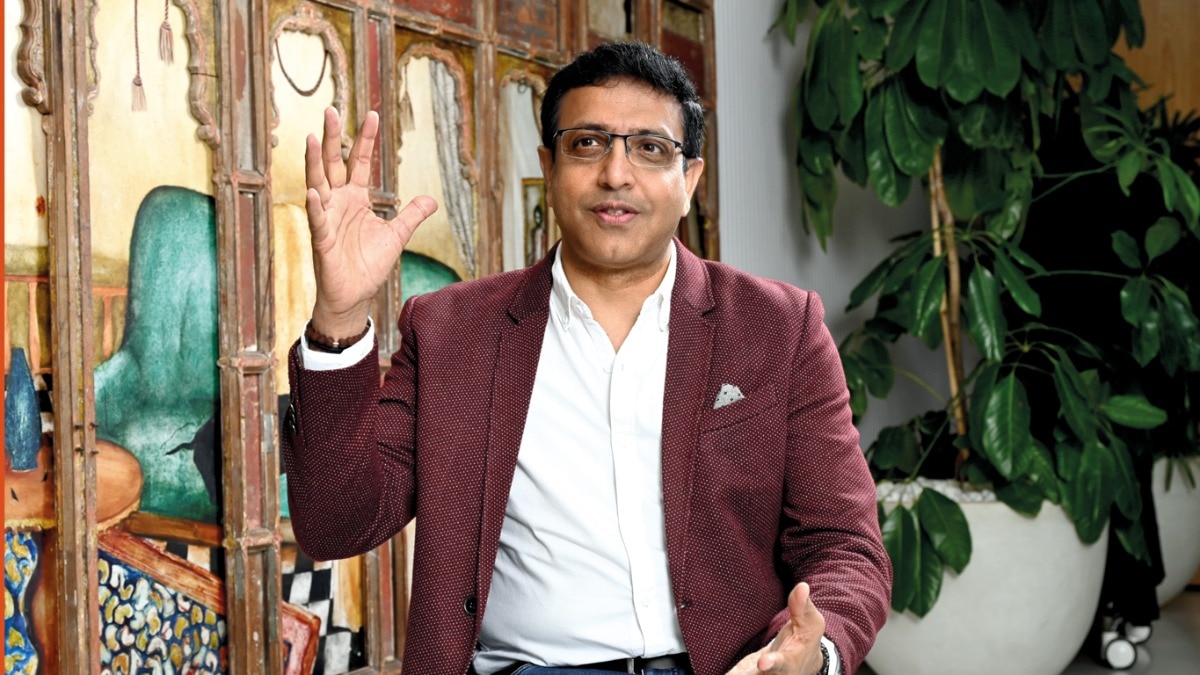
As agritech funding revives, the sector is entering a new phase of evolution. In a conversation with Business Today, Sunil Kataria, CEO & MD of Godrej Agrovet, talks about why the next decade will be defined by integration rather than disruption and the growing role of AI and climate-resilient technologies. Edited excerpts:
From your vantage point, has technology adoption among Indian farmers reached a meaningful inflection point?
Indian agriculture is in the midst of a significant digital transformation.
Smartphone penetration, affordable mobile data, digital public infrastructure and increasing awareness among farmers are accelerating technology adoption. Government initiatives such as AgriStack have already enabled the creation of over 84 million farmer IDs, while Digital Crop Survey has expanded to cover more than 285 million plots, creating an important foundation for data-driven agriculture.
At the same time, adoption is becoming more visible on the ground. Industry estimates suggest that 60-70% of smallholders already receive weather and pest-related information through digital channels, while AI-driven advisories are beginning to gain traction in several farming systems.
At Godrej Agrovet, we are witnessing this shift firsthand through our engagement with farmers across crop care and oil palm businesses. The next decade will be less about introducing new technologies and more about embedding them into daily farming decisions.
Q. The first decade of agritech was about start-up creation. Will the next decade be about integration with larger agricultural and food companies?
I believe the next decade will be defined by integration and collaboration rather than standalone disruption.
The first phase of Agritech focused on proving that technology could address longstanding inefficiencies in agriculture. Entrepreneurs developed solutions across advisory services, marketplaces, logistics, financing, traceability, and farm management. That innovation was essential because it demonstrated what technology could do for agriculture.
The next phase is about embedding those solutions within the larger agricultural and food ecosystems. Farmers do not operate in silos. Their success depends on multiple interconnected factors—from quality inputs and scientific advisory services to financing, market access, processing, and consumer demand.
Q. Despite advances in digital agriculture, farmers continue to face challenges around productivity, market access, climate risks, and income volatility. Which of these remain the biggest unresolved problems, and where can technology make the greatest difference?
All four challenges remain important, but climate risk is increasingly becoming the underlying factor because it directly influences productivity, pest incidence, water availability, input efficiency, and ultimately farmer incomes.
For farmers, particularly smallholders, managing this uncertainty has become one of the most pressing concerns.
Technology can play a significant role in helping farmers build resilience against climate variability and weather-related risks. The biggest opportunity lies in helping farmers move from reactive to predictive decision-making.
At Godrej Agrovet, our experience has shown that the most effective solutions are those that combine technology with last-mile agronomy and farmer engagement.
However, technology alone is not enough. The real challenge is ensuring that insights are accessible, affordable, and actionable for farmers. Solutions must be designed around farmers’ realities, not around technological possibilities.
Q. Will the biggest opportunities in Indian agriculture come from improving productivity at the farm level, strengthening post-harvest infrastructure, building food brands, or creating more efficient value chains?
The biggest opportunity lies in connecting all four. Strengthening post-harvest infrastructure and improving value-chain efficiency can therefore unlock substantial gains. Changing consumer preferences are creating new opportunities in food brands, traceable supply chains, value-added products, and nutrition-focused offerings.
@PalakAgarwal64
agritech in India, Indian agriculture technology, AI in agriculture, future of farming in India, digital agriculture, AgriStack, farmer technology adoption, climate resilient agriculture, smart farming solutions, precision agriculture, AI-driven farming, agricultural innovation, agritech funding, agritech startups India, Godrej Agrovet, Sunil Kataria interview,#decade #embedding #tech #daily #farming #decisions #Godrej #Agrovet #CEO #Sunil #Kataria1784830090

agricultural innovation
AgriStack
agritech funding
agritech in India
agritech startups India
Agrovet
AI in agriculture
AI-driven farming
CEO
climate resilient agriculture
Daily
decade
decisions
digital agriculture
Embedding
farmer technology adoption
farming
future of farming in India
Godrej
Godrej Agrovet
Indian agriculture technology
Kataria
precision agriculture
smart farming solutions
Sunil
Sunil Kataria interview
tech