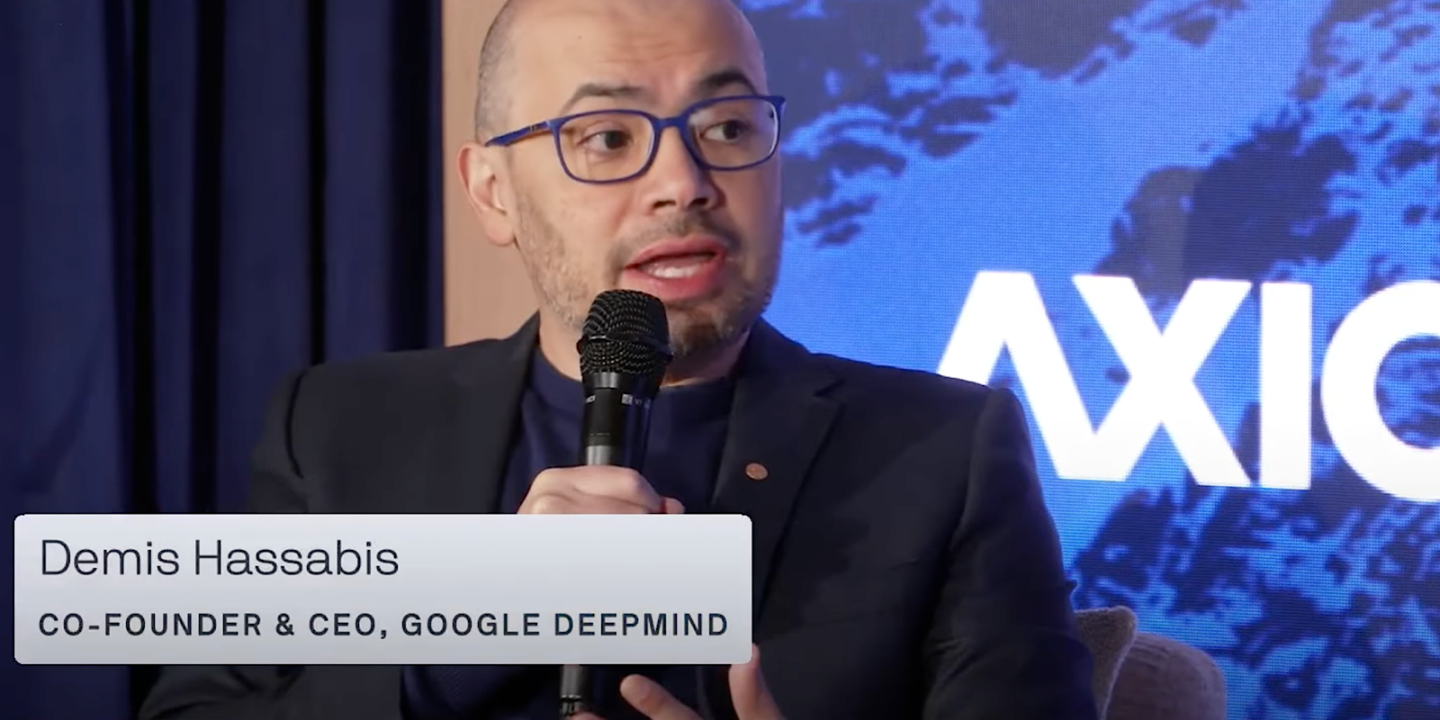
Google DeepMind CEO Demis Hassabis said Google doesn’t have any current plans to introduce advertising into its Gemini AI assistant, citing unresolved questions about user trust.
Speaking at the World Economic Forum in Davos, Hassabis said AI assistants represent a different product than search. He believes Gemini should be built for users first.
“In the realm of assistants, if you think of the chatbot as an assistant that’s meant to be helpful and ideally in my mind, as they become more powerful, the kind of technology that works for you as the individual,” Hassabis said in an interview with Axios. “That’s what I’d like to see with these systems.”
He said no one in the industry has figured out how advertising fits into that model.
“There is a question about how does ads fit into that model, where you want to have trust in your assistant,” Hassabis said. “I think no one’s really got a full answer to that yet.”
When asked directly about Google’s plans, Hassabis said: “We don’t have any current plans to do it ourselves.”
What Hassabis Said About OpenAI
The comments came days after OpenAI said it plans to begin testing ads in ChatGPT in the coming weeks for logged-in adults in the U.S. on free and Go tiers.
Hassabis said he was “a little bit surprised they’ve moved so early into that.”
He acknowledged advertising has funded much of the consumer internet and can be useful to users when done well. But he warned that poor execution in AI assistants could damage user relationships.
“I think it can be done right, but it can also be done in a way that’s not good,” Hassabis said. “In the end, what we want to do is be the most useful we can be to our users.”
Search Is Different
Hassabis drew a line between AI assistants and search when discussing advertising.
When asked whether his comments applied to Google Search, where the company already shows ads in AI Overviews, he said the two products work differently.
“But there it’s completely different use case because you’ve already just like how it’s always worked with search, you’ve already, you know, we know what your intent is basically and so we can be helpful there,” Hassabis said. “That’s a very different construct.”
Google began rolling out ads in AI Overviews in October 2024 and has continued expanding them since. The company claims AI Overviews generate ad revenue equal to traditional search results.
Why This Matters
This is the second time in two months that a Google executive has said Gemini ads aren’t currently planned.
In December, Google Ads VP Dan Taylor disputed an Adweek report claiming the company had told advertisers to expect Gemini ads in 2026. Taylor called that report “inaccurate” and said Google has “no current plans” to monetize the Gemini app.
Hassabis’s comments reinforce that position but go further by explaining the reasoning. His “technology that works for you” framing suggests Google sees a tension between advertising and the assistant relationship it wants Gemini to build.
Looking Ahead
Google is comfortable expanding ads where user intent is explicit, like search queries triggering AI Overviews. The company is holding back where intent is less defined and the relationship is more personal.
How long Google maintains its current position depends in part on how users respond to advertising in rival assistants.
Featured Image: Screenshot from: youtube.com/@axios, January 2026.
Generative AI,News#Google #Gemini #Ads #Trust #Assistant #sejournal #MattGSouthern1769444651