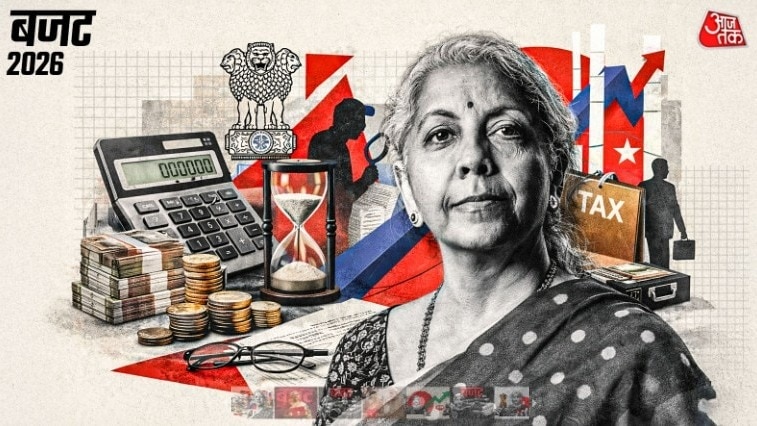
The Union Budget 2026 may not offer big-ticket tax breaks like last year, but it introduces a series of targeted measures that will directly affect middle-class taxpayers. While some provisions offer continuity and procedural relief, others aim to simplify compliance and reduce friction rather than deliver outright tax cuts.
From retaining effective tax relief for middle-income earners to extending timelines for revised returns, rationalising Tax Collected at Source (TCS), and granting relief on motor accident compensation, the Budget carries several changes that merit close attention. According to CA Dr Suresh Surana, Budget 2026 impacts the middle class primarily through continuity in tax relief, compliance relaxations and targeted exemptions.
Here are five key Budget 2026 announcements every middle-class taxpayer should understand.
1. Continuity of effective tax relief
The Finance Bill, 2026 does not propose any change in the personal income tax relief available to middle-income taxpayers. As a result, the existing slab structure under the concessional or new tax regime, along with the rebate mechanism, continues to ensure that individuals with total taxable income of up to ₹12 lakh are not subject to income tax.
This means salaried taxpayers and pensioners falling within this income threshold remain outside the tax net, preserving disposable income without any additional compliance burden. Importantly, tax rates under the old tax regime have also been left unchanged, offering stability to taxpayers who continue to rely on deductions and exemptions.
2. Extended time limit for ITRs
Budget 2026 provides additional flexibility to taxpayers by extending the timeline for filing revised returns. Under Section 263(5) of the Income-tax Act, 2025 (corresponding to Section 139(5) of the Income-tax Act, 1961), a taxpayer who discovers any omission or wrong statement in the original or belated return can file a revised return.
Earlier, such revised returns had to be filed within nine months from the end of the relevant tax year or before completion of assessment, whichever was earlier. The Finance Bill, 2026 proposes to extend this time limit to 12 months from the end of the relevant tax year.
However, a fee will apply for revised returns filed beyond nine months. Under Section 428(b), a fee of ₹1,000 will be levied where total income does not exceed ₹5 lakh, and ₹5,000 where total income exceeds ₹5 lakh. These provisions will apply from April 1, 2026, for tax year 2026–27 onwards.
3. TCS rationalisation on overseas tour packages
The government has rationalised TCS on overseas tour programme packages. Earlier, tax was collected at source at 5% on amounts up to Rs 10 lakh and 20% on amounts exceeding Rs 10 lakh. Under Budget 2026, this structure has been simplified to a uniform TCS rate of 2%, with the removal of the Rs 10 lakh threshold. This means TCS will be collected at a single rate of 2% irrespective of the package value, reducing upfront cash outflow and simplifying compliance for travellers.
> Overseas tour programme packages: At present, TCS is collected at 5% on overseas tour packages costing up to ₹10 lakh, and at a steep 20% on the amount exceeding Rs 10 lakh. Under the new rules, this two-tier structure has been replaced with a single TCS rate of 2%, with the Rs 10 lakh threshold removed entirely. This means any overseas tour package, irrespective of its cost, will now attract TCS at a uniform rate of 2%, significantly reducing the upfront tax outgo for travellers.
Liberalised Remittance Scheme (LRS) – Education and Medical Purposes: Currently, remittances made under LRS for education loans (excluding those eligible under Section 80E) or for medical treatment attract TCS at 5% once the remittance exceeds Rs 10 lakh in a financial year. Budget 2026 proposes to reduce this rate to 2%, while retaining the Rs 10 lakh threshold. This change lowers the immediate cash burden on families remitting funds abroad for essential purposes.
> LRS – other purposes: For remittances under LRS made for purposes other than education or medical treatment—such as investments, gifts or overseas spending — the TCS rate remains unchanged at 20%, applicable on amounts exceeding Rs 10 lakh. The government has chosen to retain the higher rate in this category to continue monitoring large foreign outflows.
Overall, since TCS is adjustable against final income tax liability, the lower rates are expected to reduce excess tax collections and refund delays, while maintaining oversight on overseas remittances.
4. Lower TCS under LRS
TCS under the Liberalised Remittance Scheme has also been eased. For remittances towards education loans (other than those covered under Section 80E) and medical treatment, the TCS rate has been reduced from 5% to 2%.
For remittances made for purposes other than education or medical treatment, the TCS rate remains unchanged at 20%. Since TCS is adjustable against final tax liability, the lower rate will reduce excess collections and refund claims, improving taxpayer convenience.
5. Tax exemption on interest from motor accident compensation
Budget 2026 provides significant relief to accident victims and their families. Interest received on compensation awarded under the Motor Vehicles Act, 1988 by the Motor Accident Claims Tribunal will now be fully exempt from income tax in the hands of the individual or their legal heir.
Further, the government has proposed that no TDS will be deducted on such interest income, irrespective of the amount, removing the earlier Rs 50,000 threshold. These changes will also take effect from April 1, 2026.
TCS revision Budget 2026, tax tweaks Union Budget 2026, Budget 2026 impact on salaried taxpayers, middle class tax changes 2026, TCS changes for overseas travel, overseas tour package TCS cut, LRS TCS rules Budget 2026, TCS on foreign remittances India, education loan remittance TCS reduced, medical treatment remittance TCS, revised income tax return deadline 2026, revised return 12 months rule, income tax relief up to 12 lakh Budget 2026, new tax regime slab Budget 2026, old tax regime unchanged 2026, salaried taxpayers tax relief India#TCS #revision #tax #tweaks #Union #Budget #salaried #taxpayers1770156198

Budget
Budget 2026 impact on salaried taxpayers
education loan remittance TCS reduced
income tax relief up to 12 lakh Budget 2026
LRS TCS rules Budget 2026
medical treatment remittance TCS
middle class tax changes 2026
new tax regime slab Budget 2026
old tax regime unchanged 2026
overseas tour package TCS cut
revised income tax return deadline 2026
revised return 12 months rule
revision
salaried
salaried taxpayers tax relief India
Tax
tax tweaks Union Budget 2026
taxpayers
TCS
TCS changes for overseas travel
TCS on foreign remittances India
TCS revision Budget 2026
tweaks
Union