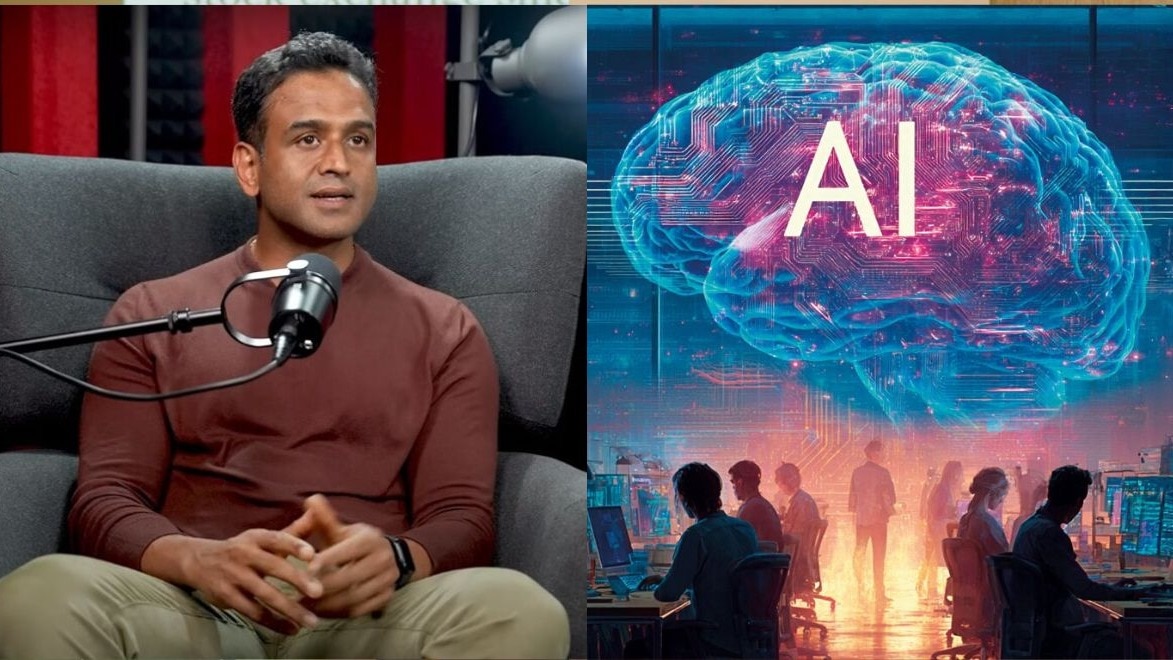
As global trade fractures and export controls tighten, Zerodha founder and CEO Nithin Kamath on Monday said India can no longer rely on software services alone.
The world, he argued, is shifting toward hard infrastructure, strategic supply chains, and deep technology – and India must prepare. “Tech seems to be getting effectively nationalised. Starting from around 2020, we’ve seen an increase in export controls on things like chips, critical minerals, restrictions on advanced manufacturing equipment and various other trade restrictions. Supply chains have become a security issue for countries.”
The implication, he said, is clear. “We’re no longer in a world where India can be okay with just exporting IT services. If we don’t build domestic deep tech capabilities, we’ll be locked out when it matters most. Self-sufficiency has become necessary insurance.”
From bits to atoms
Kamath said India’s startup ecosystem has matured, but the next phase must look different. “India’s startup ecosystem has come a long way. We have genuine local talent that can build a lot of what we currently import. They just need the right support. The recent government push for deep tech is a step in the right direction.”
He added that artificial intelligence is reshaping business models in ways that could hurt traditional software-heavy ventures. “If AI can pretty much produce all of the software, asset-light models will get hit. The next decade belongs to atoms, not just bits. You’re already seeing this with money flowing into data centers, defense systems, batteries, semiconductors, advanced manufacturing.”
Venture capital flows reflect this transition, he noted. “You can also see this in VC investment flows. In the last decade most of VC investments went into eCommerce, lending, and payments. Those segments have now matured and the easy opportunities are gone. For deep tech, it’s still day one.”
Yet Kamath sees a structural gap. He says India has the talent but “what we don’t have is the ecosystem around them.”
The Zerodha CEO acknowledged that comparisons with China are common, but argued that there are practical lessons. “Comparisons with China are cliched, but they didn’t become an industrial superpower by accident. There are lessons we can learn.”
He pointed to the intensity of China’s domestic competition. He said China’s internal market is brutally competitive as hundreds of startups compete in a given sector and this forces them to innovate and be efficient. “Indian states used to do this for software parks. Why not for deep tech? Tamil Nadu, Gujarat, and Maharashtra are success stories but we need more states in the race.”
Industrial clustering, he said, has been key. According to him, companies choose to manufacture in China because everything they need to manufacture is within a few miles. “This industrial clustering creates genuine competitive advantages. You can create a design in the morning and have a prototype by evening. This density took decades to build, but we can do it if we invest with a long-term mindset.”
“China also built real bridges between universities and companies,” Kamath flagged. “In India, most ideas die in the minds of students. Brilliant PhDs can’t find the capital or institutional support to build a prototype, let alone turn them into businesses. We need government procurement guarantees. Patient capital that understands hardware burns cash for years before revenue. Pathways from idea to commercialization.”
Beyond funding
Kamath said the government’s support for deep tech is welcome, but must go beyond headline allocations. “We need R&D tax credits, subsidies, first-purchase guarantees, streamlined approvals, and other incentives. All of this has to be sustained across decades, not election cycles.”
At stake, he argued, is not just growth but strategic resilience. Without domestic deep tech capability, he said, India will remain dependent on others for critical infrastructure. “That dependence is vulnerability.”
“If we build the clusters, invest in education, fund the R&D, bridge academia to industry, and let states compete to create ecosystems, we get more than self-sufficiency. We become a deep tech exporter.”
Nithin Kamath deep tech statement, Zerodha CEO on export controls, India deep tech ecosystem 2026, China industrial clusters comparison, export controls on chips and critical minerals since 2020, India self-sufficiency in semiconductors and advanced manufacturing, government support for deep tech R&D tax credits, venture capital shift from ecommerce to hardware, AI impact on software business models, India building domestic deep tech capabilities, supply chain security and nationalization of technology, what India needs to compete with China in deep tech, how export controls are reshaping global technology trade
#039India #longer #rely #services039 #Nithin #Kamath #calls #Chinastyle #deep #tech #push1770655270

039India
AI impact on software business models
Calls
China industrial clusters comparison
Chinastyle
Deep
export controls on chips and critical minerals since 2020
government support for deep tech R&D tax credits
how export controls are reshaping global technology trade
India building domestic deep tech capabilities
India deep tech ecosystem 2026
India self-sufficiency in semiconductors and advanced manufacturing
Kamath
longer
Nithin
Nithin Kamath deep tech statement
Push
rely
services039
supply chain security and nationalization of technology
tech
venture capital shift from ecommerce to hardware
what India needs to compete with China in deep tech
Zerodha CEO on export controls