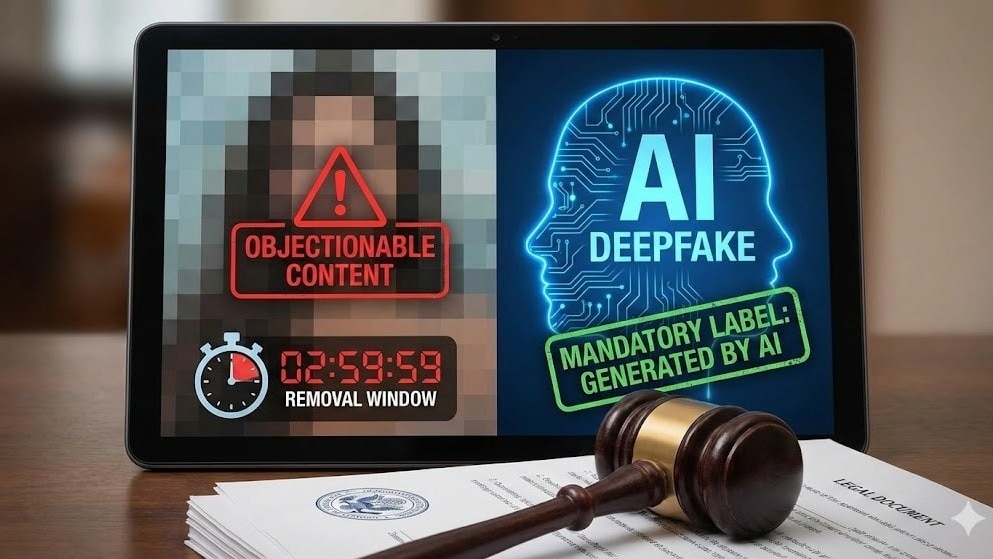
The government has tightened India’s internet rules to bring AI-generated and deepfake content under stricter compliance, mandating clear labelling, permanent metadata and faster takedown timelines for online platforms.
The Ministry of Electronics and Information Technology (MeitY) on February 10 notified the Information Technology (Intermediary Guidelines and Digital Media Ethics Code) Amendment Rules, 2026, expanding the scope of the law to explicitly cover what it calls “synthetically generated information”.
The amended rules will come into force on February 20, 2026, according to the Gazette notification.
What counts as synthetically generated content
The notification defines synthetically generated information as audio, visual or audio-visual content that is “artificially or algorithmically created, generated, modified or altered using a computer resource” in a way that makes it appear authentic.
“‘Synthetically generated information’ means audio, visual or audio-visual information which is artificially or algorithmically created, generated, modified or altered using a computer resource, in a manner that such information appears to be real, authentic or true,” the rules state.
However, the government clarified that routine editing, formatting, technical correction or the good-faith creation of documents, PDFs, research outputs and educational material will not be treated as synthetic content.
Mandatory labels, metadata and disclosures
Under the amended framework, intermediaries that enable the creation or dissemination of AI-generated content will be required to prominently label such content.
“Every such information… shall be prominently labelled in a manner that ensures prominent visibility… that can be used to immediately identify that such information is synthetically generated information,” the notification said.
Platforms must also embed permanent metadata or technical provenance mechanisms, including a unique identifier, to trace the computer resource used to generate or modify the content.
Crucially, intermediaries will not be allowed to enable the removal or suppression of these labels or metadata.
Big obligations for social media platforms
Social media intermediaries will now have to ask users to declare whether content is AI-generated before publishing it and deploy automated tools to verify those declarations.
“Where such declaration or technical verification confirms that the information is synthetically generated, ensure that the same is clearly and prominently displayed with an appropriate label,” the rules say.
If a platform is found to have knowingly allowed such content in violation of the rules, it will be deemed to have failed its due diligence obligations, potentially risking its legal safe-harbour protection.
Faster takedowns, stricter timelines
The amendments also shorten takedown timelines. Intermediaries must now act on certain lawful orders within three hours, instead of the earlier 36 hours.
User grievance redressal timelines have also been tightened, with response periods reduced from 15 days to seven days, and certain actions required within two hours.
Focus on deepfakes and illegal content
The rules explicitly prohibit AI-generated content that includes child sexual abuse material, non-consensual intimate imagery, false documents, or misleading depictions of real individuals or events.
Such violations can lead to immediate removal, suspension or termination of user accounts, disclosure of user identity to victims, and mandatory reporting to law enforcement under applicable criminal laws.
MeitY AI rules, AI content labelling, AI-generated content rules, synthetic content regulation India, deepfake rules India, IT Rules 2026, Intermediary Guidelines Amendment 2026, India, social media compliance, digital media regulations, safe harbour IT Act, content takedowns, ai, artificial intelligence#Govt #tightens #rules #AIgenerated #content #mandates #labels #faster #takedowns1770729372

AI
AI content labelling
AI-generated content rules
AIGenerated
Artificial intelligence
Content
content takedowns
deepfake rules India
digital media regulations
Faster
Govt
India
Intermediary Guidelines Amendment 2026
IT Rules 2026
labels
mandates
MeitY AI rules
Rules
safe harbour IT Act
social media compliance
synthetic content regulation India
takedowns
tightens