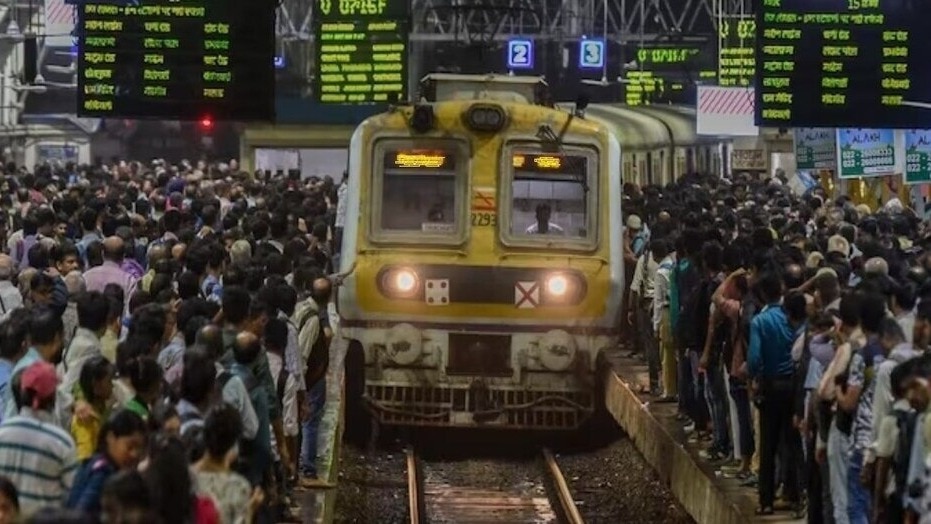
The Union Cabinet, chaired by Narendra Modi, has approved the launch of the Urban Challenge Fund (UCF) — a major financing reform aimed at reshaping how Indian cities build infrastructure. With ₹1 lakh crore in central assistance designed to unlock ₹4 lakh crore in total urban investment over five years, the initiative marks a shift away from traditional grant-based funding toward a market-driven, reform-linked model of urban development.
India’s urban population is expanding rapidly, placing pressure on housing, mobility, water systems, and civic services. Until now, many city projects relied heavily on government grants, often leading to delays, weak financial discipline, and limited private-sector participation.
The Urban Challenge Fund seeks to change that by:
- Linking funding to reforms and measurable outcomes
- Encouraging cities to raise money from markets
- Positioning urban local bodies as financially credible borrowers
- Driving private investment into city infrastructure
The government sees cities as the next engines of economic growth, similar to how industrial corridors powered earlier development phases.
How the fund will work
1. Shared Financing Model
- The Centre will provide 25% of project costs.
- Cities must mobilise at least 50% from market sources such as:
- Municipal bonds
- Bank loans
- Public-Private Partnerships (PPPs)
- Remaining funds can come from states, urban local bodies (ULBs), or other channels.
Why this matters: Cities will need stronger financial planning and governance to attract investors.
2. Competitive “Challenge Mode” Selection
Projects won’t receive automatic funding. Instead, cities must compete by submitting proposals demonstrating:
- Transformative economic impact
- Sustainability and climate resilience
- Reform implementation
- Long-term financial viability
Funding will be released in stages, tied to milestones and performance outcomes.
3. Reform-Linked Funding Framework
Urban funding will now depend on structural reforms across:
- Governance & digitisation (e-governance, transparency)
- Financial systems (creditworthiness, revenue reforms)
- Operational efficiency (better service delivery)
- Urban planning (transit-oriented development, green infrastructure)
Cities that fail to sustain reforms risk losing further funding.
Boost for smaller cities: Credit repayment guarantee
A major concern has been that smaller municipalities lack credit history and struggle to borrow. To address this, the Cabinet approved a ₹5,000 crore Credit Repayment Guarantee Scheme.
- Provides a central guarantee up to ₹7 crore or 70% of first-time loans.
- For subsequent loans, the guarantee covers ₹7 crore or 50%.
- Helps smaller towns undertake projects worth ₹20-28 crore or more.
This is especially targeted at:
- Northeastern and hilly states
- Tier-II and Tier-III cities
- Municipalities with populations under 1 lakh
Goal: Bring over 4,200 cities into formal capital markets for the first time.
Key areas where money will be spent
A. Cities as Growth Hubs
- Development of economic clusters and city regions
- Integrated transport and spatial planning
- Infrastructure along industrial and transit corridors
- Projects that enhance competitiveness and job creation
B. Creative Redevelopment of Cities
- Renewal of central business districts and heritage cores
- Brownfield regeneration and transit-oriented development
- Climate resilience and disaster mitigation
- Decongestion strategies in dense urban areas
C. Water and Sanitation
- Upgrading water supply and sewerage systems
- Stormwater management and waste processing
- Rurban infrastructure and water grids
- Legacy waste remediation aligned with cleanliness goals
Who is eligible?
The Urban Challenge Fund will cover:
- All cities with populations above 10 lakh
- All state and Union Territory capitals
- Major industrial cities with populations above 1 lakh
- Smaller municipalities via the guarantee scheme
In principle, the government says every city can participate, provided it meets reform and financing requirements.
Timeline
- Operational period: FY 2025-26 to FY 2030-31
- Implementation window: Extendable until FY 2033-34
This long horizon is intended to support multi-year infrastructure pipelines rather than short-term schemes.
The big shift: From grants to market discipline
The Urban Challenge Fund represents a structural transition:
| Earlier Model | New UCF Model |
| Grant-driven funding | Market-linked financing |
| Limited accountability | Outcome-based evaluation |
| Government-led execution | Public-private collaboration |
| Short project cycles | Long-term urban transformation |
Expected outcomes
The government expects the fund to:
- Catalyse large-scale private investment in urban infrastructure
- Strengthen municipal governance and financial health
- Create jobs and economic clusters
- Improve inclusiveness, safety, sanitation, and climate resilience
- Build “future-ready” cities aligned with national growth priorities
The Urban Challenge Fund is less about spending more money and more about changing how India builds its cities — making them financially self-reliant, investment-ready, and structurally accountable.
Urban Challenge Fund India, UCF scheme details 2025, urban infrastructure financing India, municipal bonds India policy, PPP urban development India, reform-linked funding cities India, credit guarantee scheme ULBs, Tier 2 Tier 3 city infrastructure funding, Housing and Urban Affairs initiatives, Budget 2025 cities as growth hubs, urban governance reforms India, market-based urban financing India, water sanitation urban projects India, transit-oriented development India, urban investment ₹4 lakh crore plan#lakh #crore #boost #Cabinet #approves #Urban #Challenge #Fund #finance #nextgen #cities #Check #details1771099923

approves
Boost
Budget 2025 cities as growth hubs
Cabinet
challenge
Check
cities
credit guarantee scheme ULBs
crore
Details
Finance
Fund
Housing and Urban Affairs initiatives
lakh
market-based urban financing India
municipal bonds India policy
nextgen
PPP urban development India
reform-linked funding cities India
Tier 2 Tier 3 city infrastructure funding
transit-oriented development India
UCF scheme details 2025
Urban
Urban Challenge Fund India
urban governance reforms India
urban infrastructure financing India
urban investment ₹4 lakh crore plan
water sanitation urban projects India