Artificial intelligence is steadily moving from research labs into the heart of military operations. One program drawing significant attention is Project Maven, a Pentagon initiative that demonstrates how AI could transform the way modern wars are planned, monitored and fought.
What began as a technological experiment has evolved into one of the most influential defence AI systems in use today. Its primary role is to process massive amounts of battlefield data and help military analysts identify potential threats far faster than traditional methods allow.
Data overload from modern surveillance
The United States Department of Defense launched Project Maven in 2017 to address a growing challenge: the overwhelming volume of surveillance data generated by modern warfare.
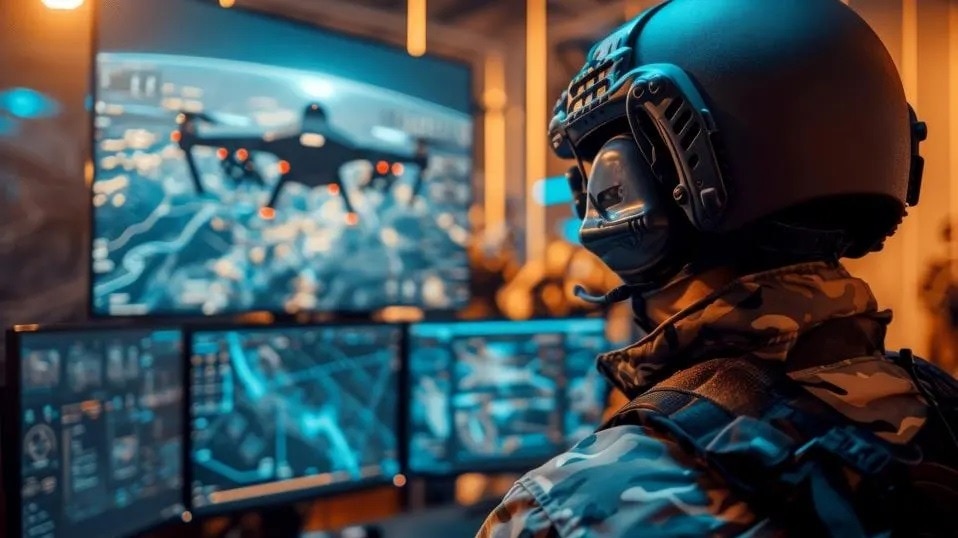
Military drones and reconnaissance platforms produce enormous amounts of video and imagery every day. Analysts previously had to review hours of footage manually, scanning frame by frame for signs of suspicious activity such as moving vehicles, weapons or fortified positions.
Project Maven was developed to reduce this burden. Using machine-learning algorithms and advanced computer vision tools, the system automatically scans images and video streams to detect objects that might indicate military targets.
Rather than replacing human analysts, the system acts as a digital assistant. It highlights objects of interest and allows human experts to verify whether the detected activity represents a real threat.
Speeding up battlefield decision-making
Over time, the scope of Project Maven has expanded beyond analyzing drone footage. The system can now process information from multiple sources, including satellites, surveillance aircraft and intelligence databases.
By combining these inputs, Maven creates a more comprehensive picture of what is happening on the battlefield. This allows commanders to make decisions more quickly and with greater situational awareness.
One of the biggest advantages of AI systems like Maven is their ability to analyze vast datasets simultaneously. Tasks that once took teams of analysts hours or even days can now be completed in a fraction of the time.
In modern conflicts, this speed can dramatically shorten the so-called “kill chain” — the process of detecting a target, confirming its identity and carrying out a strike.
Key technology in the rise of AI warfare
Project Maven is often cited as an early example of how artificial intelligence is becoming integrated into military strategy.
The technology has reportedly supported several US military operations, where it helps sift through large quantities of intelligence data to identify patterns or targets that might otherwise go unnoticed.
As conflicts become increasingly data-driven, systems capable of processing information at high speed are expected to play a growing role in military planning and operations.
Tech industry’s role in military AI
The development of Project Maven has also highlighted the growing partnership between the defence sector and the technology industry.
When the project first began, major technology firms contributed expertise in machine learning and data analysis. However, the involvement of private tech companies sparked debate within the industry about the ethical implications of developing AI systems for military use.
Some companies stepped back after internal protests from employees concerned about the potential use of AI in warfare. Since then, other technology firms and defence contractors have continued working with the Pentagon to expand the system’s capabilities.
Ethical concerns surrounding AI
The growing role of AI in warfare has triggered intense global debate. Supporters argue that AI can improve military efficiency, reduce the workload on analysts and potentially enable more precise targeting. Critics, however, warn that heavy reliance on automated systems could create new risks.
One concern is that algorithmic errors or incomplete data could lead to incorrect conclusions during fast-moving military operations. Others worry that increasing automation might reduce human oversight in decisions that carry life-and-death consequences.
Project Maven, Pentagon AI program, AI warfare technology, US military artificial intelligence, drone surveillance analysis AI, battlefield data analysis AI, Pentagon machine learning project, AI targeting systems, military AI technology explained, future of AI warfare#Project #Maven #Pentagons #brain #quietly #reshaping #modern #warfare1775440773

AI targeting systems
AI warfare technology
battlefield data analysis AI
brain
drone surveillance analysis AI
future of AI warfare
Maven
military AI technology explained
modern
Pentagon AI program
Pentagon machine learning project
Pentagons
project
Project Maven
quietly
reshaping
US military artificial intelligence
warfare