Tensions in the Middle East escalated sharply after Donald Trump warned that the United States could launch devastating military strikes on Iran if Tehran fails to reopen the strategically vital Strait of Hormuz before a Tuesday deadline.
Speaking to reporters, Trump said Iran had submitted a “significant proposal” through diplomatic channels but insisted it did not go far enough to end the conflict or restore maritime traffic through the narrow oil chokepoint. The US President has set 8 p.m. Eastern Time on Tuesday as the final deadline for Tehran to comply.
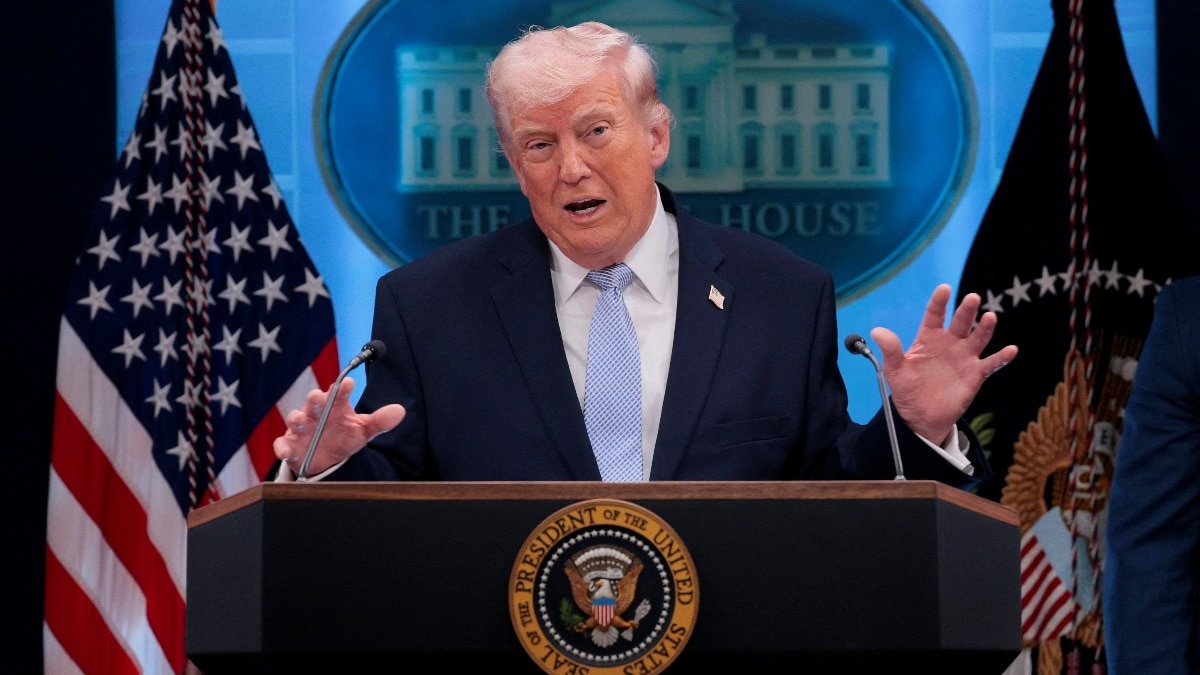
“The entire country can be taken out in one night, and that night might be tomorrow night,” Trump said, doubling down on earlier threats that US forces could target Iran’s civilian infrastructure, including power plants and bridges, if negotiations collapse.
Trump raises prospect of seizing Iranian oil
In remarks that further underscored the economic stakes of the conflict, Trump also floated the possibility of the United States taking control of Iran’s oil resources.
“If I had my choice, what would I like to do? Take the oil! Because it’s there for the taking, there’s not a thing they can do about it. Unfortunately, the American people would like to see us come home,” Trump said.
No deadline escalation
Trump reiterated that the deadline is unlikely to be extended again. He said Iran had already been granted additional time after requesting a week-long extension.
“They asked for seven days. I said I’m going to give you 10. But at the end of 10, all hell’s going to break out if you don’t get there,” he said.
The president has repeatedly warned that US forces could carry out broad strikes against Iranian infrastructure if Tehran fails to strike a deal or reopen the Strait of Hormuz — one of the world’s most important oil shipping routes.
Iran responds with ceasefire proposal
Iran has formally responded to a ceasefire proposal conveyed through Pakistan, according to the state-run Islamic Republic News Agency.
Tehran’s response reportedly includes a 10-point framework that calls for a permanent end to the war “in line with Iran’s considerations.” Among its key demands are:
- An end to regional hostilities
- A protocol ensuring safe passage through the Strait of Hormuz
- Reconstruction support
- The lifting of international sanctions
However, Washington appears unconvinced that the proposal adequately addresses its core demands.
Controversy over targeting infrastructure
Trump dismissed criticism that attacking civilian infrastructure could constitute war crimes. “I’m not worried about it. You know what’s a war crime? Having a nuclear weapon,” he said.
Human rights groups and some international legal experts have warned that targeting civilian power plants and other non-military facilities could violate international law amid the escalating conflict.
Trump also argued that military pressure could ultimately benefit the Iranian public, claiming many citizens want to overthrow the government but fear repression.
“The Iranian people will fight back as soon as they know they’re not going to be shot,” he said. The president suggested protests could erupt if citizens believed they had the means to challenge the ruling authorities.
The president also addressed reports that Iran had shot down a US F-15 Eagle fighter jet during the ongoing hostilities. Trump described the incident as a “lucky shot” by Iranian forces but praised the rescue operation that recovered the injured pilot.
Trump Iran warning, Strait of Hormuz crisis, US Iran tensions 2026, Trump Iran ultimatum, Iran ceasefire proposal, US Iran conflict escalation, Middle East oil shipping crisis, Trump take the oil remark, Iran US military threat, Hormuz global oil route crisis#Entire #country #night #Trump #warns #Iran #deadline #nears1775499444

country
deadline
Entire
Hormuz global oil route crisis
Iran
Iran ceasefire proposal
Iran US military threat
Middle East oil shipping crisis
nears
Night
Strait of Hormuz crisis
Trump
Trump Iran ultimatum
Trump Iran warning
Trump take the oil remark
US Iran conflict escalation
US Iran tensions 2026
Warns