
For over a year now the rupee has seen high volatility. Even so, on March 30, the rupee slipped below 95 against the US dollar for the first time; the fall comes to 5.8% from January 1. While there has been some recovery since then, it is expected to remain weak, especially if the conflict smoulders on.
The rupee recovered slightly after the US and Iran declared a two-week truce and the Reserve Bank of India (RBI) announced steps to curb speculation in the forex market. On April 10, it closed at 92.68. However, it weakened again on April 13, falling past the 93 to the dollar mark after the US and Iran failed to arrive at a peace deal and oil prices spiked again. It closed at 93.48 on April 21.
The biggest reason for the rupee’s fall is the heightened volatility in the global economy. In FY26, it declined nearly 10% to the US dollar, due to headwinds such as the tariff war launched by US President Donald Trump last year. The trade and tariff-related uncertainties, coupled with investors chasing artificial intelligence (AI)-related opportunities in markets, right from the US to South Korea, led to a huge sell-off in Indian equity markets by foreign portfolio investors (FPIs).
The FPI exodus has deepened since the war broke out in West Asia. Investors are worried that India’s import-dependent economy will suffer with high oil prices and supply disruptions. Between April 2025 and March 2026, FPIs pulled out close to Rs 1.81 lakh crore (over $19 billion) from India’s equity market, according to data from National Securities Depository Ltd.
In March alone, FPIs selling was over Rs 1.17 lakh crore (about $12.7 billion), among the worst monthly outflows. In the first 10 days of April, they sold another Rs 48,213 crore (around $5.15 billion) from the equity market. An FPI exodus creates demand for dollars as they take out capital from the country. This puts more pressure on the rupee.
The outflows may continue for some time, say analysts. “Markets like South Korea and Taiwan have the advantage of AI-related trade. But India is a laggard as far as AI is concerned. So, FPIs may continue to sell in the short term, though India offers long-term growth opportunities,” says V.K. Vijayakumar, Chief Investment Strategist at Geojit Investments.
Net foreign direct investment (FDI) into India, too, has been a concern. While gross FDI has been growing—it rose 15% to $79.32 billion between April 2025 and January—net FDI fell 24% to just $1.66 billion, due to the rise in outward FDI and repatriation. That, too, is putting pressure on the rupee.
RBI Steps In
This volatility has forced the RBI to intervene in the foreign exchange market to stabilise the rupee.
According to Sonal Varma and Aurodeep Nandi, economists at Japanese financial services firm Nomura, the RBI’s short-forward book stood at $77.7 billion at the end of February. They estimate that the RBI net sold $18.3 billion of spot forex reserves between March 1 and 27. A short-forward dollar position means the central bank is selling dollars for future delivery, while buying rupee in the spot market. This allows it to support the local currency, while not immediately depleting its dollar reserves.
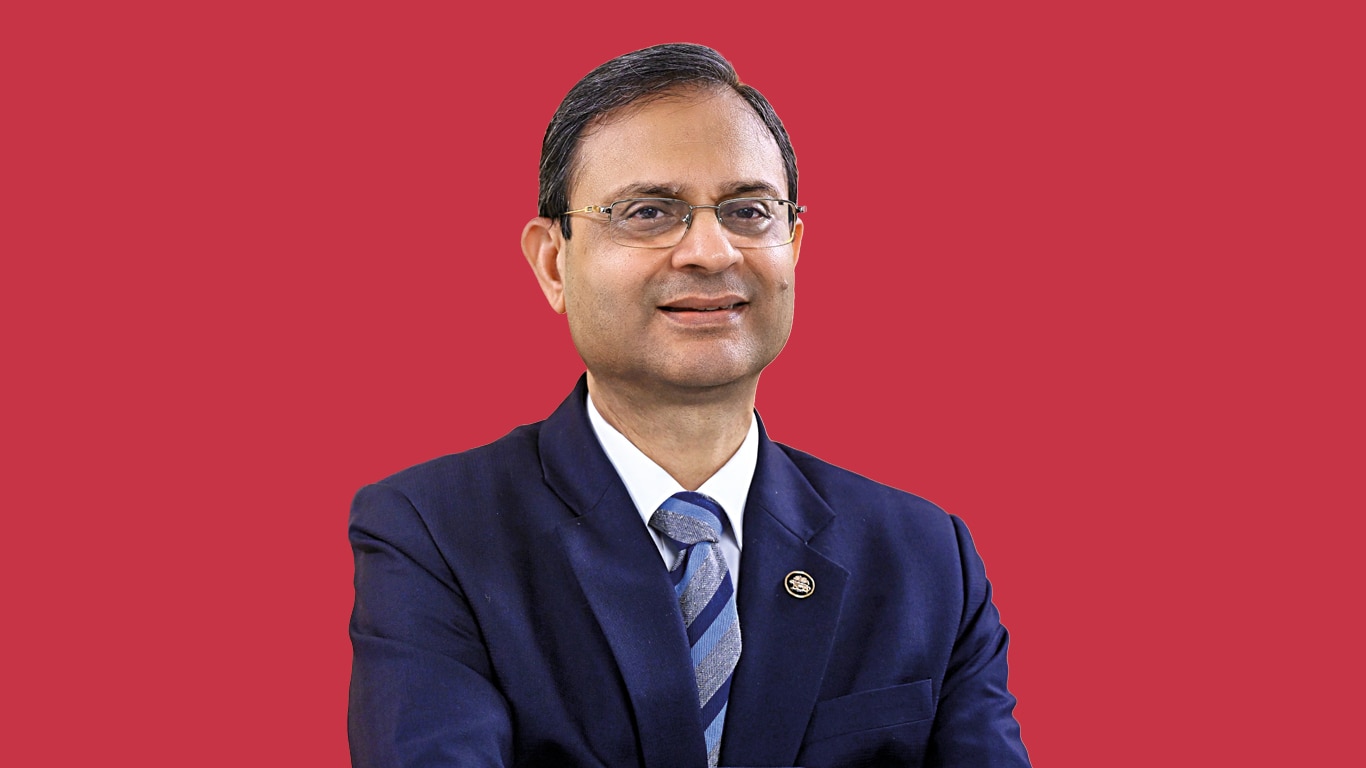
They (RBI’s measures) are not signalling any structural change. These are not measures that are going to remain there forever.
-SANJAY MALHOTRA,GOVERNOR, RESERVE BANK OF INDIA
The RBI does have some comfort on the forex reserves front. In the week ended April 3, India’s reserves rose over $9 billion to $697.12 billion. RBI Governor Sanjay Malhotra has said that the reserves are “adequate” in terms of standard metrics, providing an import cover of about 11 months.
As the rupee was falling fast, on March 29, the central bank directed authorised dealers to ensure that their net open rupee positions—the difference between foreign currency assets and liabilities—be maintained within $100 million at the end of each business day. The idea being that banks would wind up any excess forex positions, creating excess dollar supply and strengthening the rupee.
On April 1, the RBI barred banks from offering rupee non-deliverable forward (NDF) contracts to corporate clients. This measure was partially withdrawn on April 20. An NDF is a financial derivative used to hedge or speculate on currency exchange rates. These contracts are typically settled in cash, unlike traditional forward contracts, where actual currencies are exchanged when contracts mature.
The move helped close the arbitrage window that had opened between onshore and NDF markets after the previous directive, which had led to a surge in corporate interest as banks unwound their positions, according to Radhika Rao, Senior Economist and Executive Director at Singapore-headquartered DBS Bank. It is estimated that close to $40 billion in arbitrage positions were unwound ahead of the RBI’s April 10 deadline.

Authorities will be careful to not allow the rupee to correct sharply for fear of hurting purchasing power, investor confidence, and spurring inflationary pressures.
-RADHIKA RAO,SENIOR ECONOMIST & EXECUTIVE DIRECTOR, DBS BANK
Subsequently, the RBI is reported to have curbed oil marketing companies’ (OMCs’) dollar demand, reducing dollar purchases in the spot market and asking them to use a credit line with State Bank of India instead.
Will the rupee still see volatility in the coming weeks? It depends on the conflict in West Asia.
Should the tensions escalate and oil prices remain above $100 a barrel for some time—as restoring supplies disrupted by the conflict may take time — the Indian economy will remain under pressure. This is because the country imports close to 85% of its crude oil requirements.
The rising import bill has increased demand for dollars and contributed to currency pressures. At the same time, global financial yields have tightened, with elevated yields and more cautious investor behaviour affecting capital flows, say analysts.
So far, the government has ensured that the high oil prices are not passed on to consumers at the fuel pump. The government recently slashed the excise duty on petrol and diesel. However, the rise in prices may eventually have to be passed on to consumers. This will not only raise fuel prices, but also increase costs for multiple sectors, fuelling a broad-based inflation.
India’s current account deficit may widen too. “If we assume that the price of oil remains over $100 per barrel, we can expect the current account deficit moving towards 1.5-2%. (Should the conflict drag on), we could also expect remittances to slow down. It may not be very significant, but it will be down,” says Madan Sabnavis, chief economist at Bank of Baroda.
The West Asia region, particularly the Gulf Cooperation Council countries, accounts for over a third of remittances to India.
While external conditions are a worry, India’s domestic fundamentals have remained strong so far. The RBI projects gross domestic product to grow 6.9% in the current financial year, which will mean that India will remain among the fastest growing major economies. However, the growth this year will be slower than the 7.6% that India is expected to have clocked in FY26.
Once the conflict ends, Sabnavis says foreign fund flows could return, given the strong growth economic prospects. However, the rupee will remain under pressure should the tensions continue. He expects the rupee to trade in the 92-95 per dollar range, possibly even going to 96, if tensions escalate.
Vijayakumar of Geojit Investments feels the rupee could depreciate to 93.5–93.6 in the near term, but he doesn’t see it going below 95 for now, considering the RBI’s recent measures.
Unlike in the past when the central bank was seen intervening aggressively in the forex market, under Governor Malhotra, the interventions appear to be more selective. This indicates that the Governor is, perhaps, willing to let the rupee find its value, say forex market watchers.
Speaking after the monetary policy committee (MPC) meeting on April 8, Malhotra said the interventions were only aimed at curbing excessive and disruptive volatility and not targeting any specific level.
“When there is excessive building up of positions, perhaps not helping in price discovery, such measures are taken. They are not signalling any structural change. These are not measures that are going to remain there forever,” said Malhotra.
This implies that the RBI’s recent measures are temporary, rather than an attempt to permanently alter the supply-demand structure in the forex market, say the Nomura economists. They believe the RBI could accumulate forex reserves on any excessive downside move. Varma and Nandi also don’t expect any sustained pick-up in portfolio flows, as structural concerns over AI-related disruption to India’s software industry remain.
“Recent RBI regulations on authorised dealer (AD) limitations on offering onshore forward hedges has increased forex hedging costs for portfolio managers, which can deter portfolio inflows,” say the economists. They see a further scope for the rupee to depreciate.
If the rupee stays around current levels, imports will remain expensive, though exports may benefit. Other than end-use products, raw materials across industries, from electronics to automobiles and chemicals, are imported. As input costs rise, the companies could eventually raise prices. Over time, this would fuel inflation and dent consumer demand, and that, in turn, will affect economic growth.
Exports like software services do tend to benefit from a depreciating rupee, as companies typically earn in dollars. However, amid geopolitical and AI-related uncertainties, software exporters are already combating demand pressures.
What Next
The RBI has stepped in whenever the rupee has faced sustained pressure to stabilise the currency. In 2013, for instance, when the US Federal Reserve announced that it would taper off its bond repurchase programme introduced in the aftermath of the global financial crisis of 2008, popularly called the taper tantrum, the rupee plunged from around 54 to the dollar to 69 in just four months.
At that time, special FCNR-B (foreign currency non-resident bank) accounts were floated against the dollar. The bonds mopped up around $30 billion. Before that, in 2000-01, $5.5 billion was raised via India Millennium Deposits of five-year tenure to bring in NRI deposits to stabilise the rupee.
Even earlier, in 1998, during the East Asian crisis, Resurgent India bonds helped garner around $5 billion from NRIs, boosting the forex reserves.
Will the RBI explore similar such measures this time? The difference this time is that India’s macroeconomic fundamentals are stronger, say analysts.
“The external position is more resilient, with contained current account deficit, elevated foreign exchange reserves, and improved policy credibility. Even after accounting for net forward short positions, reserves at roughly $630–650 billion provide an import cover of about 11 months on a balance of payments basis, and somewhat lower on a merchandise basis,” Kotak Mutual Fund said in its analysis on April 9.
It pointed out that since FY20, India’s current account deficit has averaged close to 1% of GDP, which is a clear improvement compared with the 2009-13 period, when the deficit widened sharply, peaking above 4% of GDP.
But Kotak MF warned that a sustained increase in crude oil prices or a prolonged weakening in global demand could widen the trade deficit and exert pressure on the current account. At the same time, the global financial environment has become less supportive, it said.
“While a certain scale of depreciation can contribute to trade competitiveness and be viewed as a pressure valve, authorities will be careful to not allow the unit to correct sharply for the fear of hurting purchasing power, weighing on investor confidence and spurring inflationary pressures,” says Rao of DBS Bank.
The RBI will only go in for measures like special FCNR deposits as a last resort, feels Geojit’s Vijayakumar. “In 2013, the rupee depreciated 25% in three months. India was among the fragile five countries. That is not the case now; the macros are strong,” he says. However, he warns that the outlook is too uncertain and the scenario may well change depending on how the conflict pans out. He believes the RBI will continue to intervene in the market, selling dollars, when necessary.
The MPC, after having slashed the repo rate by 125 basis points over 2025 from 6.5% to 5.25%, left it unchanged in its latest meeting on April 8. Several analysts say the central bank is likely to continue its pause for much of 2026. However, should oil prices remain around $100 and inflation shoot up, the MPC might be compelled to raise interest rates towards the end of the current financial year.
For the moment, OMCs have received some respite with the government cutting excise duty on petrol and diesel. “They may raise prices at some stage and that will be inflationary. From the monetary policy perspective, there won’t be any more rate cuts now, there can only be a rate hike, and I feel there will be one by the end of the financial year,” says Bank of Baroda’s Sabnavis.
Nomura expects the RBI to leave rates unchanged through 2026 because of “exceptionally low inflation”, which offers it a “longer runway” to evaluate the impact of the shocks.
A lot depends on how long the war in West Asia drags on.
@thenachiket
#experts #caution #pain #ahead #rupee1777379120