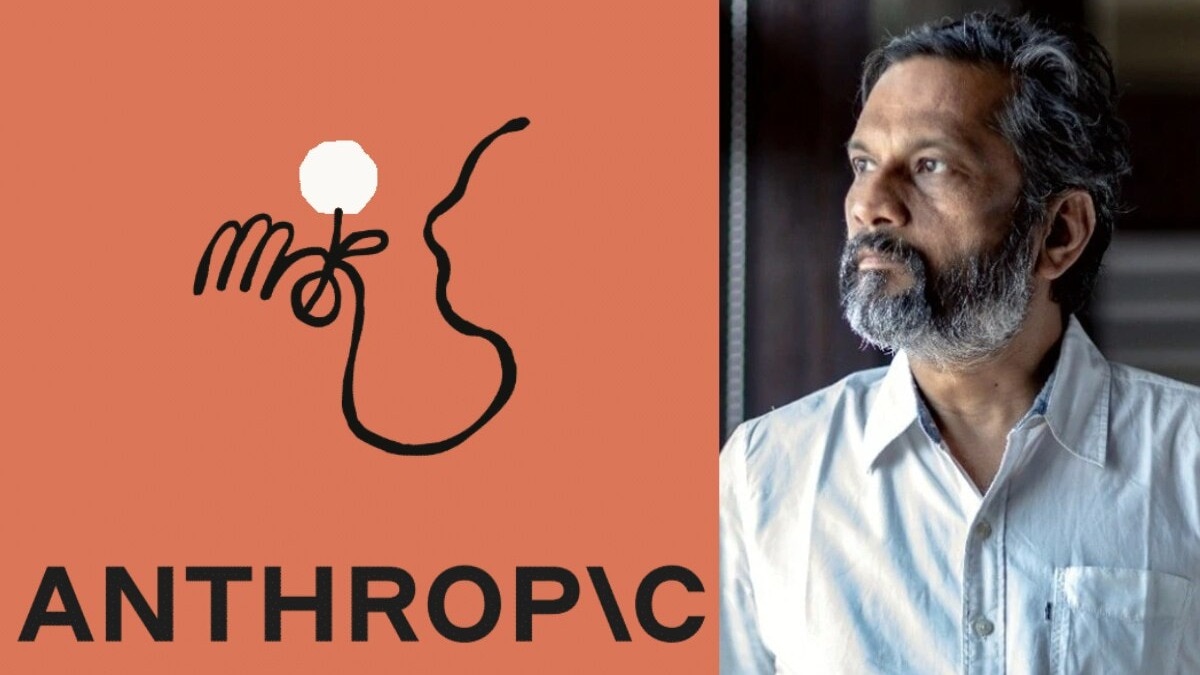
Zoho founder Sridhar Vembu has renewed his call for India to build technological self-reliance after restrictions reportedly cut off access to the Mythos and Fable AI models for users outside the United States. In a series of posts on X (formerly Twitter), Vembu argued that the development should serve as a wake-up call for India and other countries that continue to depend heavily on foreign technology platforms.
Calling the move “big,” Vembu said the incident reinforces a larger geopolitical reality: “Technology is the ultimate weapon. National sovereignty, national security, all of it is now about technology.”
He went a step further by declaring that “globalization is dead,” adding that “Bharat must find her own way ahead.” According to him, recent developments in the AI sector demonstrate that access to cutting-edge technology can be restricted overnight, making dependence on external providers a strategic vulnerability.
Push for Indian and open-source AI
Rather than relying on proprietary frontier AI systems developed overseas, Vembu suggested that Indian organisations should increasingly adopt smaller AI models, including Indian and Chinese open-source alternatives.
“Ensure that orgs in India embrace smaller models, both Indian and Chinese open source ones. With a bit of effort, we can make them work. Anyway, why pay money to people who don’t even want to sell to you?” he wrote.
Vembu acknowledged the enormous challenges involved in competing at the frontier of AI development. Training the latest generation of models requires not only massive computational resources but also access to advanced graphics processing units (GPUs), many of which are now subject to export controls and supply restrictions.
He argued that India cannot realistically match the spending levels of the world’s largest AI players, noting that entering the race for state-of-the-art models could require investments of well over $100 billion. Even if such funding were available, he added, acquiring the necessary hardware would remain a challenge due to global restrictions.
“I would not like to ask the government to fund tens of billions of dollars on this anyway — the money has far better uses,” Vembu said.
Instead, he advocated alternative research and development approaches that are significantly less expensive. He revealed that Zoho has been pursuing such methods internally, while also acknowledging that breakthrough research naturally takes time. “We are patient. I am confident we will get there,” he added.
‘Delusions about globalisation’
The entrepreneur used the AI access issue to make a broader argument about the changing nature of the global economy. In his view, countries can no longer assume uninterrupted access to critical technologies developed elsewhere.
“Any remaining people in India who have delusions about globalization should wake up now,” he wrote, framing technological capability as the foundation of economic independence and national security.
The remarks come amid growing global discussions around AI sovereignty, with governments and companies increasingly seeking domestic alternatives to reduce dependence on foreign infrastructure and platforms.
Invoking Abdul Kalam’s vision
In a follow-up post, Vembu linked the current AI race to the long-standing vision of former President and scientist Dr APJ Abdul Kalam, saying the late leader had recognised the importance of technological self-reliance decades ago.
“Dr Abdul Kalam was a visionary way ahead of his time. He saw the need for sovereign tech back in 1998,” Vembu wrote, adding that India now has to “work hard to catch up.” He also proposed the creation of an annual “Dr Abdul Kalam Award” dedicated exclusively to engineers and scientists.
He expressed confidence that the country possesses the talent required to build globally competitive technologies but stressed that both the private sector and the government need to prioritise research and development.
Vembu also outlined a set of policy suggestions aimed at strengthening India’s innovation ecosystem. One proposal was for the government to conduct annual evaluations of capabilities across 100 critical technology sectors and publish public leaderboards ranking companies by their technological strengths.
“Rank companies by capability. Let competitive forces do the rest,” he suggested, arguing that transparency and recognition could spur greater investment in R&D.
Sridhar Vembu, Zoho founder, sovereign AI, India AI strategy, AI nationalism, artificial intelligence, Abdul Kalam, technology sovereignty, globalization, open source AI#039Ultimate #weapon…039 #Sridhar #Vembu #urges #India #build #sovereign #Anthropic #curbs1781358872

039Ultimate
Abdul Kalam
AI nationalism
Anthropic
Artificial intelligence
build
curbs
globalization
India
India AI strategy
open-source AI
Sovereign
sovereign AI
Sridhar
Sridhar Vembu
technology sovereignty
urges
Vembu
weapon...039
Zoho founder