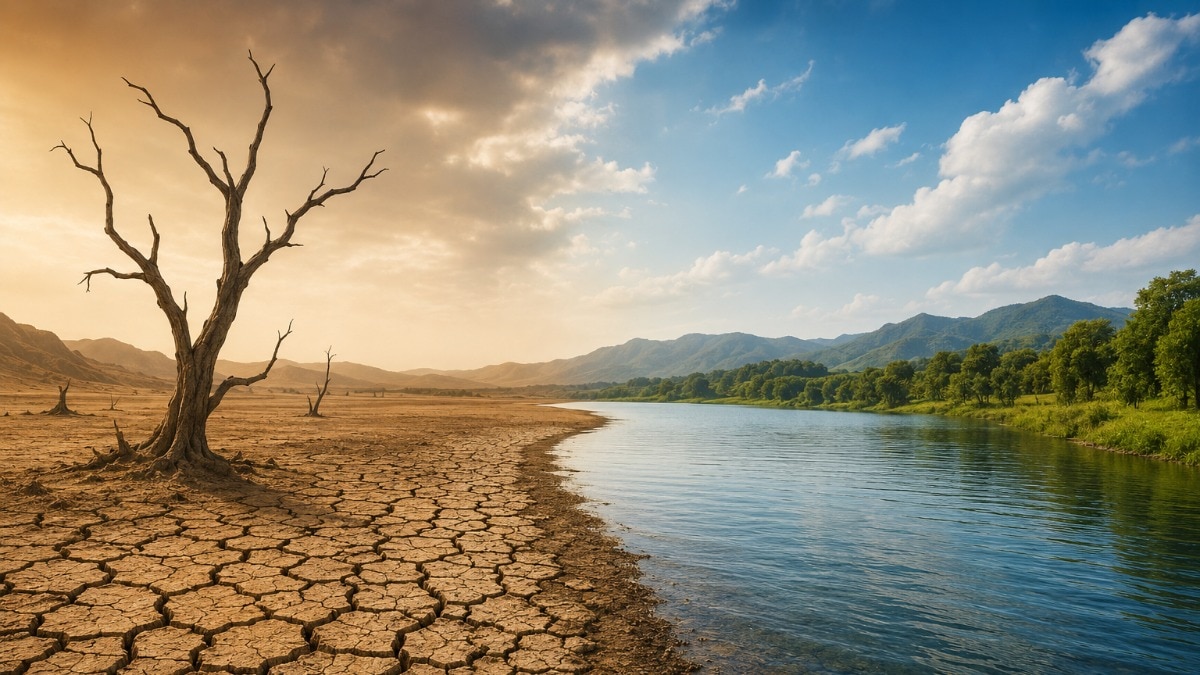
The world’s freshwater reserves are shrinking at a pace that scientists say can no longer be ignored. From massive lakes in Central Asia and the Middle East to critical rivers in South America and reservoirs in the United States, satellite imagery is revealing a stark reality: many of the planet’s most important freshwater sources are steadily disappearing under the combined pressure of climate change, prolonged droughts, and unsustainable water use.
The phenomenon is increasingly being described as “continental drying” — a long-term decline in freshwater stored in lakes, rivers, wetlands, reservoirs, soil, and underground aquifers. According to research highlighted by global water experts, Earth is losing vast quantities of freshwater annually, threatening ecosystems, agriculture, energy production, and drinking water supplies for millions of people.
Satellite images reveal a global pattern
Recent satellite comparisons spanning several decades show dramatic transformations across multiple continents.
One of the most striking examples is the Parana River in South America, a vital trade route connecting Brazil, Paraguay, and Argentina. Images comparing the river in 1990 and 2026 reveal sharply reduced water levels, exposing riverbeds, disrupting grain shipments, and affecting hydroelectric power generation.
In Bolivia, Lake Poopó — once the country’s second-largest lake — has nearly vanished. Satellite imagery shows how a water body that once covered around 1,000 sq km has been reduced to a vast salt flat due to drought, warming temperatures, and water diversions.
Iran’s Lake Urmia offers another stark warning. Once among the largest saltwater lakes in the Middle East, it has shrunk dramatically over the past three decades as drought, agricultural demand, river diversions, and groundwater extraction depleted its inflows.
The story is similar in Iraq’s marshlands, Chile’s Laguna de Aculeo, Botswana’s Lake Ngami, and Mali’s Lake Faguibine, all of which have experienced severe reductions in water levels over recent decades.
Major reservoirs are under pressure
The crisis is not limited to remote lakes and wetlands.
Lake Mead, the largest reservoir in the United States, has seen significant declines as drought conditions, rising temperatures, and heavy demand from cities and agriculture strain water supplies across the American Southwest. Satellite images show expanding shorelines and exposed land where water once stood.
Meanwhile, the South Aral Sea in Central Asia has become one of the world’s most infamous environmental disasters. Decades of river diversion for irrigation have reduced the once-vast lake by more than 90%, leaving behind a barren and increasingly toxic landscape.
Climate change & Groundwater depletion
Scientists say climate change is amplifying the problem by altering rainfall patterns, increasing evaporation rates, and intensifying droughts. At the same time, excessive groundwater pumping is draining underground reserves faster than they can naturally recharge.
A major study using more than two decades of satellite observations found that freshwater loss has accelerated since 2002, with vast “mega-drying” regions emerging across parts of North America, Europe, Asia, and the Middle East. Researchers estimate that roughly three-quarters of the global population now lives in countries that have experienced freshwater losses over the past two decades.
The same research found that groundwater depletion accounts for a significant share of freshwater loss, making it one of the most serious long-term threats to water security worldwide.
Warning from scientists
The scale of the crisis has prompted increasingly urgent warnings from international experts. Earlier this year, a United Nations-backed report argued that many regions have moved beyond temporary “water stress” and entered what it termed an era of “global water bankruptcy,” where natural water reserves are being depleted faster than they can recover.
Researchers warn that shrinking freshwater supplies could intensify food insecurity, increase competition for resources, reduce hydropower generation, and raise the risk of social and economic instability in vulnerable regions.
Freshwater represents only a tiny fraction of Earth’s total water supply, yet it sustains billions of people, agriculture, industry, and ecosystems. The satellite images emerging from around the world provide visual evidence that this critical resource is under growing strain.
global water crisis, freshwater shortage, climate change, drought, satellite images, water scarcity, groundwater depletion, disappearing lakes, shrinking rivers, water security, freshwater reserves, environmental crisis, global warming, Lake Urmia, Lake Mead, Aral Sea, Parana River, water conservation, ecosystem loss, hydropower, agriculture, extreme weather, sustainability, climate impact, water resources#Vanishing #waters #Satellite #images #show #lakes #rivers #amp #reservoirs #drying #means1782044136

Agriculture
amp
Aral Sea
Climate Change
climate impact
disappearing lakes
drought
drying
ecosystem loss
environmental crisis
Extreme Weather
freshwater reserves
freshwater shortage
global warming
global water crisis
groundwater depletion
hydropower
images
Lake Mead
Lake Urmia
lakes
means
Parana River
reservoirs
rivers
satellite
satellite images
Show
shrinking rivers
Sustainability
Vanishing
water conservation
water resources
water scarcity
water security
Waters
Recent Post


Gallery






Featured Videos