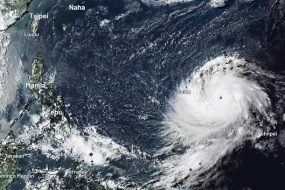
As Super Typhoon Bavi races towards the Mariana Islands with Category 5-equivalent strength, it has once again drawn attention to the world’s most powerful tropical cyclones. With sustained winds exceeding 252 km/h, these storms are capable of unleashing catastrophic winds, storm surge and torrential rain in a matter of hours.
When a tropical cyclone reaches Category 5, it has entered the highest classification on the Saffir–Simpson Hurricane Wind Scale. These are the most powerful storms on Earth, capable of flattening homes, uprooting forests, triggering devastating storm surges and leaving widespread destruction in their wake.
Although Category 5 storms are relatively rare, they account for some of history’s most catastrophic weather disasters because of their extreme winds, torrential rainfall and coastal flooding.
MUST READ | Super Typhoon Bavi threatens US Pacific islands: What makes it a Category-5 beast?
But what exactly qualifies a storm as Category 5, and what conditions allow a tropical cyclone like Bavi to reach such extraordinary intensity? Here’s a closer look at the science behind these rare and devastating weather systems.
What is a Category 5 cyclone?
A Category 5 cyclone is a tropical cyclone with maximum sustained winds of at least 252 km/h (157 mph). It represents the highest level on the Saffir–Simpson Hurricane Wind Scale, which classifies storms solely by their sustained wind speeds.
While different ocean basins use different names — hurricanes in the Atlantic and eastern Pacific, typhoons in the western Pacific, and cyclones in the Indian Ocean and South Pacific — they are all the same type of weather system.
How does a Category 5 cyclone form?
Not every tropical storm becomes a Category 5 cyclone. It requires an almost perfect combination of atmospheric and oceanic conditions.
1. Warm ocean waters: Cyclones draw their energy from warm seas. Water temperatures generally need to be at least 26.5°C, but many Category 5 storms develop over waters closer to 29-31°C, providing enormous amounts of heat and moisture.
2. A pre-existing weather disturbance: The process often begins with a cluster of thunderstorms or a tropical disturbance over warm ocean waters. As warm, moist air rises, it creates an area of low pressure that pulls in more air from the surrounding region.
3. Earth’s rotation: The Coriolis effect, caused by Earth’s rotation, makes the incoming air spiral around the low-pressure centre. This creates the familiar rotating structure of a tropical cyclone. Because the Coriolis effect is weak near the Equator, cyclones rarely form within about five degrees of it.
4. Low wind shear: For a cyclone to strengthen, winds at different heights in the atmosphere must remain relatively similar. Strong vertical wind shear can tilt or tear apart the storm, preventing it from organising.
5. High humidity: Moist air in the middle levels of the atmosphere fuels thunderstorm development, allowing the cyclone to build a strong and organised circulation.
6. Rapid intensification: Some storms undergo rapid intensification, meaning their sustained winds increase dramatically within 24 hours. This usually occurs when exceptionally warm water, deep ocean heat and favourable atmospheric conditions combine, allowing the cyclone to strengthen at an extraordinary pace.
Why are Category 5 cyclones so destructive?
Many people assume the wind is the biggest danger, but Category 5 cyclones bring multiple life-threatening hazards simultaneously.
- Extreme winds: Sustained winds above 252 km/h can rip roofs off buildings, destroy weaker structures, snap power poles and uproot large trees. Flying debris often becomes one of the greatest risks to people caught outdoors.
- Storm surge: Strong onshore winds push seawater inland, creating storm surges that can inundate coastal communities within minutes. In many historic cyclones, storm surge has caused more fatalities than the wind itself.
- Torrential rainfall: Category 5 cyclones carry enormous amounts of moisture, producing intense rainfall that can trigger flash floods, river flooding and landslides, even far inland.
- Massive waves: Powerful waves generated by the storm can erode coastlines, damage ports and harbours, and make rescue operations extremely difficult.
What is the eye of the storm?
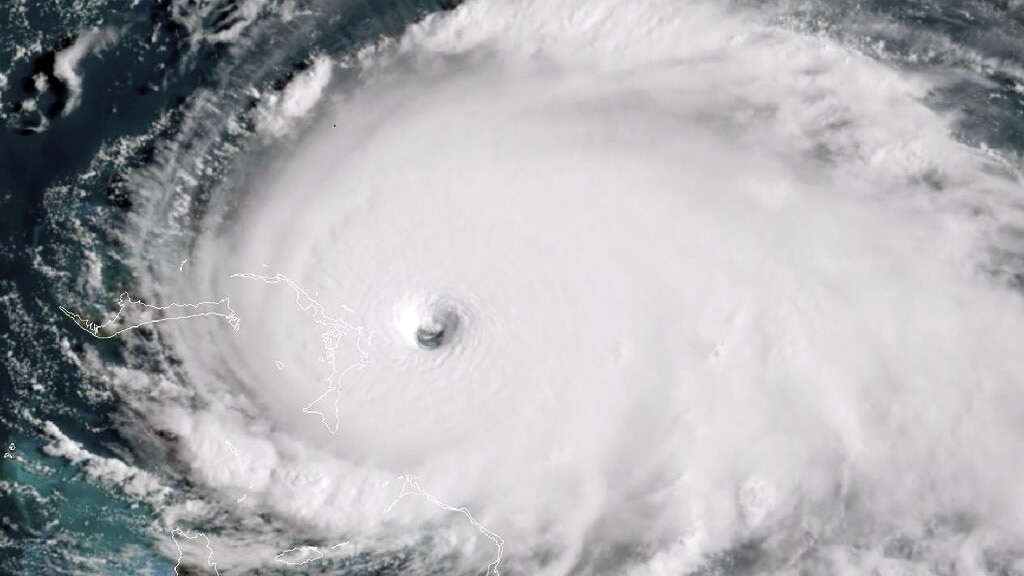
The eye is the calm centre of the cyclone, often spanning 20-50 km in diameter. It is surrounded by the eyewall, where the strongest winds and heaviest rain occur.
People sometimes mistakenly believe the storm has passed when the eye moves overhead. In reality, the most dangerous conditions often return quickly as the opposite side of the eyewall arrives, bringing violent winds from the opposite direction.
Some of the strongest Category 5 cyclones
- Typhoon Haiyan – One of the deadliest tropical cyclones ever recorded.
- Hurricane Patricia – One of the strongest storms ever measured by sustained winds.
- Hurricane Dorian – Devastated parts of the Bahamas after stalling over the islands.
- Cyclone Winston – The strongest tropical cyclone ever recorded in the Southern Hemisphere at landfall.
Scientists say climate change is not necessarily increasing the total number of tropical cyclones, but warming oceans are increasing the likelihood that storms will intensify more rapidly and reach the highest categories.
Warmer seas provide more energy, while a warmer atmosphere can hold more moisture, increasing the potential for heavier rainfall. As sea levels rise, storm surges can also reach farther inland, worsening coastal flooding.
Category 5 cyclone, tropical cyclone, hurricane, typhoon, cyclone explained, how cyclones form, rapid intensification, warm ocean waters, storm, extreme weather, tropical storm, eye of the storm, cyclone categories, heavy rainfall, coastal flooding, natural disaster, climate change, ocean heat, powerful storms, what are category-5 cyclones, category-5 cyclones, cat-5 storm, cat-5 cyclone, typhoon gavi#Category #cyclones #Typhoon #Bavi #reshape #coastlines #they039re #dangerous1783290933

Bavi
cat-5 cyclone
cat-5 storm
category
Category 5 cyclone
category-5 cyclones
Climate Change
coastal flooding
coastlines
cyclone categories
cyclone explained
cyclones
Dangerous
Extreme Weather
eye of the storm
heavy rainfall
how cyclones form
hurricane
natural disaster
ocean heat
powerful storms
rapid intensification
reshape
storm
they039re
tropical cyclone
tropical storm
typhoon
typhoon gavi
warm ocean waters
what are category-5 cyclones