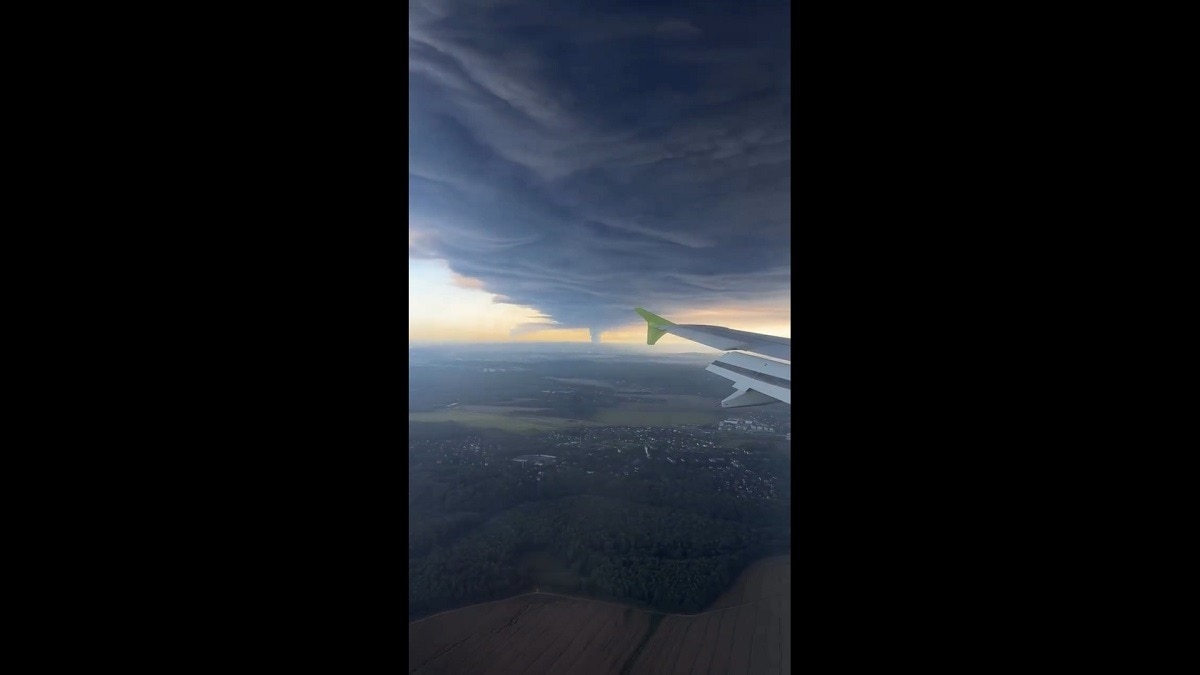
A towering wall of black smoke swallowed the sky, turning daylight into an eerie twilight. Within minutes, social media was flooded with comparisons to Mordor, the dark realm from The Lord of the Rings, as a massive fire ripped through one of Russia’s largest Wildberries warehouses following a wave of Ukrainian drone attacks.
The dramatic visuals, however, told only part of the story. Beyond the viral images, the strikes marked a notable shift in Ukraine’s long-range campaign, with logistics hubs — rather than just oil depots and weapons factories — emerging as key targets in Kyiv’s effort to disrupt Russia’s military supply chain.
Russian regional officials said the attacks killed seven warehouse workers and injured dozens more across multiple locations on July 18.
In the Tambov region, Governor Evgeniy Pervyshov said 25 people were injured after Ukrainian drones struck a Wildberries warehouse in Kotovsk, about 475 kilometres southeast of Moscow. He claimed the drones carried warheads designed to inflict greater casualties and added that Russian air defences intercepted 28 drones.
A second Wildberries warehouse in Elektrostal, east of Moscow, was also hit. Moscow region Governor Andrei Vorobyov said 24 people were injured in that attack.
Ukraine said the facilities were legitimate military-related targets.
President Volodymyr Zelensky said Ukrainian forces struck two logistics facilities used to supply sanctioned components for Russian drone production and navigation equipment. He added that an oil facility was also hit during the operation.
A Ukrainian military statement described the burning Wildberries warehouse as spanning 188,000 square metres, saying thick black smoke could be seen from kilometres away.
Videos shared by both Russian and Ukrainian sources showed enormous plumes of smoke billowing into the sky, fuelling comparisons with Tolkien’s fictional land of Mordor.
Wildberries later said the fire at its Kotovsk warehouse had been contained.
Ukraine broadens its target list
For much of the war, Ukraine’s long-range drone campaign has focused on energy infrastructure, oil refineries, fuel depots and factories linked to Russia’s defence industry.
The latest strikes suggest Kyiv is increasingly targeting logistics facilities that help sustain military production and operations, potentially widening the scope of its deep-strike strategy.
Zelensky also said an oil facility was struck, along with additional targets in the Sea of Azov, a strategically important waterway that connects to the Black Sea.
Pressure on Russia’s logistics & Maritime network
The warehouse attacks come amid a broader Ukrainian effort to weaken Russia’s logistics and transport capabilities.
According to Robert Brovdi, commander of Ukraine’s Unmanned Systems Forces, Ukrainian drones have struck 172 vessels belonging to Russia’s so-called shadow fleet in the Black Sea and the Sea of Azov over the past two weeks.
Taken together, the attacks indicate a broader strategy aimed not only at damaging military infrastructure but also at disrupting the networks that keep Russia’s war machine running.
The comparison to Mordor quickly gained traction because of the fire’s scale. Thick smoke engulfed the skyline, creating scenes that many online said resembled the volcanic wasteland ruled by Sauron in J.R.R. Tolkien’s The Lord of the Rings.
Ukraine drone attack, Wildberries warehouse fire, Russia Ukraine war, Mordor, Moscow skyline, Lord of the Rings, Volodymyr Zelensky, Wildberries Russia, Tambov, Elektrostal, logistics hubs, oil depot, Black Sea, Sea of Azov, shadow fleet, Russian warehouses, drone warfare, Russia news, Ukraine latest#188000sqm #Wildberries #warehouse #burns #Ukraine #drone #strike #Russia039s #skyline #looked #039Mordor0391784400630

039Mordor039
188000sqm
Black Sea
burns
Drone
drone warfare
Elektrostal
logistics hubs
looked
Lord of the Rings
Mordor
Moscow skyline
oil depot
Russia news
Russia Ukraine war
Russia039s
Russian warehouses
Sea of Azov
shadow fleet
skyline
strike
Tambov
Ukraine
Ukraine drone attack
Ukraine latest
Volodymyr Zelensky
warehouse
Wildberries
Wildberries Russia
Wildberries warehouse fire