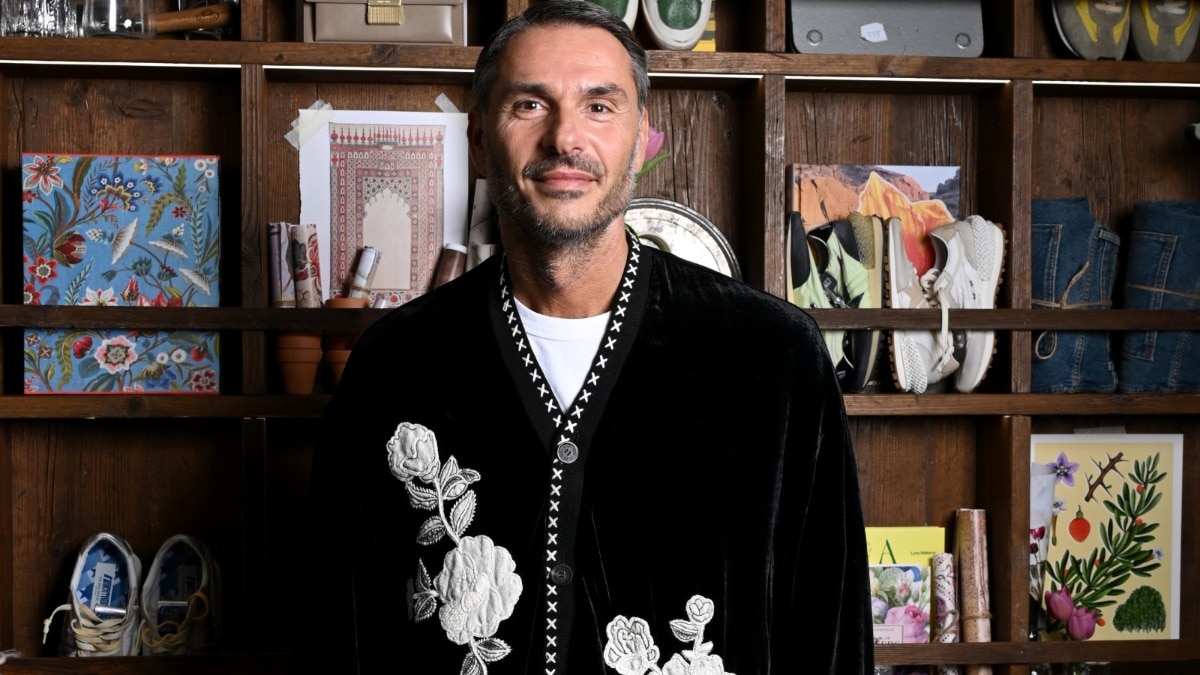
Coveted Italian luxury brand Golden Goose opened its third store in India in Mumbai in December, after Delhi and Bengaluru. The Venice-based brand, which posted a turnover of €656 million in 2024, is well known for its distressed look and co-creation with the customers. The shoes can be completely personalised, giving them a unique identity. In a free-wheeling conversation with Business Today, Silvio Campara, CEO of Golden Goose, spoke about the importance of the Indian market, how the luxury landscape is changing and what makes Golden Goose so popular with Gen Z. Edited excerpts:
Q. How important is India as a market for you?
India is very special to us and to me personally. Fashion is reflective of society and culture. India is one of the most important cultural hubs in the world. India hasn’t seen its full potential yet. I have invested in three stores because I am ready to bet that very soon execution will meet aspiration. I am sure India will have a lot to tell in the fashion and luxury scene in the world.
India has one of the youngest luxury markets on the planet. Demographics make a difference. Moreover, you have incredible attachment to heritage. There is no innovation without a clear connection to the past. So, this is what is making me very confident of investing in your country.
Q. Does the Indian luxury customer differ from those in other fast-growing luxury markets?
Absolutely, yes. The market is very different. Take for example, weddings. They are such a big part of the Indian market. We expected the people to be more traditional in their tastes, but they aren’t. So that was a learning for us.
India is the perfect blend of tradition and innovation. If China is by associated with innovation, and Europe with heritage, then India is a combination of the two. It is because of this huge cultural capital and a very young consumer market.
How are you targeting the young Indian luxury consumer that you are talking about, without diluting your brand’s identity?
We don’t have a heritage to defend. So, we are not in defence mode. We are in offence mode, we are more open to embracing the new emotional component of young consumers, rather than defending our old, heritage component.
If you have a heritage, you want to set up your business on desire because you can’t really adapt so easily to the needs of an 18-year-old customer. For us, it is the exact opposite. We don’t have anything to defend. Only new moments to craft with our customers. We envision our brand more as a platform rather than a closed box. Our goal is to offer products that can help people unleash their own creativity and express themselves rather than settle for someone else’s idea of what it should be. Our tagline is ‘Be Unique, Be Yourself’. We are in the business of creating love and not desire. We want people to say they love Golden and not that they desire it. That was the biggest innovation that we entered the market with. Nobody could believe that personalisation would be such a hit. For the past 15 years, the younger generation has been crafting its own content. So, it’s no surprise that customers want to craft their own products. I don’t have any fashion-risk component, because I don’t have one hero designer. I have miniscule designers so everyone can be the best designer for themselves. It’s not because this is my strategy but because this is what new customers want. Traditional luxury brands because of their price points and the way they are, have only 6-7% Gen Z customers. While 37-40% of our customers are Gen Z, 70% are women. Our clientele is also super loyal. For luxury products, Gen Z buys may be one product a year, while in our case they come at least four times to our store.
Q. Co-creation is central to Golden Goose. How will that take place in India?
The design on the shoe is by far the numero uno co-creation experience. We see people designing special occasions like graduation, wedding day or other things like pets. Globally, we see a lot of heritage monuments, but that is for luxury tourists. Luxury tourism is not happening in India, the buyers are local consumers, so there is no emphasis on monuments. But we have collaborations with Indian designers and artisans [For the Mumbai store, fashion designer Manish Malhotra co-created two limited edition sneakers]. Co-creation is huge. It accounts for 50% of revenues. We are all about personalisation and not customisation. In customisation, you choose from selected options, whereas at Golden Goose you can create your own shoe which is completely unique. You put your own persona on the product. Right now, in India it is only on the sneakers, but we will start offering it soon on apparel too.
Q. How do you see the luxury landscape shaping?
Heritage luxury brands depend upon one designer. That to me is strange. How can one person make a difference to millions of people. Creativity needs to be expressed in a different way. How does a brand resonate with the customers. Fashion shows for me are like the Pyramids. They are so old. The thought that something that is executed for a few people will have significance for millions of people is absolutely wrong. The new media is retail, it is stores. People can browse everything on digital media, but they are looking for authentic moments that can only happen at a physical level, in a store. My advice to the luxury world will be to rethink the way they execute their love for their customers. They absolutely love their customers, but they are executing it in a very old way because they have too much heritage to defend. But sometimes you need to break the rules.
Indian luxury market, Silvio Campara Golden Goose#Indian #luxury #market #combination #innovation #heritage #Golden #Goose #CEO #Silvio #Campara1770430471

Campara
CEO
combination
Golden
Goose
heritage
Indian
Indian luxury market
Innovation
Luxury
Market
Silvio
Silvio Campara Golden Goose