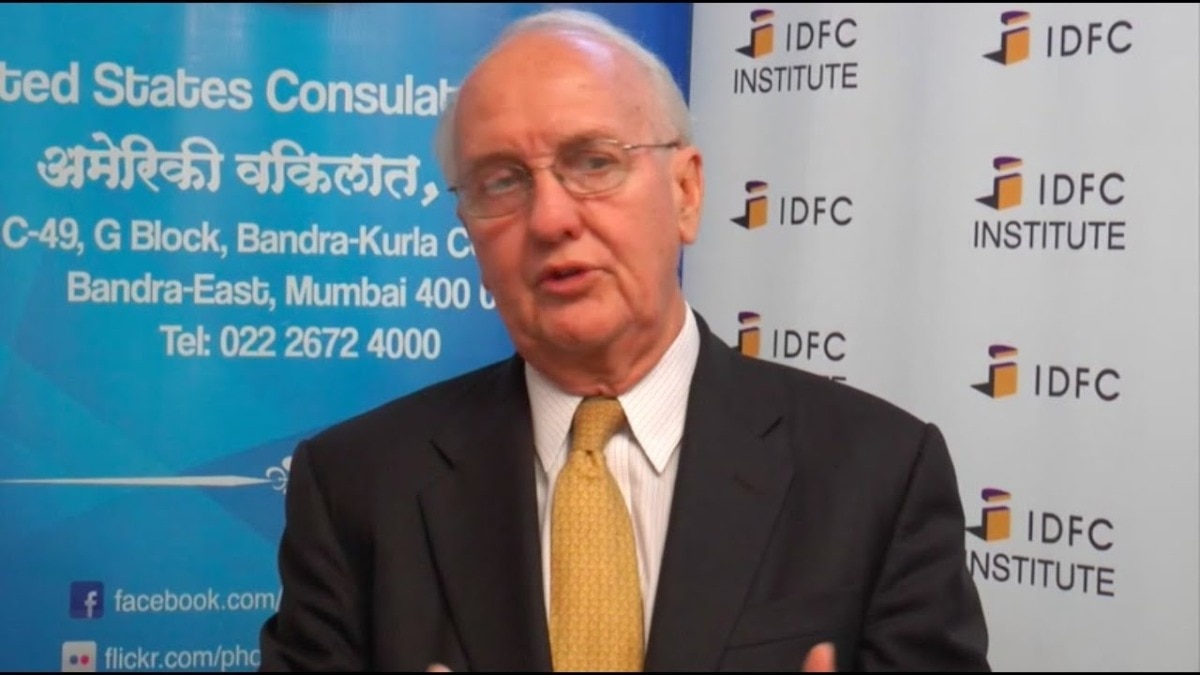
India’s decision to sign off on a framework for a bilateral trade agreement with the United States has opened fresh opportunities and placed New Delhi among a select group of countries managing negotiations with Washington in a “logical and deliberate” manner, former US Assistant Secretary of Commerce Raymond Vickery has said.
Speaking to ANI, Vickery argued that India has navigated the Trump administration’s highly transactional trade style better than most major economies by sticking to a structured negotiating process rather than reacting to policy volatility.
Vickery noted that the timeline surrounding the interim trade framework departs significantly from how major trading partners typically conclude agreements.
“In the standard way of doing trade agreements, you work out the details first, which often takes more than a year, and only then issue a joint statement confirming the agreement,” he said. “This is not the Trump style.”
Instead, he explained, the Trump administration often announces a framework first — sometimes before the underlying details are finalised — and then attempts to force substantive commitments into that framework later.
Despite this, Vickery said India has performed better than most countries by continuing to push for detailed negotiations and a more conventional agreement timeline. He pointed out that New Delhi is still talking about finalising a deal over the next couple of months, which aligns more closely with traditional trade diplomacy.
Russian oil remains a key test
Vickery also stressed the importance of US-India cooperation on Russian oil imports, calling the issue central to the broader geopolitical response to Russia’s invasion of Ukraine.
His comments come after the White House revoked an additional 25% tariff imposed on India following a commitment to halt imports of Russian oil.
“There is a great need for these two great democracies, the US and India, to cooperate on Russian oil,” Vickery said, adding that coordination on this front will be critical to the long-term credibility of the trade relationship.
While welcoming progress on the interim framework, Vickery cautioned that lasting success will depend on whether both sides can move beyond headline announcements and toward an operationally sound agreement.
“It’s one thing to go on social media and say something,” he said. “It’s quite another to have an agreement that is operationally sufficient and stands the test of time.”
He added that the central challenge with the Trump administration has been its focus on short-term transactional wins rather than building a durable US-India economic relationship capable of handling complex trade issues over the long run.
The US and India have announced a framework for an Interim Agreement on reciprocal and mutually beneficial trade, reaffirming their commitment to negotiations on a broader US-India Bilateral Trade Agreement (BTA).
The BTA talks were formally launched on February 13 by US President Donald Trump and Prime Minister Narendra Modi and are expected to include expanded market access commitments and measures to strengthen resilient supply chains.
India US trade agreement, India US interim trade framework, Raymond Vickery India US trade, US India bilateral trade agreement BTA, Trump trade policy India, India US trade negotiations, Russian oil India US tariffs, India trade diplomacy, US India supply chains, India US trade news#nations #ExUS #commerce #official #lauds #Indias #handling #Trumpstyle #trade #talks1770513086

Commerce
ExUS
handling
India trade diplomacy
India US interim trade framework
India US trade agreement
India US trade negotiations
India US trade news
Indias
lauds
nations
Official
Raymond Vickery India US trade
Russian oil India US tariffs
Talks
trade
Trump trade policy India
Trumpstyle
US India bilateral trade agreement BTA
US India supply chains