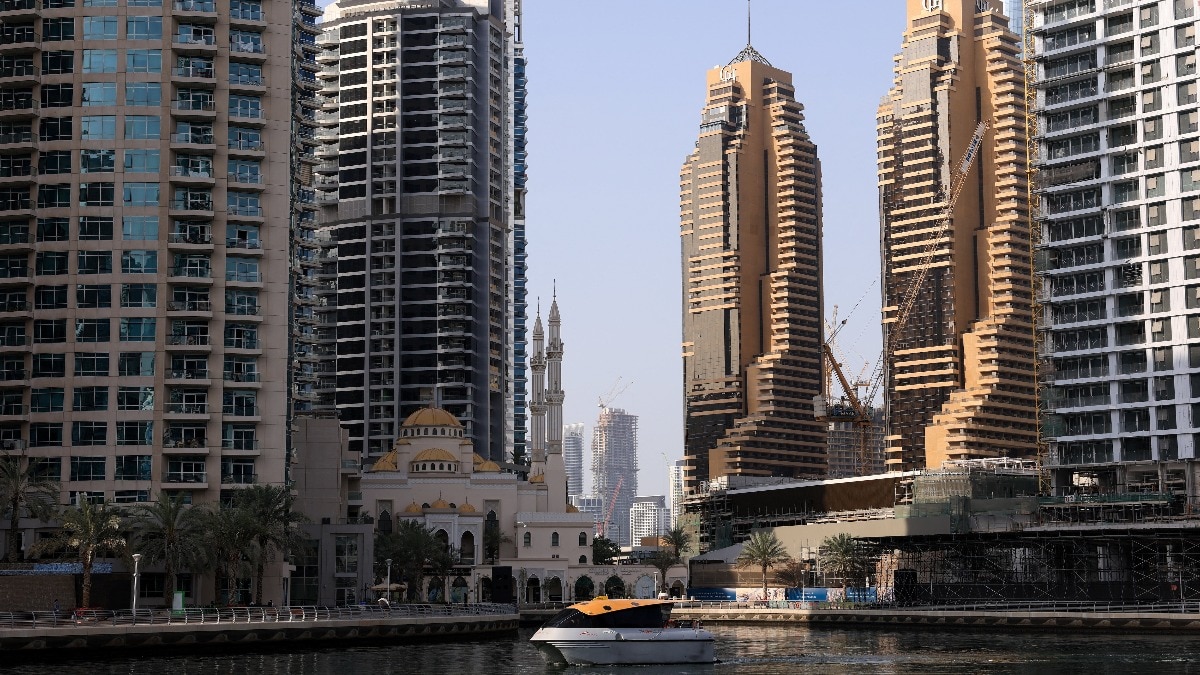
The idea of a “tax-free” life in the Gulf has long been a powerful aspiration for many Indians seeking higher earnings abroad. But according to financial advisor and chartered accountant Nitin Kaushik, the reality of expat life — especially in the UAE — may be far more complicated than it appears on paper.
In a detailed post on X (formally twitter), Kaushik warned that the promise of high salaries in the Gulf often hides a harsh financial equation once the cost of living is factored in.
The ‘Tax-Free’ Illusion
According to Kaushik, an average Indian expat in the United Arab Emirates earns roughly AED 15,000 a month, which translates to about ₹3.4 lakh. While that figure appears impressive compared to salaries in India, the expenses associated with living in global financial hubs like Dubai can quickly erode those gains.
Rent in a decent area alone can reach around ₹1.4 lakh per month, leaving far less disposable income than many expect. After accounting for basic expenses, Kaushik estimates that such a salary may only cover about 1.6 months of living costs, highlighting how quickly earnings can be consumed in high-cost cities.
“You are earning more, but you are also spending at a global scale,” he noted.
Global cost comparisons
The financial math is not unique to the Gulf. Kaushik pointed to similar challenges in other regions. In Israel, for example, a monthly salary of around $3,000 — approximately ₹2.5 lakh — barely stretches to cover about one and a half months of local living expenses.
Meanwhile, he described the economic environment in Iran as even more difficult for outsiders, citing low per-capita income levels that can create what he called a “poverty trap” for expatriates trying to build savings.
Blue-collar workers face bigger risks
The financial vulnerability becomes even more pronounced for the millions of Indian workers in the Gulf’s labour-intensive sectors. Nearly half of the Indian workforce in Gulf countries is employed in blue-collar construction jobs.
For them, geopolitical tensions in the region pose not just safety risks but also economic ones. If construction projects stall due to conflict or economic disruptions, their income streams can stop overnight.
A lifestyle paradox
Cost differences across countries further complicate the picture. Food expenses in the UAE, for instance, remain relatively affordable, averaging about ₹40,000 a month for a family. In Israel, similar expenses can exceed ₹60,000.
However, higher salaries in developed economies often come with steep taxes. A mid-level role in the United States earning around $80,000 annually could see nearly 30% of income lost to taxes.
According to Kaushik, this creates a paradox: Gulf countries may offer higher immediate take-home pay, but they typically provide no pathway to permanent residency or long-term social security benefits.
“It is a sprint, not a marathon,” he said.
The hidden geopolitical risk
Beyond the cost of living, Kaushik highlighted the potential financial shockwaves that geopolitical tensions could create. If regional conflicts were to disrupt banking systems or trigger asset freezes in Gulf countries, the impact could be felt directly by Indian households.
Many expatriates send home nearly 70% of their earnings through remittances to support families in India. Any interruption to this financial pipeline could lock up savings and disrupt family finances.
Why Indians still leave
Despite these risks, the economic reality in India continues to drive migration. Kaushik pointed out that an average salary of around ₹50,000 in urban India often fails to cover even half a month of comfortable living expenses in major cities.
For many workers, moving abroad is less about luxury and more about the possibility of saving money.
“They aren’t leaving for the lifestyle,” Kaushik argued. “They are leaving because the local savings-to-expense ratio is broken.”
A strategy for building real wealth
Kaushik believes the only sustainable way to benefit from overseas work is to keep expenses low and invest consistently.
He advises expatriates to save at least 50% of their income while abroad and channel those savings into long-term investments such as Indian mutual funds, targeting returns around 12% annually. This strategy, he suggests, can help protect wealth from geopolitical disruptions.
His final takeaway is blunt: the Gulf can be a powerful wealth-building opportunity — but only for those who resist the temptation to adopt the expensive lifestyle around them.
“The moment you spend like a local in Dubai,” Kaushik warned, “you lose the only advantage you moved for.”
expat life UAE, Dubai salary reality, Nitin Kaushik financial advice, Indian expats Gulf, cost of living Dubai, UAE tax free salary myth, expat savings strategy, Indian workers Middle East, global cost of living comparison, NRI wealth strategy#039Dubai #dream039 #reality #Financial #advisor #breaks #true #cost #expat #life1775301178

039Dubai
advisor
breaks
cost
cost of living Dubai
dream039
Dubai salary reality
expat
expat life UAE
expat savings strategy
Financial
global cost of living comparison
Indian expats Gulf
Indian workers Middle East
Life
Nitin Kaushik financial advice
NRI wealth strategy
Reality
true
UAE tax free salary myth