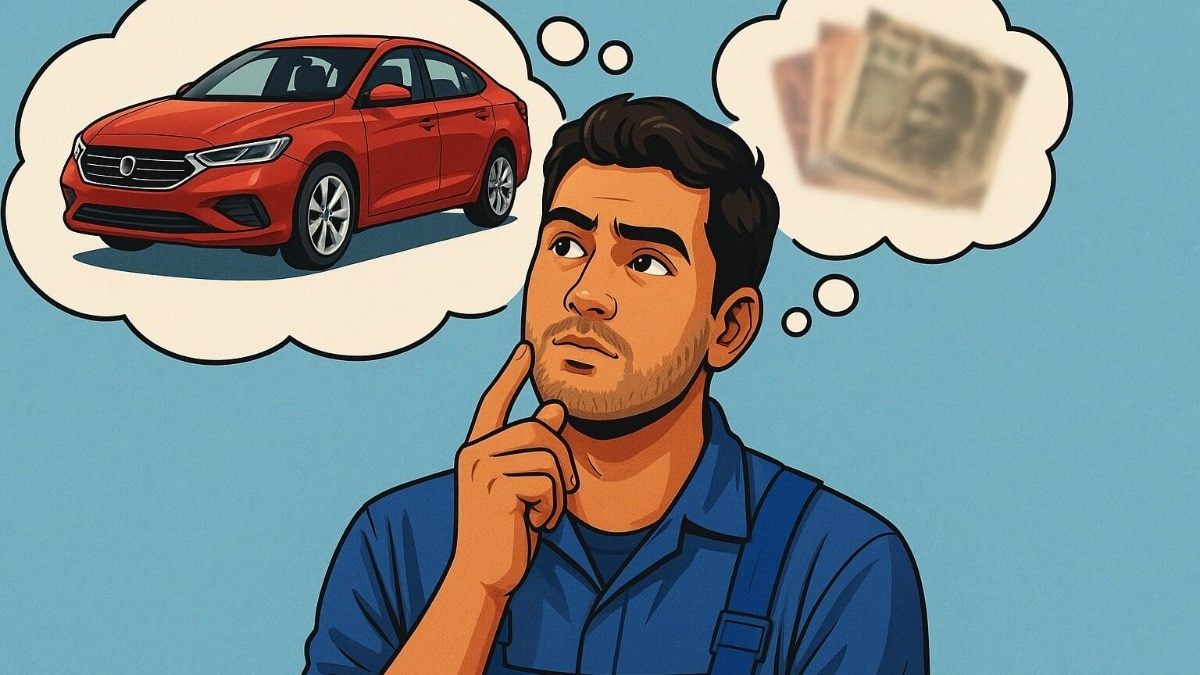
I’m planning to buy a car priced around ₹14 lakh and need advice on the most sensible loan structure. My in-hand salary is ₹64,000 per month, with an additional ₹30,000 invested monthly through an ESPP. I currently have ₹10 lakh available—₹6 lakh in fixed deposits and ₹4 lakh in savings. My CIBIL score is 780, and Union Bank has offered a car loan at 7.70%.
Initially, I planned to take a ₹5 lakh loan and pay the rest as down payment. However, the bank manager suggested taking a ₹10 lakh loan, keeping ₹5 lakh in FD, and using the FD interest to offset loan costs. For a ₹10 lakh loan, the EMI is ₹31,000 (36 months) or ₹20,133 (60 months). For a ₹5 lakh loan, the EMI is ₹15,500 (36 months) or ₹10,067 (60 months).
I intend to close the loan within 2–3 years. Which approach makes more sense: a lower loan with higher down payment, or a higher loan with FD arbitrage? Are partial prepayments a better alternative?
Advice by Dev Patel, Quantitative Research Analyst at 1 Finance
The bank manager’s advice looks like a sales tactic. While the arbitrage idea draws well on paper, it ignores risk and taxes. The FD earns on the full ₹5 lakh for 3 years, while the loan charges interest on a reduced balance. But to earn a minimal amount of net interest, you are doubling your EMI from ₹15,500 to ₹31,200. With your ₹64,000 in-hand salary, this pushes your Debt-to-Income ratio from a comfortable 24% to a completely unsustainable 49%. One bad month or unexpected expense, and that EMI becomes a cash-flow crisis. Meanwhile, the bank collects ₹1.23 lakh in interest instead of ₹61,500. The manager’s incentive is clear. Furthermore, your post-tax FD return is much lower than the 7.70% loan cost.
MUST READ: How much home loan EMI you are saving now since RBI’s last rate cut
However, the ₹5 lakh loan approach has flaws too. Making a ₹9 lakh down payment from your ₹10 lakh corpus leaves you with just ₹1 lakh for emergencies, which is dangerously low. A middle way is to borrow ₹7-8 lakh for a 36-month tenure. For a ₹7 lakh loan, your EMI will be ₹21,838.
This ensures the debt is cleared in exactly three years while capping your total interest at roughly ₹86,000. Keep in mind that a Debt-to-Income ratio of 34% is right at the edge of the recommended limit; borrowing anything more than this will result in an unsustainable EMI. Please consult a qualified financial advisor to look at the full picture to make an informed decision.
MUST READ: PPF investment rule FY27: How depositing funds before the 5th every month can maximise your returns
What investors should note
A ₹10 lakh loan with FD arbitrage may look attractive, but it significantly increases your EMI burden and risk. With a ₹64,000 salary, doubling EMI pushes your debt-to-income ratio to unsafe levels, while post-tax FD returns are unlikely to beat the 7.70% loan cost. On the other hand, a ₹5 lakh loan preserves affordability but leaves you with very low emergency savings. A balanced approach—borrowing ₹7–8 lakh for 3 years—offers the best mix of manageable EMI, adequate liquidity, and controlled interest outgo. You can further optimize by making partial prepayments using bonuses or ESPP gains.
car loan strategy India, ₹14 lakh car loan decision, FD arbitrage vs loan India, car loan EMI calculation India, debt to income ratio car loan, best car loan tenure India, car loan vs down payment strategy, personal finance car buying India, how much car loan should you take, car loan prepayment strategy India#lakh #car #plan #lakh #loan #lakh #arbitrage #strategy1775312144

arbitrage
best car loan tenure India
Car
car loan EMI calculation India
car loan prepayment strategy India
car loan strategy India
car loan vs down payment strategy
debt to income ratio car loan
FD arbitrage vs loan India
how much car loan should you take
lakh
loan
personal finance car buying India
Plan
Strategy
₹14 lakh car loan decision