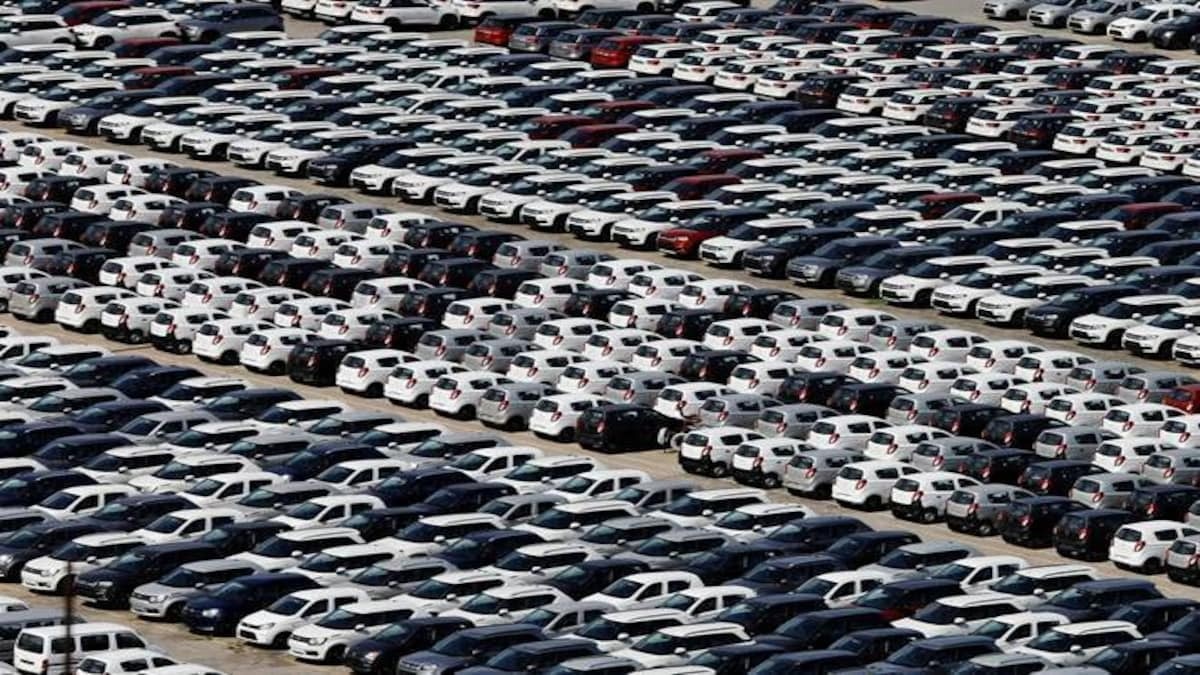
Over half of the automobile dealers in India are seeing some form of supply or dispatch disruption linked to the ongoing West Asia war, according to the Federation of Automobile Dealers Associations (FADA).
About 53.2% of dealers have experienced supply crunch with 17.1% reporting significant delays of three or more weeks, the auto dealers’ body said.
While the impact has been most pronounced in the commercial vehicle segment, passenger vehicle and two-wheeler dealers have also flagged selective variant-level delays, FADA said.
This comes after automobile makers witnessed robust sales in financial year 2025-26 with five of the six vehicle categories setting new annual records after the government slashed Goods and Services Tax (GST) on internal-combustion engine (ICE) vehicles.
“The turning point arrived in September with the implementation of GST 2.0. The rate rationalisation—which meaningfully reduced the effective tax burden on mass-segment two-wheelers, small cars, three-wheelers, and select commercial categories—improved real affordability at a time when the consumer was already positioned to respond,” said FADA President C.S. Vigneshwar.
DON’T MISS | Rare Earth magnet crisis, geopolitical tensions to impact auto sales, warns FADA
Category-wise, two-wheelers reclaimed their pre-Covid peak, retailing over 21.4 million units and growing 13.4%, Vigneshwar said. “Passenger vehicles crossed the 47-lakh mark for the first time, growing 13%, supported by a rich new-model pipeline, steady urbanisation, and the sustained shift towards SUVs and alternative powertrains. Tractors were the year’s standout performer, crossing 10 lakh retail units for the first time in history at 18.95% growth,” he added.
According to FADA, commercial vehicles closed above the 1 million mark for the first time at 11.74% growth, led by infrastructure-driven freight demand. Three-wheelers set their third consecutive annual record at 11.68% growth, with electric vehicles (EVs) now accounting for over 60% of the segment’s retail, the dealers’ association said. Construction Equipment was the sole exception, declining 11.70% as project-level delays and a high base weighed on volumes.
The penetration of EVs improved in every major category—in two-wheelers it rose to 6.54%, in PVs EV to 4.25%, and in CV it nearly doubled to 1.83%, said Vigneshwar. The penetration of CNG-power vehicles grew to 21.98% in passenger cars and 11.79% in commercial vehicles.
Within passenger vehicles, rural demand outpaced urban meaningfully at 17.12% versus 10.43%.
In its near-term outlook, FADA said April should deliver steady performance but potentially softer than March on account of base and seasonality. “The key variable will be the trajectory of the West Asia situation and its pass-through to fuel prices, supply availability, and overall consumer confidence,” FADA said.
On the risk side, three factors dominate dealer concerns, warned FADA. “The most cited risk (40.5%) is overall economic slowdown and consumer sentiment decline—a macro concern that reflects the cascading effects of geopolitical uncertainty on consumer confidence. The second-most cited risk (30.5%) is OEM supply disruption and model unavailability, a direct consequence of the West Asia conflict’s impact on global logistics, component supplies, and production schedules. The third risk (14.9%) is rising fuel prices dampening demand—a factor that has both direct and indirect effects on purchase urgency and operating economics, particularly in the CV and 2W segments,” it cautioned.
auto supply, west asia war, auto inventory, auto sales, auto sales in march, march auto sales, fada, auto supply crunch, west asia war fada auto supply#West #Asia #war #Auto #dealers #supply #disruption #FADA1775462786

Asia
auto
auto inventory
auto sales
auto sales in march
auto supply
auto supply crunch
dealers
disruption
fada
march auto sales
supply
war
West
West Asia war
west asia war fada auto supply