Quick question — when did you get your AC serviced last?
If you had to think about it, this is for you.
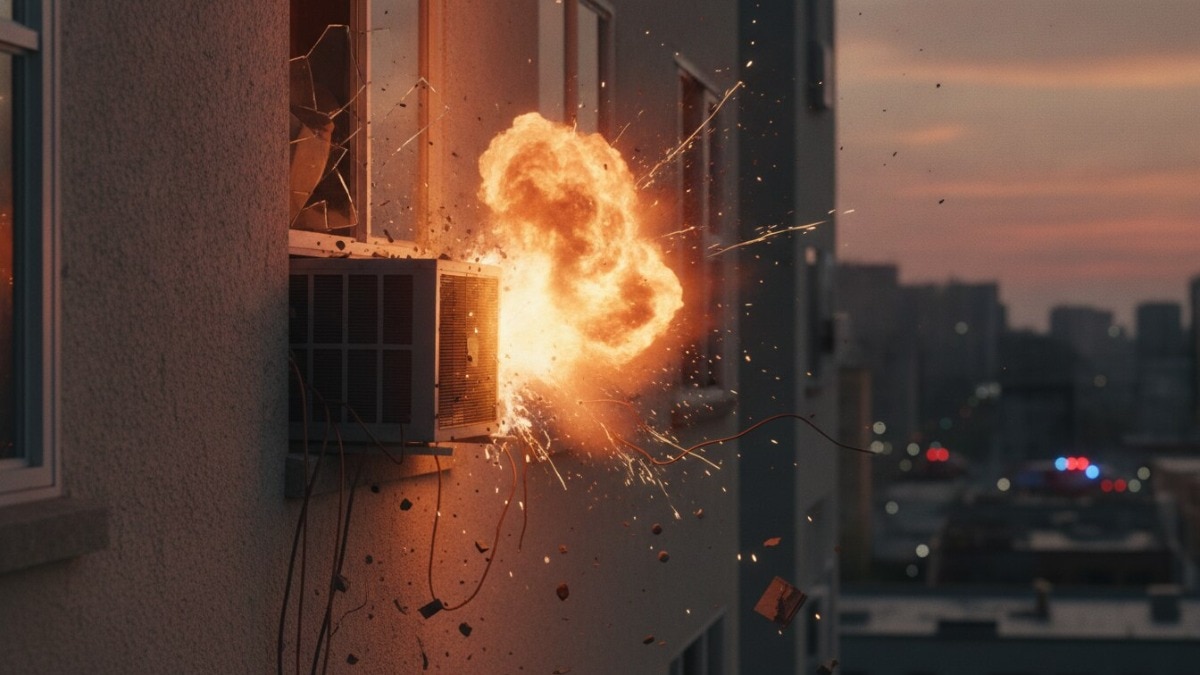
Every summer, ACs across India catch fire — not because of storms or power cuts, but because of something much simpler: dust, gas leaks and other such ignored warning signs. Your AC works silently. So do the problems building inside it.
The good news? All these are easy to spot and even easier to fix if you know what to look for.
In this piece, we explain what actually causes AC fires and blasts, what the warning signs look like, and the things you should check before this summer gets any hotter.
DO CHECKOUT | Delhi Electricity Bill shock? Why some households may have to pay more
Why does an AC blast in peak summer?
Air conditioners can become dangerous if they are overworked or poorly maintained. An AC can blast due to compressor overheating, faulty electrical wiring, refrigerant gas leaks, clogged filters, or using fake/cheap and flammable gases.
What are the warning signs you need to watch for?
- Loud clanking, rattling or squealing sounds are the most common indicators of a failed motor or compressor.
- The scent of burning plastic or a musty, pungent electric odour is an immediate red flag, and you should NOT ignore this at any cost.
- There is a severe electrical fault if your electrical board or MCB continuously trips when the AC is on.
- The most common indicator of restricted or gas leak is the formation of ice on copper pipes or the indoor unit, which also overworks the system.
- Shut down your AC IMMEDIATELY if there are any visible sparks or wisps of smoke near the indoor or outdoor unit.
MUST READ | Uttar Pradesh electricity bills to rise 10% in June as UPPCL imposes fuel surcharge
Know this 3-minute rule
As per this rule, you should wait for 3 minutes before turning on your AC again after it has been turned off. Following this rule keeps the compressor safe and ensures that your AC works well.
Can I run my AC at 16ºC?
First and foremost, you should avoid running your AC at extremely low temperatures, like 16ºC in severe heat conditions, as this overworks the compressor. It is advisable to set the thermostat between 24ºC-26ºC to reduce strain on the compressor and save electricity.
A word of caution
You should schedule regular, annual deep-cleaning services with certified professionals and wash/replace your AC’s indoor filters every month. It is important to ensure that your AC is powered by a dedicated, heavy-duty power socket and do NOT rely on flimsy extension boards.
It is critical to install a high-quality stabiliser to protect your AC unit from voltage spikes and drops.
AC blast, AC explosion, can your AC blast, why does AC blast, warning signs to watch in case of AC blast, signs of AC blast, how to avoid AC blast, 3 minute rule that can save my AC, #ticking #bomb #Check #blast1781410134

3 minute rule that can save my AC
AC blast
AC explosion
blast
bomb
can your AC blast
Check
how to avoid AC blast
signs of AC blast
ticking
warning signs to watch in case of AC blast
why does AC blast