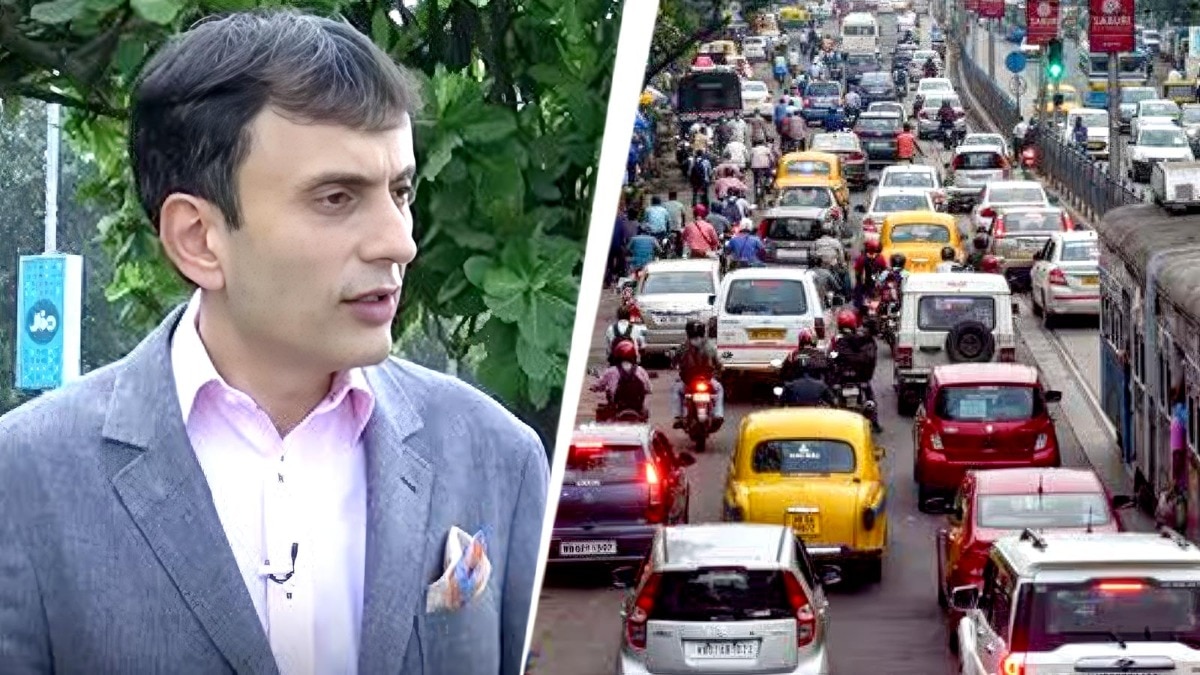
Investor and election watcher Ruchir Sharma said he was “struck by how backward this state still is” after travelling across West Bengal during the ongoing Assembly elections.
Don’t Miss: ‘Kolkata’s decline has…’: Navam Capital MD flags Bengal’s underused assets, talent flight
After a week-long trip across the state, Sharma said the economic data reflected what he saw on the ground. “I’m really struck by how backward this state still is. Because it’s one thing to see the data, which shows that Bengal’s rankings in terms of per capita income have remained unchanged for decades now. In fact, it’s slipped over time,” he said while speaking to NDTV.
He added that per capita income growth in the state has “continued to languish among the lowest in India for the last so many decades” and said, “nothing has changed”. He cited districts such as Murshidabad as examples.
Sharma said these conditions could contribute to anti-incumbency, which he said he sensed during his travels. But he described the election as difficult to call. “It is very rare in India’s electoral history for a 10 percentage point gap between two parties to be overcome within one election cycle. It’s happened, but it’s very rare,” he said.
Must Read: ‘State that produced Netaji, Tagore…’: Sanjeev Sanyal slams ‘maids’ remark on Bengal migrant workers
“The entire battle now is that the gap’s going to close, but will the gap be close enough in one election for the entire thing to flip? I think that’s the point,” the investor added.
In the 2021 Assembly elections, the Trinamool Congress secured about 48% of the vote and 215 seats, while the Bharatiya Janata Party won 77 seats with roughly 38% vote share, leaving a gap of around 10 percentage points.
Sharma also said economic development does not appear to be a decisive electoral factor in India. “I just feel that in India, unfortunately, elections are not fought on development,” he said, adding that there is “no link between economic development and electoral results”.
He cited past analysis suggesting that even states achieving high growth rates do not necessarily return incumbent governments. “Even with 8% economic growth, the chances of a state chief minister being reelected were still 50/50,” he said.
Instead, the investor pointed to other issues shaping campaigns in West Bengal. “The issues which have come to the fore have to do with things like SIR, appeasement, also about the infiltration,” he said, adding that he did not see “any great concrete agenda by either side on what they’re going to do for development of this state”.
The other big factor in Indian elections, he added, is the giveaways “that every government now feels obliged that you have to transfer money to the voters just before the election”. He said such measures had played a role in other states and were visible in West Bengal as well.
The first phase of polling in the state was held on April 23, with the second scheduled for April 29. Results are due on May 4.
Ruchir Sharma Bengal backwardness, West Bengal elections 2026 analysis, Bengal per capita income growth data, anti incumbency Bengal polls, TMC vs BJP vote share gap 2021, Indian elections development vs votes, Murshidabad poverty development Bengal, election giveaways cash transfers India, Ruchir Sharma NDTV interview#039Struck #Bengal039s #backwardness039 #investor #Ruchir #Sharma #ground1777199371

039Struck
anti incumbency Bengal polls
backwardness039
Bengal per capita income growth data
Bengal039s
election giveaways cash transfers India
Ground
Indian elections development vs votes
Investor
Murshidabad poverty development Bengal
Ruchir
Ruchir Sharma Bengal backwardness
Ruchir Sharma NDTV interview
Sharma
TMC vs BJP vote share gap 2021
West Bengal elections 2026 analysis