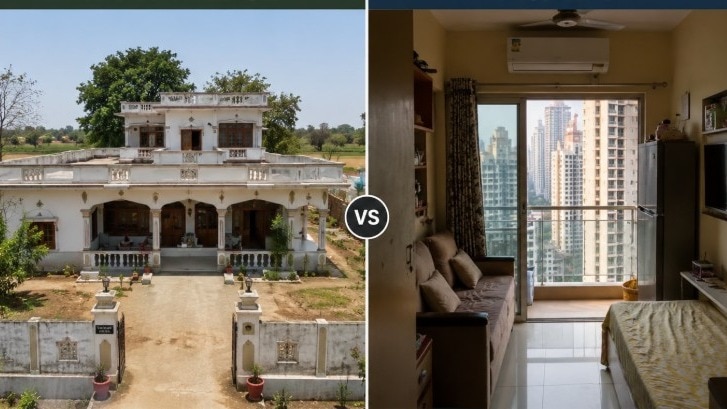
I am a 26-year-old from Mumbai, earning around ₹6 lakh annually in the content post-production industry. My family and I live in a rented chawl in the city, and while our financial situation has improved over the years, homeownership in Mumbai still feels completely out of reach.
My family owns about 2 acres of farmland in our native village in Maharashtra, but we do not have a house there. Whenever we visit, we have to stay with relatives, which makes me feel disconnected from a place that is supposed to be our home. I am considering buying back a portion of ancestral land that was sold years ago and taking a ₹20–25 lakh loan to build a house in the village.
My long-term goal is to eventually move there, especially if I can earn remotely. For those living in smaller towns or villages while working with Indian or overseas clients, what is life really like? Is building a village home a practical long-term decision?
Advice by Ankita Lohia, Qualified Financial Advisor at 1 Finance
So, you’re 26, working in Mumbai’s content post-production world, earning ₹6 lakh a year and dreaming of a home in your village instead of a flat you’ll never afford in the city. As a financial advisor, here’s how I’d help you think this through.
The real question: should you take a ₹20–25 lakh loan to build that village home now?
The money math: That loan means an EMI of roughly ₹18,000-22,000 a month for 15-20 years. On a ₹6 lakh salary, that’s nearly 35-40% of your monthly income going to one EMI. Before signing anything, ask: can my current finances absorb this or am I betting on remote income that doesn’t exist yet?
MUST READ: BT Explainer: Tenant or landlord – who bears repair costs in a rented home?
The remote work test: Try it first.
Work from the village for a month before committing.
Think dual-purpose, not all-or-nothing: Even without relocating immediately, a village home ends dependence on relatives during visits real value, both emotional and practical. It’s an asset that serves you whether the relocation plan materializes on schedule.
Build smart, not big: Buy back the ancestral land first, build modestly, and expand later once income stabilizes. A phased approach reduces upfront debt and gives you flexibility if priorities shift.
The golden rule: Never let a long-term liability outrun a tested income stream. Keep your Mumbai income secure for at least 6-12 months after any remote transition proves viable. Debt should follow certainty, not precede it.
This isn’t “village vs. city.” It’s about sequencing decisions, so the loan follows proof of income not hope.
MUST READ: Can Jewar Airport trigger a 15-20% surge in Noida property prices despite correction fears?
#building #house #village #longterm #plan #staying #Mumbai1782003746